
American Lifestyle
Why Americans Prefer Big Portions of Food
The Kitchen Table of Yesterday
I remember the steady clatter of silverware against porcelain in my mother’s kitchen. It was the early nineteen fifties, and the world felt both vast and wonderfully simple. We lived in Peoria, Illinois, in a modest two-story house with a sprawling elm tree in the front yard. In those days, dinnertime was the anchor of our existence. We all gathered around a wooden table that had seen better days, and my mother would serve the meal. If you looked at our plates back then, you would see something quite remarkable by today’s standards.
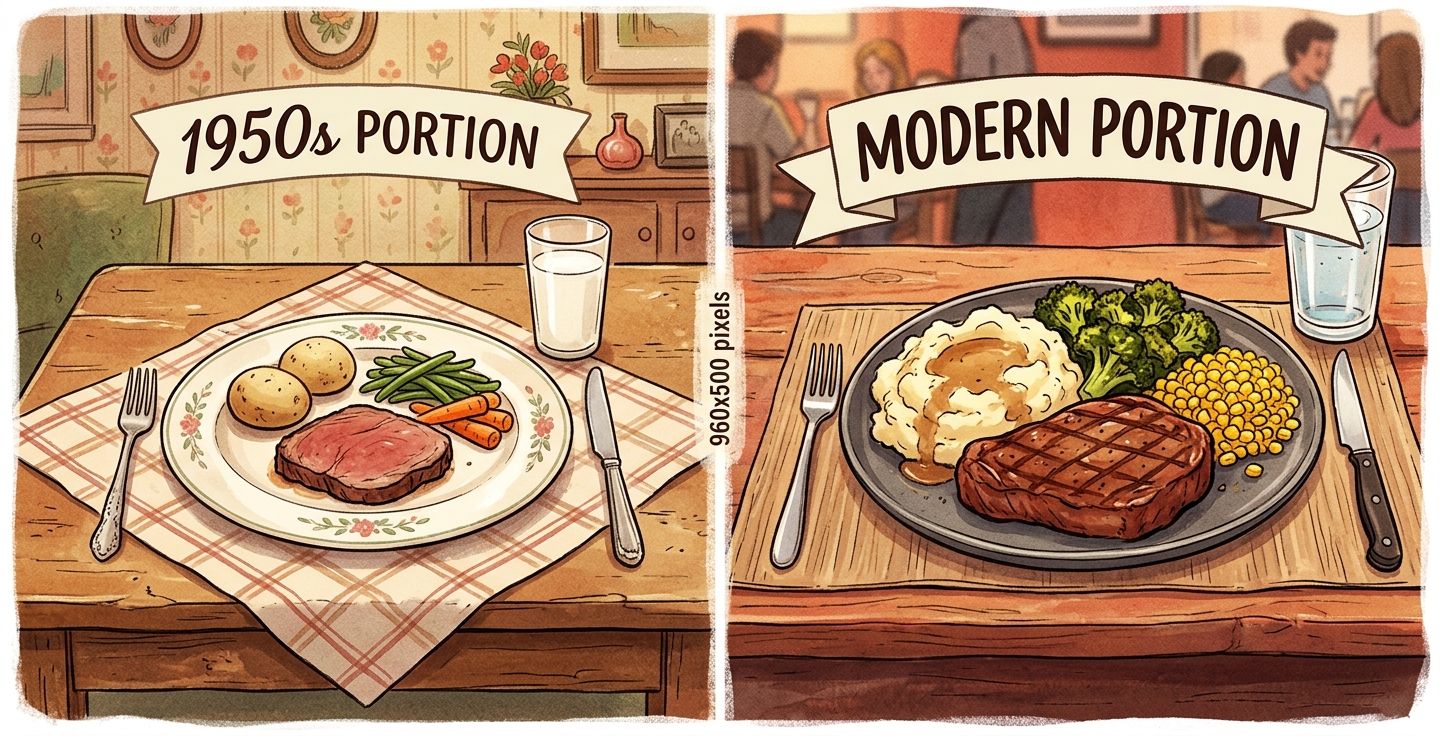
The plates were only about nine inches across. A serving of meat was roughly the size of a deck of cards. A chicken was a grand feast meant for a Sunday afternoon, and the leftovers were carefully stretched to make a soup or a casserole on Tuesday. Food was respected, cherished, and entirely finite. We ate until we were no longer hungry. The concept of feeling stuffed was reserved strictly for Thanksgiving afternoon.
The Day the Plates Grew
But as the decades rolled by, a curious phenomenon occurred right under our noses. The world around us began to swell, and our dinner plates grew right along with it. The modest nine-inch plate was quietly replaced by a twelve-inch platter. The delicate glass of soda, which was a rare and special treat, morphed into a towering plastic bucket that barely fit in a car cup holder. I watched the simple, quiet diners of my youth transform into glowing, bustling fast-food palaces along the newly built highways.
This shift was not just an illusion of memory. The numbers tell a rather astonishing story. According to the National Institutes of Health, the portion sizes in our country have doubled or even tripled over the last twenty years alone. I was reading a report from the American Heart Association that truly opened my eyes. They noted several staggering changes:
- A standard restaurant meal today is more than four times larger than it was in the nineteen fifties.
- A typical bagel grew from a dense three inch ring of one hundred and forty calories to a six inch massive loaf packing nearly four hundred calories.
- The classic soda fountain drink ballooned from a sensible six and a half ounces to twenty ounces or more.
Asking the Big Question
It makes a fellow stop and wonder. How exactly did we get here? Why did we happily trade our sensible, home cooked suppers for platters of food that could practically feed a small army? Why does the average American feel a spark of pure, unadulterated joy when presented with a mountain of French fries, while a smaller, carefully crafted plate leaves us feeling slightly cheated and disappointed?
The Man Who Supersized America
To understand this fascinating shift, we have to take a look at a rather clever man named David Wallerstein (born 1913, died 1993). David worked for the Balaban and Katz movie theater chain up in Chicago, Illinois, back in the mid-twentieth century. He was a man who paid deep attention to human behavior. David noticed something fascinating about the moviegoers. People loved eating popcorn during the films, and they often wanted more of it. However, they absolutely refused to buy two small bags. Buying two bags felt gluttonous. It felt like a loss of self control, and nobody wanted to be seen walking back down the theater aisle with two bags of popcorn in their hands.
David pondered this puzzle and came up with a brilliant, albeit waistline-expanding, solution. He decided to introduce a single, gigantic bucket of popcorn. He charged just a few pennies more for it. The result was pure magic for his business. People bought the giant buckets by the thousands. They did not feel greedy because they were still only buying one single item. More importantly, they felt they were getting an incredible value for money. We love a good deal in this country. We love feeling like we outsmarted the system by getting twice the food for just a fraction more cash. David Wallerstein eventually took this exact philosophy to a growing national burger chain, and the concept of supersizing was officially born. We stopped looking at food purely as fuel and started looking at it as an economic victory.
The Promise of Abundance
But the roots of our hearty appetites go much deeper than clever marketing or movie theater popcorn. It is woven into the very fabric of the American dream. You have to remember the generations that came before us. My parents, and the parents of all my childhood friends on that quiet street in Peoria, lived through the bitter, scraping years of the Great Depression. They knew exactly what it meant to go to bed with a hollow ache in their bellies. They knew the deep, persistent anxiety of a barren pantry.
When the post-war boom arrived, and the country flourished in ways nobody had ever seen, having plenty to eat was not just a convenience. It was the ultimate proof that you had survived the hardest of times. It was the proof that you had finally made it. To offer someone a massive plate of food was an act of profound love. It was our unique brand of hospitality. My mother would pile my plate high because she could, simply because her mother could not. We began to equate the sheer volume of food with the depth of our care for one another. A full table meant a safe, secure home. This deeply ingrained desire to provide abundance for our families has never really left our national psyche. In many ways, we are still feeding the ghosts of those lean times.
A Hopeful Horizon
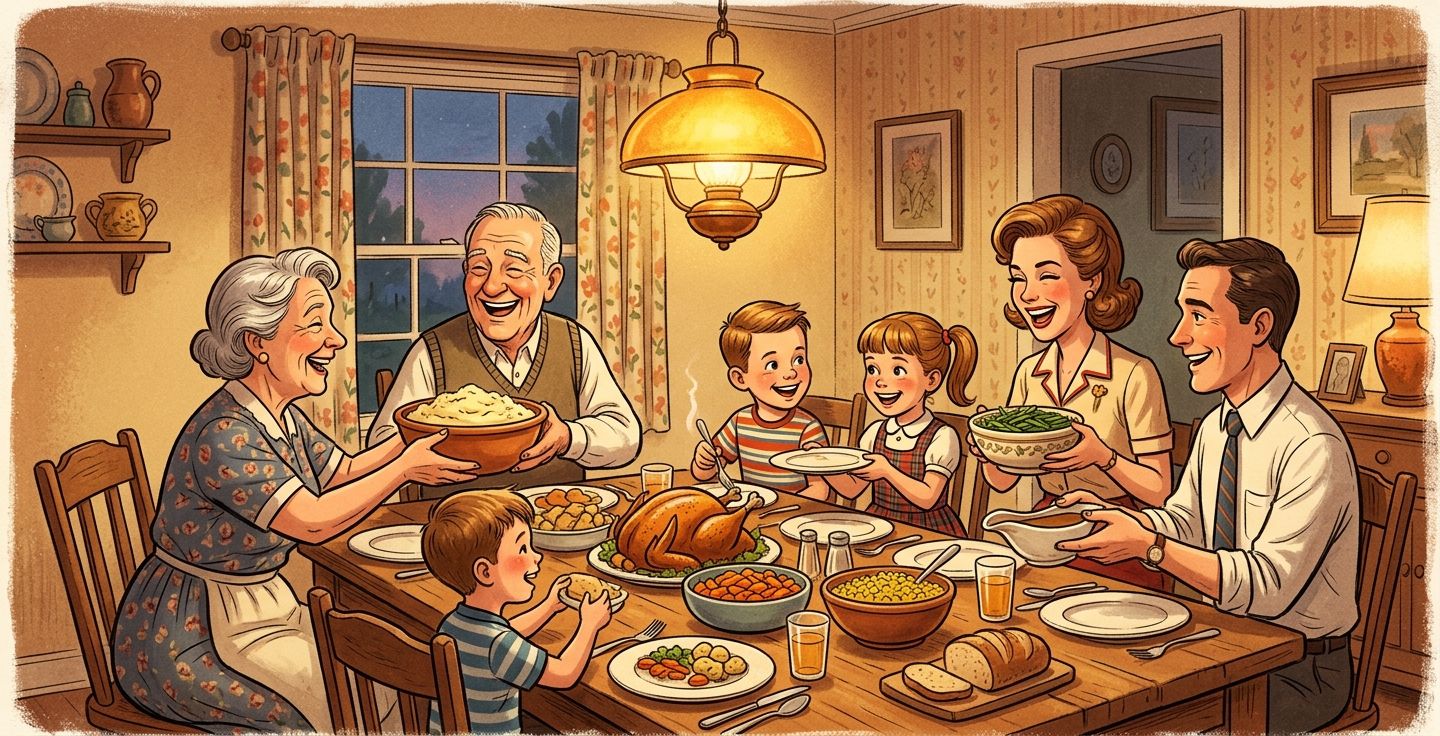
I look at all of this history not with judgment, but with a deep, abiding affection for our journey as a people. We are a big-hearted, enthusiastic nation, and our oversized plates have simply reflected our oversized hopes. But I am also filled with incredible optimism for the road ahead. We do not have to keep eating mountains of food to prove we are a prosperous and successful people.
I see the younger generations today, my own grandchildren among them, making thoughtful choices that fill me with absolute hope. They are asking smart questions about where their food comes from. They are sitting down to meals that prioritize vibrant colors, fresh ingredients, and rich flavors over sheer, overwhelming size. They understand that true wealth is found in our health, and that we can celebrate our wonderful culinary traditions without putting such a heavy burden on our bodies. They are finding a beautiful balance, stepping back from the towering platters, and reclaiming the simple, unhurried joy of a sensible meal. Our future is bright, and I believe we are slowly learning how to feast with our hearts rather than just our eyes.
Common Questions About Our Changing Appetites
How much have portion sizes really grown since the nineteen fifties?
The change has been quite dramatic. In the nineteen fifties, a typical fast food hamburger was around two ounces. Today, a standard burger is often four to six ounces, and many restaurant meals are four times larger than they were back then. It has been a slow, steady climb over the decades that completely altered our perception of a normal meal.
Did the introduction of the car cup holder change how we drink soda?
It certainly played a significant role. When automobiles began featuring large cup holders in the front seats, it allowed folks to comfortably carry massive drinks with them everywhere they went. The beverage industry responded by creating larger and larger cups, turning a small, occasional treat at the soda fountain into a massive, all day companion for our long daily commutes.
Why do modern restaurants serve such massive plates of food?
The raw ingredients in a meal often cost a restaurant very little compared to the expenses of labor, rent, and overhead. By adding just a few pennies worth of extra fries or pasta to the plate, they can charge a bit more overall. It makes the customer feel like they are getting a fantastic deal, which keeps them coming back.
Does the physical size of our plate actually trick our brain?
It absolutely does. Human beings are highly visual creatures. If you put a modest, healthy amount of food on a giant twelve inch plate, your brain tells you that you are being deprived. If you put that exact same amount of food on an older, nine inch plate, it looks like an absolute feast, and you feel entirely satisfied after eating.
Is the practice of supersizing still as common today as it was years ago?
We have actually seen some positive changes recently. While massive meals are still widely available across the country, many large fast food chains quietly phased out their official supersize options after severe public pushback. However, the standard baseline sizes still remain much larger than they were in my youth, so we must remain mindful of what we order.
How can families return to normal portion sizes without feeling deprived?
There are a few simple steps you can take at home.
- Start buying smaller nine inch dinner plates and smaller bowls for your kitchen cabinets.
- Try serving the meal directly from the stove rather than placing large bowls of food right on the dinner table.
- Eat slowly and share stories to give your body time to feel full.
These small changes make us pause and think before taking a second helping.
Are younger generations changing the way America eats for the better?
I truly believe they are. Many young folks today are deeply interested in the quality, origin, and sustainability of their food. They are focusing much more on nutrition, plant based options, and beautifully balanced meals. They are showing us that we can enjoy incredibly delicious, satisfying food without needing to eat a towering mountain of it. It brings me great joy.