
American Sports & Pastimes
How Sports Unite Communities Across the U.S.
The Sounds of a Summer Evening
I can still hear the crack of a wooden bat bouncing off brick walls. It is a crisp sound that settles deep in your chest. When I was growing up, the local ballfield was not just a patch of dirt and grass. It was the absolute center of our universe. Friday nights meant high school football under the big metal lights. Saturday mornings meant little league games with thick chalk dust floating in the air. Sunday afternoons belonged to the radio broadcasters painting vivid pictures of men turning double plays.
You knew your neighbors because you sat right next to them on splintered wooden bleachers. You shared roasted peanuts with the hardware store owner. You cheered alongside the schoolteacher. We were completely different people living very different lives. But for a few hours a week, we were just fans. The game gave us a common language. It gave us a reason to look each other in the eye. That was the situation back then. We did not have to try hard to build a community. The game did the heavy lifting for us.
When the World Starts to Drift
Things feel a bit different today. I walk down the street and see folks staring down at glowing screens in the palms of their hands. The front porches are much emptier now. The fences between our yards seem a little taller. People rush from their cars to their front doors as if they are escaping the weather, even on a beautifully sunny afternoon. We have managed to build a world where we can get absolutely anything delivered right to our doorstep, yet we often feel completely alone.
It is a strange puzzle. We are more connected than ever before through technology, but we are starved for genuine human contact. This quiet isolation creeps up on you. It makes you wonder how we got here. More importantly, it raises an important question. How do we find our way back to each other? What can possibly bridge the gap between different generations, different backgrounds, and different beliefs? I have lived long enough to see fads come and go. I have watched neighborhoods change and city skylines grow. But through all the changing seasons of my life, one thing has remained a constant force for good.
The Numbers Tell a Story of Connection
You might think my perspective is just the fond nostalgia of an old timer. But the facts back it up entirely. If you look at the research, the impact of local sports on our society is impressive. A recent comprehensive study by the Aspen Institute revealed that over 70 percent of adults believe sports have a positive, unifying effect on their local areas. Another survey from the Robert Wood Johnson Foundation found that communities with active youth programs report significantly higher levels of civic engagement.
People who attend local games are 30 percent more likely to volunteer for neighborhood projects. They are more likely to vote in local elections. They are more likely to know their neighbors by their first names. Those are not just numbers printed on a page. Those statistics represent real people finding common ground. When a town rallies around a team, crime rates often dip. High school graduation rates improve. The shared investment in a team translates into a shared investment in the community itself. It is a beautiful ripple effect. A single game of baseball or soccer can build a sense of belonging that lasts long after the final whistle blows.
A Boy Named Willie and a Field in Alabama
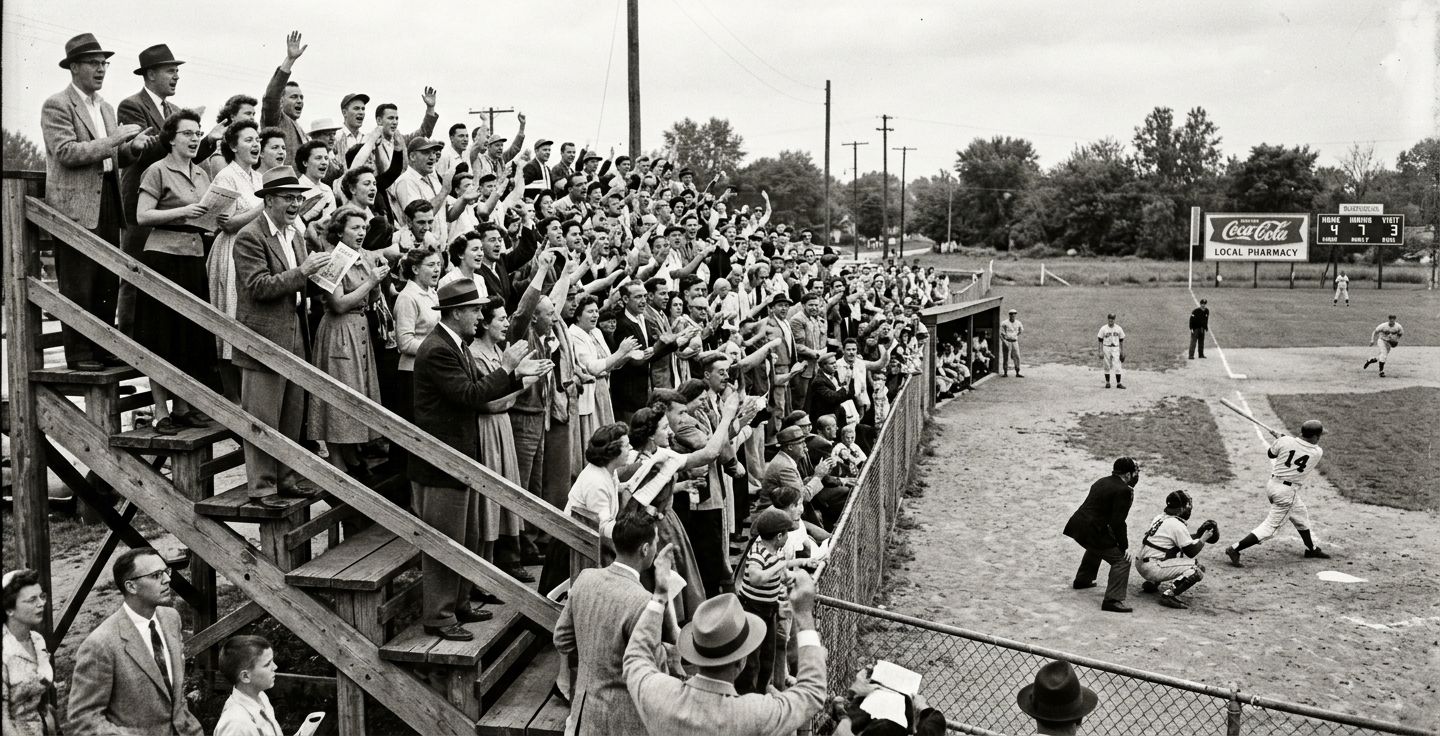
Let me tell you about a specific place to show you exactly what I mean. Think about Rickwood Field down in Birmingham, Alabama. It is the oldest surviving professional baseball park in the United States. During the 1940s, the country was heavily divided. Segregation was the tragic law of the land in the South. The air was thick with humidity, and the smell of roasted peanuts mixed with the dust kicked up from the infield. People wore their Sunday best to the ballpark back then. Hats and ties were common, even in the sweltering heat.
Baseball had a funny way of challenging those invisible walls. The Birmingham Black Barons played there, and a local teenager named Willie Mays (1931-2024) roamed the outfield. Before he went on to become a national icon, he was just a high school kid playing against grown men. The bleachers were technically segregated, but the pure love for the game could not be contained by arbitrary lines. White fans would peek through the wooden fences or find creative ways to watch this incredible young talent. When Willie caught a fly ball over his shoulder, the entire crowd exhaled together.
For a fleeting moment, the harsh racial divides melted away. Everyone was simply a witness to greatness. That is the true magic of sports. A single player on a dusty patch of grass can force a divided town to breathe as one. The history of our nation is written in those small moments. The civil rights movement was fought in courts and at lunch counters, but the groundwork of empathy was often laid in the grandstands of places like Rickwood Field.
Shoveling Snow in Titletown
We see the exact same spirit in the freezing cold of the Midwest. Take a trip up to Green Bay, Wisconsin. There is a famous street called Lombardi Avenue, named after the legendary coach Vince Lombardi (1913-1970). Green Bay is a very small town compared to the giant cities that host most professional football teams. Yet, their team belongs directly to the people. The fans literally own the team. But the real story is not about the corporate structure.
It is about what happens when a massive blizzard hits the day before a big playoff game at Lambeau Field. You can feel the biting wind coming off the Fox River. It is the kind of cold that sinks right into your bones. But when the team puts out a call for help over the local radio stations, folks do not hesitate. They bundle up in thick wool coats and heavy boots. Within hours, hundreds of locals show up with their own snow shovels.
You will see a bank manager scooping ice alongside a factory worker. You will see grandmothers pouring hot coffee for local teenagers. Nobody asks about political affiliations. Nobody cares about income brackets. They are united by a singular, simple goal. They need to clear the bleachers so the game can go on. That is true community building in action. It is a beautiful thing. When folks freeze their fingers together to dig out a stadium, they are digging out a piece of their own shared identity.
Breaking Barriers on the Diamond
Let us look back at another pioneer who changed the fabric of our country. I vividly recall the stories my father told me about Jackie Robinson (1919-1972). When he stepped onto Ebbets Field in Brooklyn, he did much more than hit a baseball. He forced millions of Americans to confront their deep prejudices. You could hear the rumble of the train passing by the outfield walls. The stadium was tucked right into the neighborhood, surrounded by brick apartment buildings. People would lean out of their windows just to catch a glimpse of the wooden scoreboard.
He handled unimaginable pressure with immense grace. People from all walks of life would ride the trolley down to Flatbush Avenue just to see him play. A neighborhood that was historically deeply divided by ethnic and racial tensions suddenly found a unified voice. The Italian immigrants, the Irish cops, the Jewish shopkeepers, and the Black community all found a shared hero. Jackie did not just integrate a sport. He integrated the minds of the people watching him. The simple act of cheering for the same uniform builds a sturdy bridge. Once you cheer with a stranger, it becomes very hard to view them as an enemy.
The Torch Passes to the Next Generation
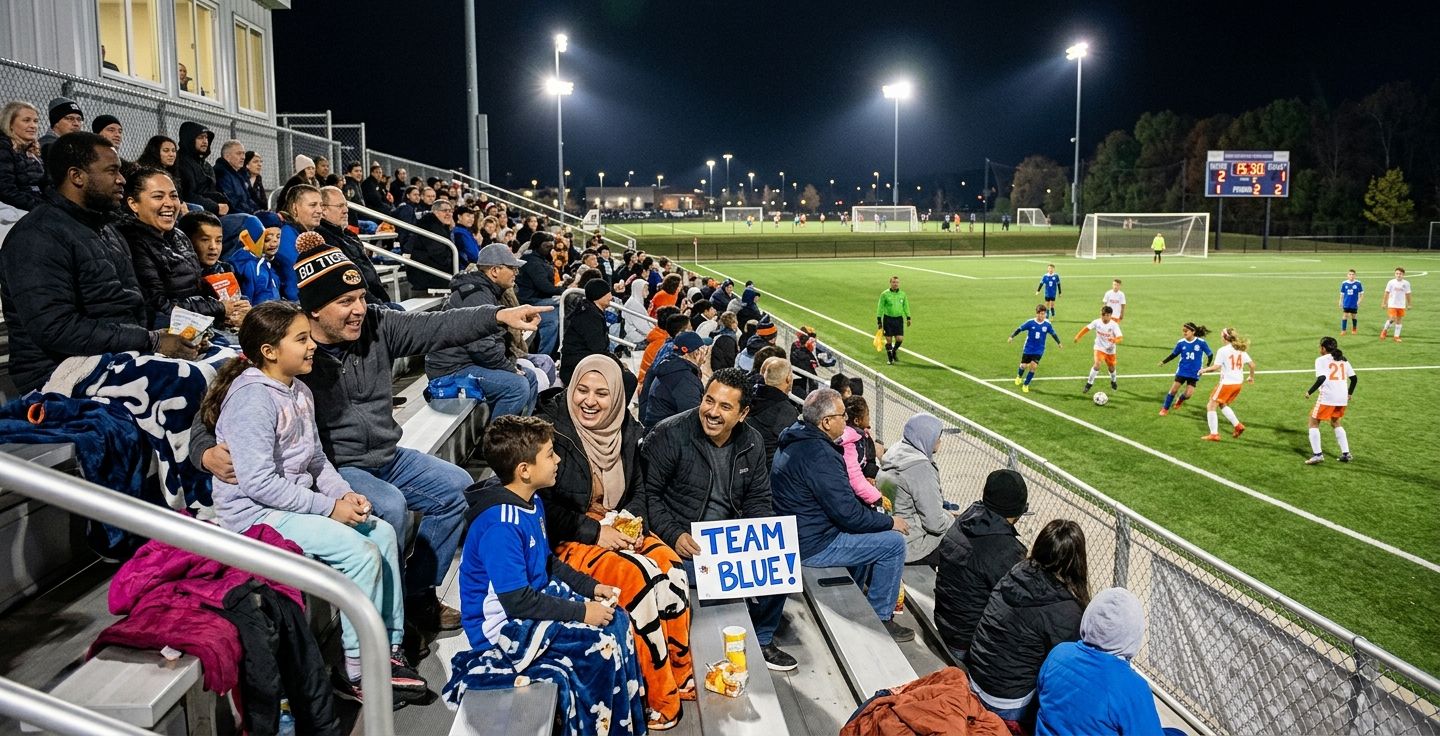
Some folks my age like to complain that things are not what they used to be. They say the kids today do not care about community. I completely disagree. If you want to feel hopeful about the future of this country, go down to a local park on a Saturday morning. Watch the youth leagues in action. You will see young parents setting up folding chairs and passing out orange slices. You will see teenagers volunteering as referees.
The grass might be artificial turf now instead of natural dirt. The scoreboards might be digital instead of hand painted wooden signs. The uniforms might be brighter now. The equipment might be fancier. But the pure spirit is exactly the same. The sound of a parent cheering for their child is identical. The children are learning how to win with grace and lose with dignity. They are learning that you have to rely on the person standing next to you.
And the parents on the sidelines are making connections that will strengthen the neighborhood for decades to come. I look at these young families and my heart fills with absolute joy. They are carrying the torch. They are keeping the fire of our local towns burning bright. We are in very good hands.
Pull Up a Bleacher Seat
So here is my advice to you. Do not let the isolation of the modern world win. If you feel disconnected from your town, the remedy is incredibly simple. Look up the schedule for your local high school basketball team. Find out when the neighborhood soccer tournament is taking place. Put on a warm coat and go. Buy a lukewarm hot dog from the concession stand. Strike up a friendly conversation with the person sitting next to you. Cheer for the kids giving it their absolute best.
You do not have to be a massive sports fanatic to appreciate the beauty of a community coming together. We need these shared spaces more than ever. We need the simple joy of a game to remind us that we are all on the same team in the end. Go out and find your seat. The game is just getting started.