
Culture & Traditions
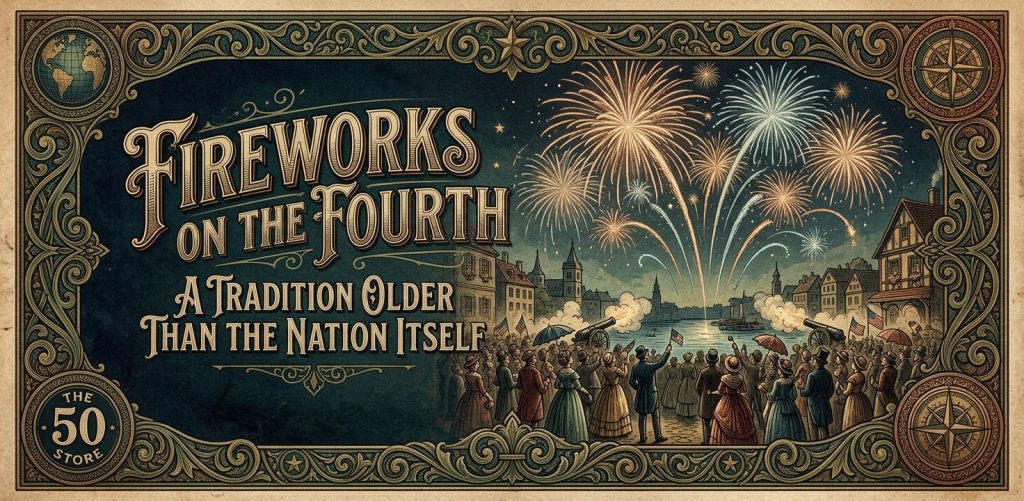
Fireworks on the Fourth: A Tradition Older Than the Nation Itself
Warm summer nights always bring a familiar scent to the breeze. It is a mix of cut grass, barbecue smoke, and the sharp tang of sulfur. I sit on my front porch watching the fireflies dance in the heavy evening air. They remind me of the sparks that will soon fill the sky. We gather our lawn chairs. We lay out the picnic blankets. We wait for the sun to dip below the horizon. This is our ritual. It is a beautiful one. But it is not just our ritual. Human beings have always looked to the heavens and tried to paint them with fire. These acts are rooted in ancient fire festival customs passed down through generations. People long ago lit bonfires to celebrate a bountiful harvest. Fire has always meant life, safety, and joy.
We often assume the story of our national celebration begins neatly in 1776. We like to think the spark was struck the exact moment the ink dried on the big parchment in Philadelphia. Yet the truth is a little more complicated. The brilliant bursts of color we see today did not just magically appear out of thin air to celebrate a new country.
Where Did the Spark Truly Originate?
So where did this really begin? How did a simple act of lighting powder on fire become the beating heart of our national pride? To understand the origins of 4th july festivities, we have to look closely at the streets where our ancestors walked. We must look long before the revolution was even a whisper.
Consider a narrow dirt lane in Jamestown, Virginia. It was here, nearly four hundred years ago, that settlers brought the first sparks of our modern traditions across the ocean. The numbers surrounding our modern celebrations are absolutely staggering. According to the American Pyrotechnics Association, Americans now consume over four hundred million pounds of fireworks each year, generating more than two billion dollars in revenue. That is a massive amount of light and sound. The Consumer Product Safety Commission also notes a fascinating trend. Despite the massive increase in usage over the last twenty years, the injury rate has actually dropped by more than fifty percent. It is proof of how these independence day pyrotechnics have evolved from dangerous novelties to highly regulated, beautiful art forms. But back in Jamestown, it was just a few brave souls with a handful of crude black powder.
Let us look at a man like John Smith (born 1580, died 1631). He is said to have set off the very first firework in Jamestown in the year 1608. Imagine being a settler on the edge of a vast, unfamiliar wilderness. The night is pitch black. The woods are full of unknown sounds. Suddenly, a streak of fire shoots up and shatters the darkness. It was a message of survival. It was a pre 1776 fire spectacle that showed resilience in a new world.

The 1776 Winners History Premium Tee
Wear your story with pride! Celebrate classic American values, history, and heritage with our premium crafted apparel, designed for comfort and durability.
Shop the Look →A Street Sweeper in Williamsburg
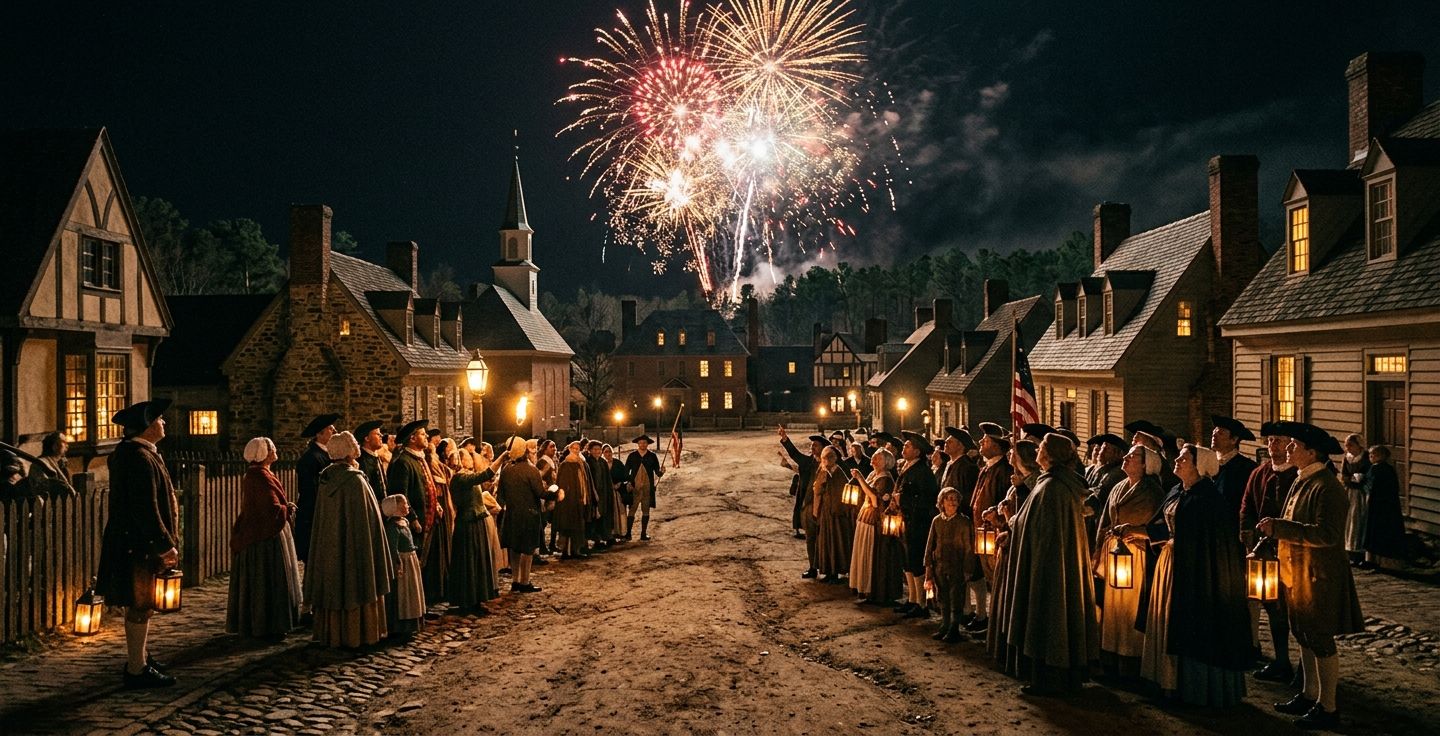
Fast forward to the years just before the revolution. Walk with me down the dusty roads of Williamsburg, Virginia. Think about a local shopkeeper sweeping his wooden steps as twilight falls. The royal governor is celebrating the birthday of the British king. The sky lights up with colonial era fireworks displays. These were grand events for the time. People who worked hard from dawn until dusk gathered together in the town square. They looked upward. They forgot their tired muscles for just a few moments. They were united by pure awe. The irony, of course, is that the very tools used to celebrate the British crown would very soon be used to celebrate its removal.
The Vision of Independence
When the time came to forge a new nation, the founding fathers celebration methods simply adapted what they already knew. I always think of John Adams (born 1735, died 1826). He was a man of great passion and vision. He sat at a small wooden desk in Philadelphia, Pennsylvania, writing a letter to his beloved wife Abigail Adams (born 1744, died 1818). He envisioned that this new day of independence would be commemorated as the day of deliverance. He specifically called for illuminations from one end of this continent to the other. He wanted bright light. He wanted loud noise. He knew that the early american firecracker traditions would speak to the soul of the everyday citizen. It was a brilliant idea. It was a way to make sure that the poorest farmer and the richest merchant could look at the exact same sky and feel the exact same thrill.
Then came the revolutionary war celebrations. Even while the war was still raging hotly across the colonies, the troops needed hope. A small town like Boston, Massachusetts, held onto its spirit by staging whatever small displays they could muster. They lacked the fancy imported rockets of the former royal governors. So they improvised with what they had on hand. Local blacksmiths and coopers packed black powder into tight paper tubes. They created noise. They created a defiant, booming roar. These were the true historical fireworks demonstrations that cemented our culture. They were raw. They were loud. They were entirely ours.
Watching the Sky Change
I have watched the skies light up from the beds of rusty pickup trucks for more decades than I can count. I have watched them from the crowded grandstands of big city parks. I have sat on quiet rural hillsides waiting for the distant flashes. Every single time, I see the same look on the faces of the children sitting around me. It is a look of absolute, pure wonder. Their wide eyes reflect the golden showers and the bright red bursts falling from the clouds. When I see that, I do not just see a fleeting moment of summer entertainment.
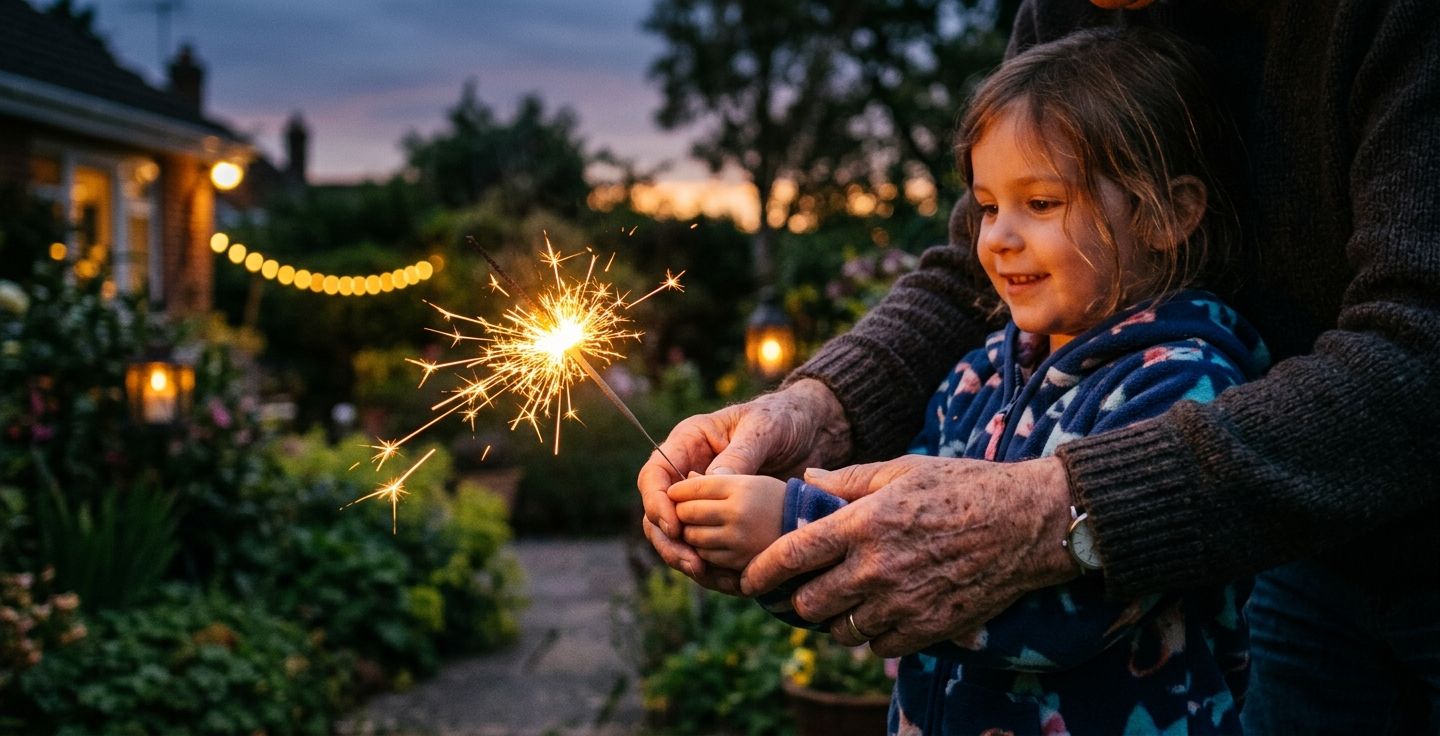
I see the american independence traditions origins living on in their smiles. I see the exact same wonder that little boys and girls felt in the summer of 1777 when the sky above Independence Hall rained down bright stars. We carry these old stories forward, whether we realize it or not. Every glowing sparkler handed to a careful child is a tiny baton in a massive relay race of human history. We teach them how to hold it away from their bodies. We show them how to draw glowing circles in the humid night air. We are passing down something beautiful and enduring.
We are giving them the light. This makes me incredibly hopeful for the future of our grand country. We hear so much about what divides us these days. We read so many loud, angry words on screens. But on the fourth of July, we all walk outside. We all tilt our heads back. We all say ooh and aah in complete unison. The light washes over all of us equally. We are reminded that we share the same sky.
Look Up With New Eyes
This coming July, I want you to do something special for me. When you pack your heavy cooler and grab your folding chairs, take a quiet moment to think about the deep roots of what you are about to watch. Head out early to your local park or field. Look around at your neighbors gathering on the grass. Remember that the blasts echoing off the hills are echoes of a long, shared journey. Feel the deep boom in your chest. Let it remind you of a heartbeat that has been thumping steadily for hundreds of years.
Look at the children’s faces when the finale starts. Smile at their joy. Be the one to lean over and tell them about John Adams and his letter. Tell them about the early settlers lighting up the dark woods. Help them feel part of this great, ongoing American story. Watch the sky, but also watch the people. The fire in the sky is beautiful, but the fire in our hearts is what keeps this nation moving forward.
When were fireworks first used in America?
The very first recorded use of fireworks in the American colonies was in Jamestown in the year 1608. Captain John Smith set them off. This was long before the United States became a country. These early displays were very simple compared to what we see today, but they brought a sense of awe and celebration to the early settlers in a new and unfamiliar land.
Did the Founding Fathers actually light fireworks themselves?
While we do not have specific records of men like George Washington or Thomas Jefferson personally lighting the fuses, they absolutely encouraged and organized the displays. John Adams was the most vocal advocate for using illuminations to celebrate independence. They saw these bright displays as the perfect way to unite the public and build morale during very difficult times.
What did early colonial fireworks look like compared to today?
Early fireworks lacked the vibrant blues, greens, and purples we enjoy now. They were mostly loud noise and bright orange or yellow sparks, created by basic black powder. Color was not widely introduced until the nineteenth century when Italian immigrants brought advanced chemical knowledge to the United States. Back then, the boom and the simple bright flash were considered spectacular enough.
Were fireworks considered dangerous during the colonial era?
Yes, they were quite dangerous. The early mixtures were unstable, and safety regulations simply did not exist. Towns constructed mostly of wood were at high risk of catching fire from stray sparks. Despite the obvious risks, the desire to celebrate and gather together usually outweighed the fear of accidental fires, showing just how deeply people valued these communal celebrations.
Why do we continue this tradition with such passion today?
We continue it because it connects us directly to the spirit of our ancestors. It is a shared physical experience. When you feel the boom in your chest and see the sky light up, you are feeling exactly what early Americans felt. It brings neighbors together, stops us from looking at our busy lives for a moment, and lets us stand united in simple, beautiful wonder.