
American Lifestyle
How Suburbs Became the Default American Dream
Grill Chill And Freedom BBQ T Shirt
Wear your story with pride! Celebrate classic American values, history, and heritage with our premium crafted apparel, designed for comfort and durability.
The Crowded City Streets We Once Called Home
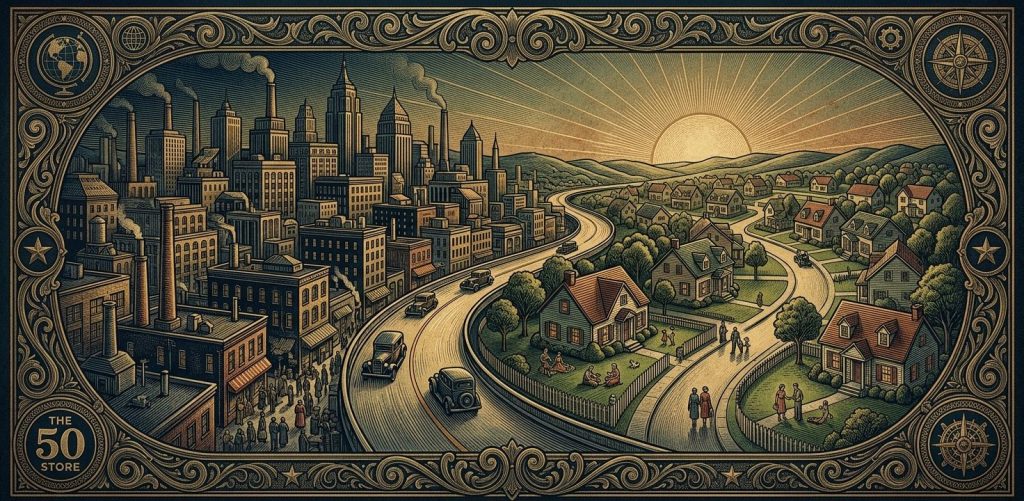
I remember walking down near Times Square just after the Second World War had finally ended. The neon lights flickered brightly against the evening sky. The streets buzzed with an incredible electric energy. Every sidewalk was completely packed with people. We were young, and the whole world felt incredibly wide open and full of promise. Yet, when the joyful parades stopped and the celebration confetti was swept away, a very quiet reality settled over us. Our cities were bursting at the seams.
Many of us were living in tiny walk up apartments. You could hear your neighbors arguing through the thin walls. You could smell their cabbage boiling on the stove every single evening. There was a genuine warmth to that close knit city life. We shared rusty fire escapes in the sweltering summer heat. We shared cups of sugar and endless stories about our days. But we also shared a deep yearning for a little bit of space. We desperately wanted fresh air. We wanted quiet streets where a person could simply think.

Grill Chill And Freedom BBQ T Shirt
Wear your story with pride! Celebrate classic American values, history, and heritage with our premium crafted apparel, designed for comfort and durability.
Grill Chill And Freedom BBQ T Shirt
Wear your story with pride! Celebrate classic American values, history, and heritage with our premium crafted apparel, designed for comfort and durability.
The Great Housing Crunch
Then our brave soldiers came home. Millions of young men and women returned from overseas deployments. They were eager to start families and build a peaceful life. They were ready to make up for lost time after years of profound global conflict. This created an incredible baby boom that shook the foundation of our country. Suddenly, those cramped city apartments were no longer just a minor inconvenience. They were entirely inadequate for growing families.
We faced a massive housing shortage unlike anything this nation had ever seen. During the Great Depression, nobody had the money to build new houses. During the war, all our materials went to the military effort. By the late nineteen forties, there simply were not enough homes for all the new families. Two or three generations were squeezed together into small two bedroom flats. Young married couples were sleeping on fold out couches in their parents living rooms. We had won a massive global war, but we could not find a quiet place to put a crib.
Where Do We Go From Here?
This leads us to a very important question. Where exactly were all these young, hopeful families going to live? The busy cities had absolutely no more room to grow outward. Building tall apartment towers was far too expensive for the average working family to afford. The brilliant answer lay just beyond the crowded city limits. It was waiting patiently in the quiet farm fields and the empty green spaces. The answer was the creation of modern suburbia.
Numbers That Tell A Staggering Story
It is genuinely hard to imagine just how incredibly fast this massive shift happened. The statistics from those days are still staggering to read and understand. According to the United States Census Bureau, the suburban population in our country grew by an astonishing forty three percent between nineteen forty seven and nineteen fifty three. That is an enormous population movement in just six short years. During that exact same period, the urban city population barely grew at all. People were packing up their station wagons and moving out in droves.
The Federal Housing Administration backed millions of home mortgages during this era. They changed the rules of homeownership forever. Before the war, buying a house required a massive down payment in cash. It was something only the truly wealthy could ever afford to do. But with the new government policies, a working class family could move into a brand new home with just five percent down. Sometimes, the monthly payment on a new house was actually cheaper than renting a dingy city apartment. By nineteen sixty, a full third of the entire nation lived in the suburbs. It was a massive migration that created a completely new American way of life.
This massive growth required a brand new infrastructure. We needed roads to get to work. President Dwight D. Eisenhower (born 1890, died 1969) signed the Federal Aid Highway Act into law. This created the massive interstate highway system. It was the largest public works project in American history. Those new ribbons of concrete became the vital arteries connecting our quiet new neighborhoods to the bustling city employment centers. Automobile ownership skyrocketed because a car was absolutely essential for this new lifestyle.
A Man, A Plan, And A Potato Field
To truly understand this dramatic shift, you have to look at the ambitious people who built these places. You have to look at visionary builders like William Levitt (born 1907, died 1994). He was a practical man with a grand vision. He stood in a massive flat potato field in Levittown, New York, and he saw a completely new way of living. He saw endless rows of neat little houses sitting on perfectly square plots of green grass.
He brought the factory assembly line directly to the neighborhood construction site. He broke the entire process of building a home down into twenty seven distinct steps. One crew would arrive in the morning to pour the concrete slab. The next crew would show up to frame the wooden walls. Another crew would follow behind to install the copper plumbing. They worked with astonishing speed and incredible precision. At the absolute peak of production, his dedicated crews were finishing a brand new house every sixteen minutes.
Tommy And The Canvas Of The Yard
Let me tell you a little story about a fellow I knew named Tommy. Tommy served bravely in the Navy. He came home to a pregnant wife and absolutely no place of his own to live. He heard rumors about these affordable new houses being built out on Long Island. He took a commuter train out to see them for himself. He signed the purchase papers that very same afternoon. Thanks to the amazing benefits of the GI Bill, he did not have to put a single penny down for a deposit. His total monthly mortgage payment was only fifty seven dollars.
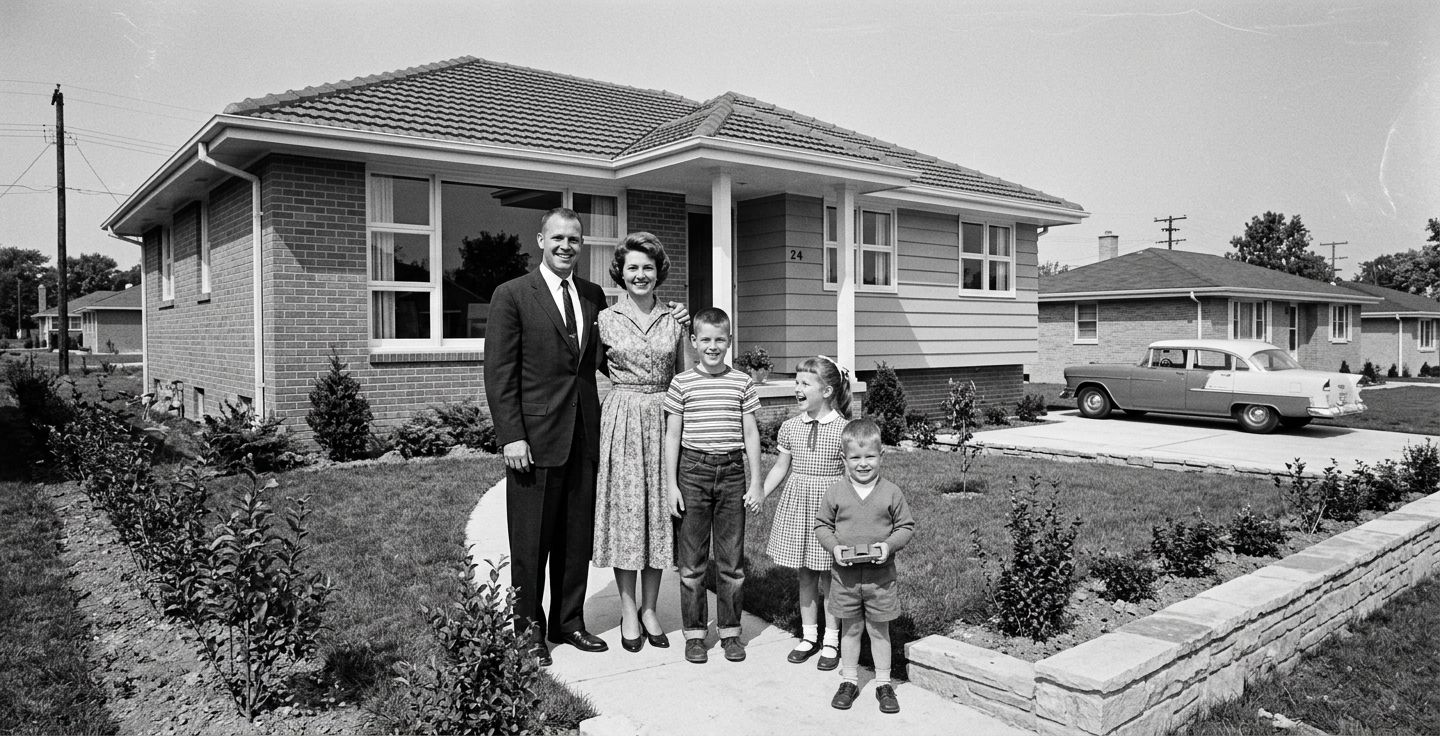
When Tommy and his lovely wife moved in, the house was admittedly quite small. It had two modest bedrooms, a cozy living room, and a bright kitchen. But the magic was that it was entirely theirs. It had a shiny new washing machine. It had a modern built in television set. Most importantly, it had a beautiful front yard. That patch of grass was a blank canvas for a new life. It was the absolute birthplace of the famous white picket fence ideal.
The kitchens in these new homes were a true marvel for the time. They came fully equipped with a brand new electric stove and a gleaming white refrigerator. Before the war, buying major household appliances was a huge separate expense that required years of saving. Having them simply included in the initial purchase price of the home felt like a tremendous luxury. Wives proudly showed off their pristine new kitchens to visiting relatives. It represented a bold step into a bright and modern technological future.
For a weary generation that had lived through the terrifying Great Depression and a horrific global war, a private patch of green grass was the ultimate luxury. It meant deep peace. It meant permanent security. It was the very embodiment of the American Dream. We happily planted small saplings in our front yards. We watched those tiny trees grow tall right alongside our laughing children. Every single weekend, the cheerful sound of gasoline lawnmowers filled the neighborhood air. It was the comforting soundtrack of our brand new lives.
Building Communities From The Ground Up
We did not just build houses out there in the former farm fields. We built tightly knit communities completely from scratch. We hosted massive neighborhood barbecues on summer evenings. We formed competitive weekend bowling leagues. We organized volunteer fire departments and built little league baseball fields for the kids. We banded together to build neighborhood schools and local community centers. We felt exactly like brave pioneers settling a very comfortable and very green new frontier.
The sudden explosion of young children meant we desperately needed new schools. Every morning, you could look out your front window and see absolute legions of kids walking down the sidewalks carrying their books. The local governments scrambled to build enough classrooms to hold them all. We passed bond measures and proudly attended parent teacher meetings in school gymnasiums that still smelled like fresh paint. Educating the next generation became the central unifying mission of every single new community.
Those early days were filled with a profound sense of shared purpose. Every single person on the block was in exactly the same boat. We were all young parents trying to figure out how to raise good children and maintain a nice home. If your car broke down, three neighbors would immediately rush over with their toolboxes to help you fix it. If someone fell ill, a parade of casseroles would magically appear on their front porch. That deep spirit of mutual cooperation is what truly made those neighborhoods feel like home.
Passing The Torch To A New Generation
Over the many decades, I have proudly watched those small saplings grow into massive oak trees. Their thick leafy branches now completely shade the busy streets where we once played evening catch with our kids. The original tiny houses have been expanded, beautifully remodeled, and painted in absolutely every color imaginable. The modern suburbs have grown and evolved in wonderful ways. They are no longer just endless rows of identical box houses. They have become vibrant and wonderfully diverse communities filled with unique character.
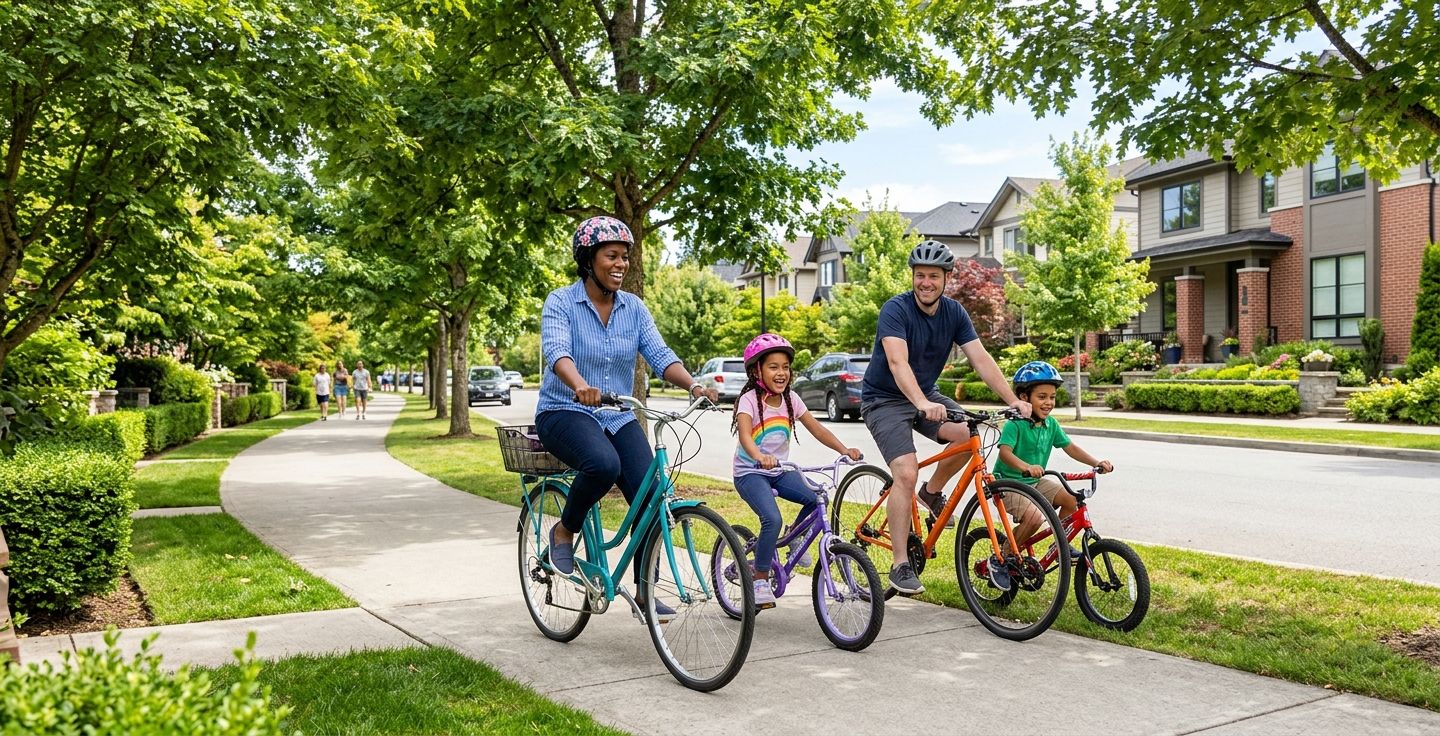
I look at the younger generations raising families today, and my old heart fills with a tremendous amount of joyful hope. You are taking the basic framework we built and you are making it so much better. You are adding lovely community gardens and lush green parks. You are building safe bicycle paths and organizing wonderful local farmers markets. You are making these established neighborhoods far more inclusive and much more environmentally sustainable. You are beautifully adapting our old dream to perfectly fit a brand new century.
The core human desire remains exactly the same today as it was back then. We all want a incredibly safe place to gently rest our heads at night. We all want a kind and friendly neighbor to happily wave to in the bright morning. We all want a supportive community where our precious children can safely grow and truly thrive. That is the true enduring magic of the suburban lifestyle.
It was never really about the total square footage of the house or the absolute perfection of the green lawn. It is always about the wonderful people living inside those houses. It is about the deep personal connections we make with the good folks living right next door. Keep building up your local communities. Keep reaching out a helping hand to your new neighbors. Keep planting those beautiful trees for the next generation to proudly enjoy. The dream is incredibly alive and doing exceptionally well. It is resting safely in your very capable and caring hands.
Questions You Might Have About Our Suburban History
What were the main reasons families originally moved to the suburbs?
Families were desperately looking for open space, quiet streets, and a safe environment to raise their young children. After years of crowded and loud city living, the wonderful promise of a private yard and a brand new home was incredibly appealing to returning veterans.
How did the military benefits change homeownership?
The federal government provided programs that allowed returning service members to buy homes with zero money down and extremely low interest rates. This incredible benefit made buying a brand new house actually cheaper than renting an apartment in the busy city.
Who was responsible for making these new homes so affordable?
Pioneering builders applied factory assembly line methods to residential home construction. By breaking the complicated building process down into simple repeated steps, they could construct beautiful homes incredibly fast and drastically reduce the final purchase price for working families.
What was the typical layout of an early neighborhood house?
The earliest models were very modest and highly functional. They typically featured two small bedrooms, one bathroom, a comfortable living room, and a bright kitchen. Many intentionally included unfinished attics so the growing family could easily expand their living space later.
How did the massive growth of neighborhoods affect automobile ownership?
Because these new developments were located far outside the city transit lines, owning a reliable car became an absolute necessity. This direct need caused automobile sales to completely skyrocket and led directly to the creation of our massive national highway system.
Are these residential communities still growing today?
Yes, they are continually evolving and growing. While the original modest houses are often remodeled or replaced, the fundamental desire for a quiet community space remains incredibly strong. Modern developments now frequently focus on creating walkable spaces and highly sustainable living environments.