
Culture & Traditions
The Story of Tailgating: America’s Portable Neighborhood
Grill Chill And Freedom BBQ T Shirt
Wear your story with pride! Celebrate classic American values, history, and heritage with our premium crafted apparel, designed for comfort and durability.
A Tradition Forged on the Frontier
I have watched the sun rise over cold concrete parking lots more times than I can count. There is a certain kind of magic that happens when the early morning dew is still clinging to the grass and the towering stadium lights are just standing there, quiet and waiting. You pull the car into your assigned spot. You turn off the engine and step out into the crisp, biting air. For a brief moment, everything is perfectly still. Then, you hear the reassuring click of a trunk opening, followed by the heavy rattle of a charcoal bag. In the distance, someone laughs. A truck door slams. It is Saturday morning in America, and our neighborhood is waking up.
We gather in these sprawling asphalt fields week after week, year after year. We set up folding chairs. We light fires. We share our food with complete strangers. It is a ritual that feels as natural to us as breathing. But as I sit back in my old canvas chair and watch the smoke drift up toward the autumn sky, I often wonder about the roots of this tradition. How did a simple parking space become the front porch of our nation? Why do we feel this deep urge to pack up our kitchens, drive to a stadium, and cook breakfast in the cold?
The answer lies deep in our tailgating history. It is a story about the American spirit. It is about making a home wherever you happen to park.
Let me take you back a long way, before massive concrete stadiums and paved lots existed. The true seed of this tradition began out on the dusty, untamed frontier. There was a legendary Texas cattleman named Charles Goodnight (1836-1929). After the bitter years of the Civil War, men were driving massive herds of cattle across endless miles of lonely prairie. It was grueling, bone aching labor. The cowboys were exhausted, hungry, and far from the comforts of any town.
Charles Goodnight saw a problem, and he fixed it with pure ingenuity. He purchased a sturdy military wagon left over from the war. He reinforced the axles and bolted a heavy wooden box to the back end. Inside that box, he stored coffee beans, salted pork, flour, and a heavy cast iron Dutch oven. When he unlatched the hinged door of that box, it folded down to create a flat preparation table. He called it a chuckwagon. 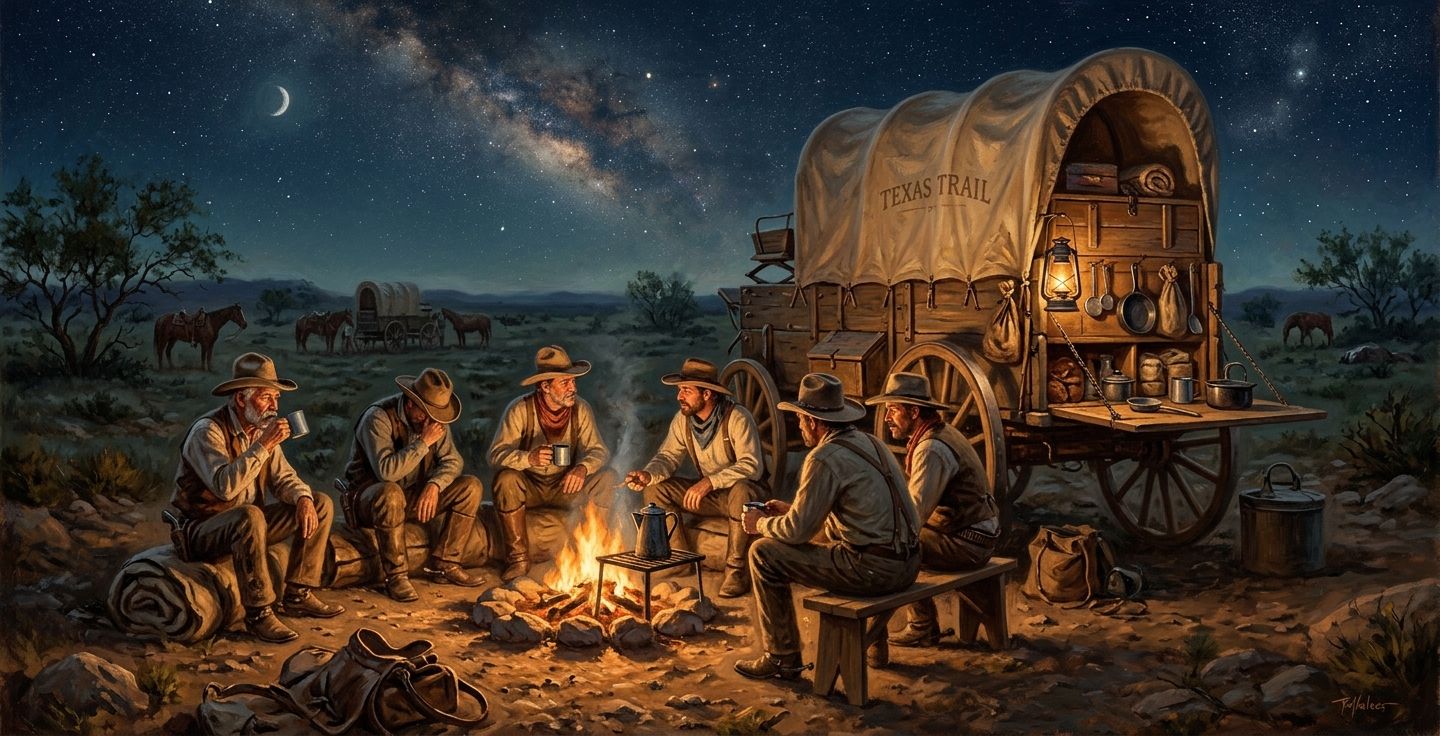
That simple wooden box changed everything. At the end of a long, miserable day of eating dust, the cowboys gathered around the back of that wagon. They smelled the sharp, rich scent of coffee boiling over an open mesquite fire. They told jokes, shared their fears, and found comfort in each other’s company. Goodnight had built a portable neighborhood. That spirit of gathering around the back of a wagon for warmth and friendship is the very foundation of the evolution of tailgating.

Grill Chill And Freedom BBQ T Shirt
Wear your story with pride! Celebrate classic American values, history, and heritage with our premium crafted apparel, designed for comfort and durability.
Grill Chill And Freedom BBQ T Shirt
Wear your story with pride! Celebrate classic American values, history, and heritage with our premium crafted apparel, designed for comfort and durability.
From the Prairie to the Gridiron
Decades later, that same spirit found a new home in the world of sports. In the crisp autumn of 1869, folks traveled to New Brunswick, New Jersey for a very special occasion. It was the first ever college football game, played between Rutgers and Princeton. The fans did not have paved parking lots. They traveled for miles by horse and carriage. They arrived early, tied up their horses, and sat on the back of their buckboards. They wrapped themselves in heavy woolen blankets to fight off the chill. They unpacked baskets of roasted meats and shared warm drinks, enjoying the fellowship of their neighbors before the boys took the field.
You might think this is just a little weekend hobby for a few dedicated fans. The reality is quite staggering. I was reading a report from the Tailgating Industry Association recently, and the numbers are truly remarkable. Every single year, tens of millions of Americans participate in a tailgate. It is a massive economy of coolers, grills, and groceries. But here is the statistic that really warms my heart. According to comprehensive surveys conducted by Quicken Loans and tailgating researchers, roughly thirty to forty percent of people at a tailgate do not even step foot inside the stadium. They do not hold a ticket.
Why would someone drive for hours, set up a heavy grill, and stand in the freezing wind if they are not going to the game? Because they are not there for the football. They are there for the community. They are there for the american tailgating culture. They are seeking out that chuckwagon spirit. In a world where we often do not know the names of the people living next door, the parking lot is the one place where strangers become fast friends.
A Feast for the Senses
When you walk through a bustling lot outside a famous venue like Lambeau Field, Green Bay, Wisconsin, you can feel that magic in the air. The tailgate experience engages every single sense you have. You hear the rhythmic thumping of music mixing with the distant sound of a marching band practicing their scales. You see a sea of colorful team jerseys, bright pop up tents, and flags snapping in the autumn wind. Most importantly, you smell the food.
Over the decades, I have seen our culinary ambitions grow from simple cold cut sandwiches to magnificent feasts. If you are looking for good tailgating food ideas, you have to remember one simple rule. The best food warms the soul and can be eaten while standing up. My personal favorite is a thick, hearty chili. You cook it the night before, letting the spices meld together. You bring it to the lot in a big pot and keep it simmering on a small camp stove. When the wind bites at your face, a steaming bowl of chili feels like a miracle. 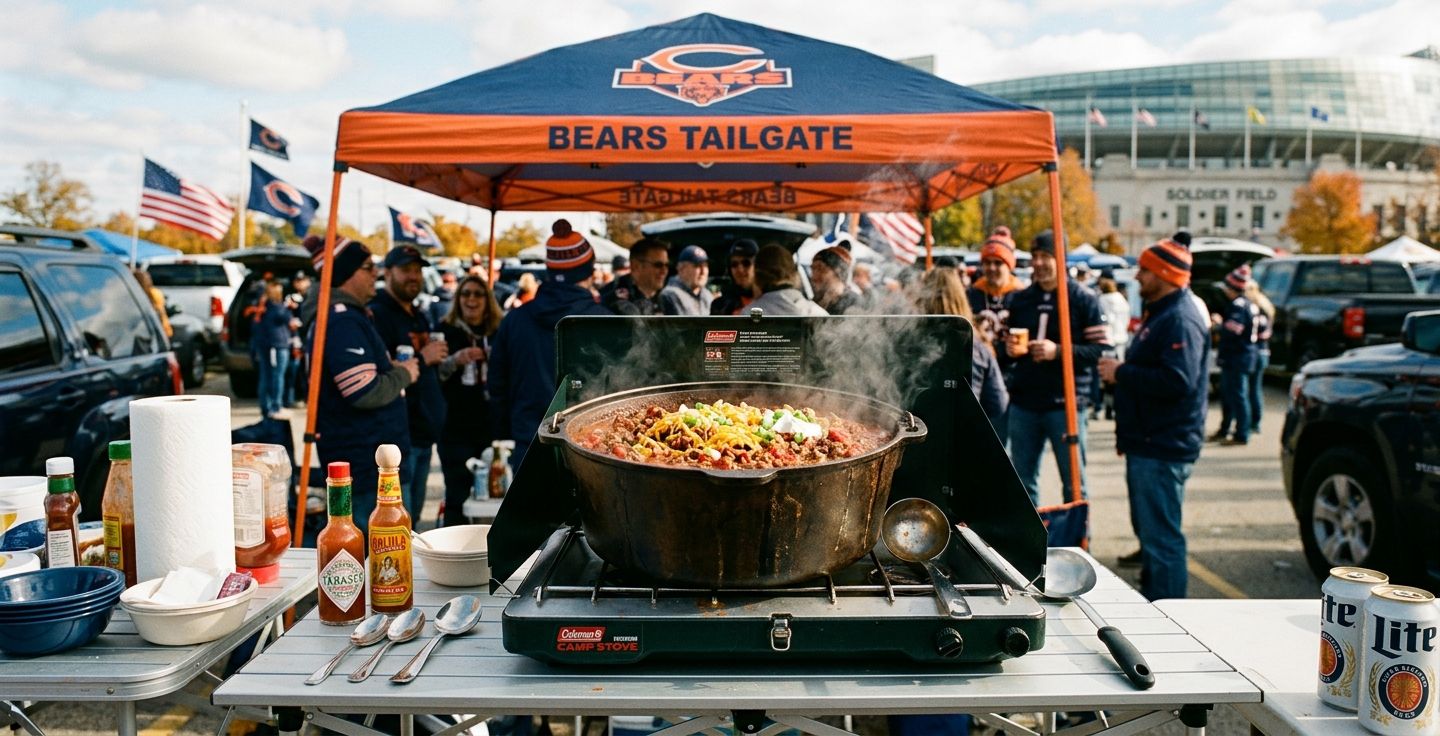
Grilled sausages piled high with caramelized onions and sweet peppers are another reliable favorite. Brisket sliders, smoked slow and low back at the house, always please a hungry crowd. And you must never forget the morning risers. Cracking fresh eggs onto a hot griddle while the sun is still coming up is a beautiful ritual.
Games and Good Company
While the food is settling, the games begin. The best tailgating games are simple, sturdy, and welcoming to all ages. I have seen little girls in oversized jerseys beat grown men at cornhole. It is a game of pure, gentle skill. The solid thud of a canvas bag filled with corn hitting a wooden board is the official soundtrack of a Saturday afternoon. You can hear that rhythmic thumping echoing across the entire lot. Ladder toss is another wonderful pastime, with colorful golf balls wrapping around plastic rungs. But honestly, the finest game of all requires no equipment other than a football. Tossing a ball back and forth between the parked cars, dodging coolers and lawn chairs, brings out the child in every single one of us.
Gathering the Essentials
People often ask me what they really need to bring. The true tailgate party essentials are simpler than you might think. You need a reliable cooler that will hold its ice from sunrise to sunset. A sturdy portable grill is important for making hot meals. A canopy tent is wonderful for blocking the hot sun or a sudden rain shower. Finally, bring heavy duty trash bags to ensure you leave the parking lot spotless.
But the most vital piece of equipment you can bring is a comfortable, sturdy folding chair. Bring an extra one, too. You never know when a neighbor might wander over to compliment the smell of your cooking. Having an empty chair ready is an unspoken invitation. It says that there is room at your table. It says that in this temporary neighborhood, everyone is welcome.
A Future Bright with Fellowship
I look around the lots today and I see a lot of younger folks. They have fancy battery powered speakers and portable satellite televisions. Some traditionalists might grumble about the changes. I do not. I see the exact same light in their eyes that I saw fifty years ago. I see fathers teaching their daughters how to get the perfect sear on a burger. I see college kids sharing what little food they have with the older couples parked beside them.
The tools might change, but the heart remains steady. We are still just a bunch of weary travelers gathering around the back of the wagon, seeking warmth, seeking food, and seeking each other. So, the next time the leaves start to turn and the weekend approaches, do not just stay on your couch. Pack up your car. Make a big batch of your famous potato salad. Drive down to the local stadium. Light the charcoal and watch the smoke drift upward. Introduce yourself to the folks parked beside you. Keep the fires burning, and keep our neighborhood alive.