
American Sports & Pastimes
How Basketball Became a Global Sport From the U.S.
I can still hear the rhythmic echoing thud of a heavy leather ball bouncing on hard maple wood. The floorboards in our neighborhood gymnasium always creaked in the corners. It was a humble place smelling faintly of floor wax, canvas sneakers, and winter sweat. Outside the wind would howl through the bare branches of the oak trees rattling the single pane windows. But inside we were warm. We were just kids in the dead of winter trying to keep our legs moving and our spirits high. We had no idea we were participating in a ritual that would eventually circle the entire earth. For my whole life the simple game of basketball has been a faithful companion. I have shot free throws under the dim flickering lights of local parks. I have sat on the porch listening to college tournaments on a crackling transistor radio. To us it was merely an everyday American pastime requiring only a round ball and a ten foot high iron ring. It felt like our own private neighborhood secret.
The situation back then was quite practical. Young folks needed rigorous physical exercise when the snow piled up too high outside to play baseball or football. The game was literally invented right here on American soil to solve that exact seasonal problem. Yet winter is long and cold in many places around the world. A physical education activity designed for a cramped indoor gymnasium in New England could have easily remained a local oddity. It could have stayed locked inside dusty school gyms played only when the weather turned foul. It was not guaranteed to cross state lines let alone oceans.
This always makes me ponder. How did a simple indoor exercise designed to keep rowdy boys out of trouble become the heartbeat of the modern globe? How did a couple of peach baskets nailed to a wooden balcony transform into a truly global sport that captivates billions?
I was reading the sports section of the morning paper just the other day and the numbers absolutely astounded me. The world has grown so wonderfully connected. According to the International Basketball Federation widely known as FIBA there are currently more than 450 million registered and unregistered players participating in the sport worldwide today. Think about that number. That is more than the entire population of the United States all stepping onto courts to dribble a ball. The National Basketball Association now broadcasts its games to 214 different countries and territories. Those broadcasts are translated into 50 different languages. Today roughly one quarter of the players on professional American rosters were born outside of the United States hailing from over 40 different countries. It is simply remarkable.
Sweet American Summer Bomb Pop T Shirt
Wear your story with pride! Celebrate classic American values, history, and heritage with our premium crafted apparel, designed for comfort and durability.
A Winter Cure in Western Massachusetts
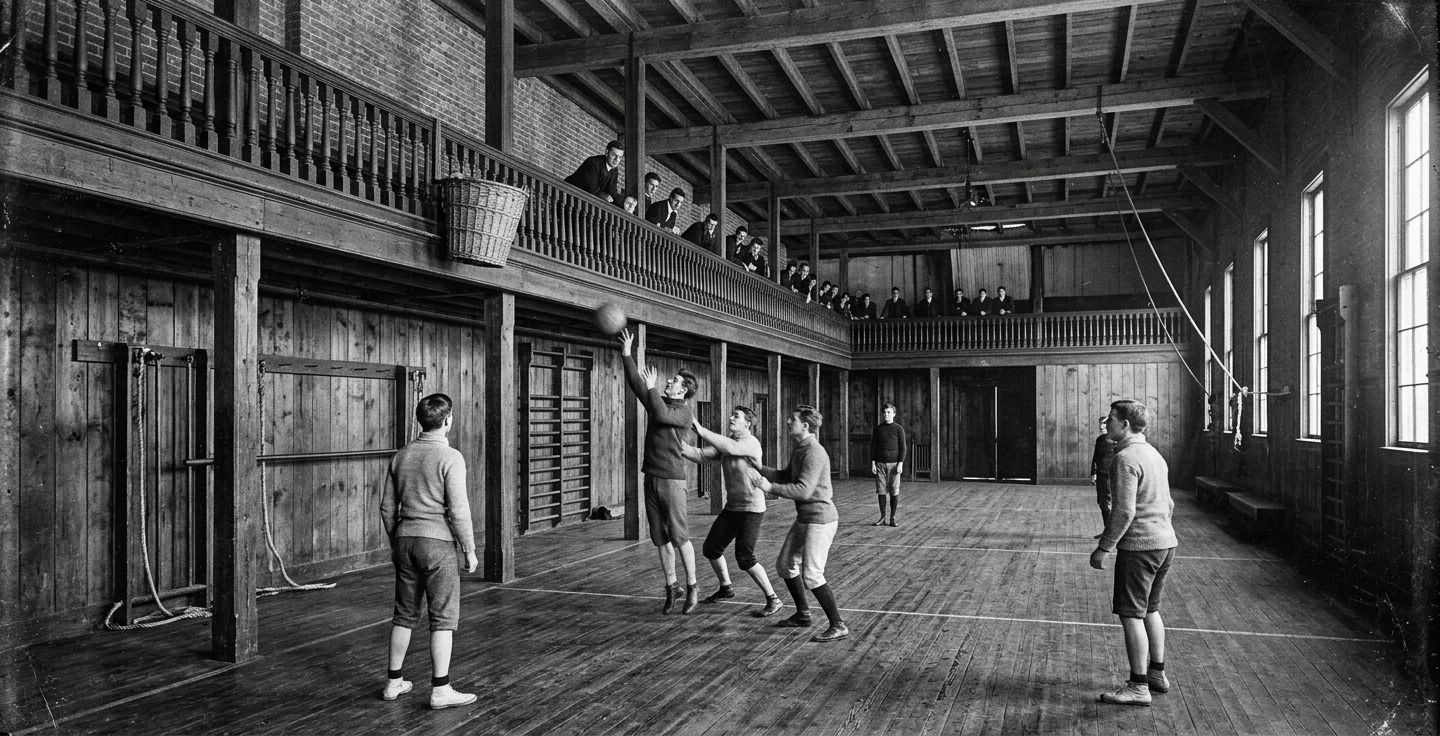
To understand this vast expansion let me take you back to a small freezing gymnasium in the late nineteenth century. The story starts with a physical education instructor named James Naismith (1861 to 1939). He worked at the YMCA International Training School located in Springfield, Massachusetts. In December of 1891 the winter was bitter and unforgiving. Naismith was tasked with managing a particularly rowdy class of young men. They were trapped indoors by the snow completely bored with their usual marching drills and heavy gymnastics. Naismith needed a game that was active but safe for a wooden floor. He asked the building superintendent for some square boxes. The superintendent did not have boxes but he did have two empty half bushel peach baskets.
Naismith nailed those humble peach baskets onto the lower balcony of the gymnasium which happened to be exactly ten feet off the ground. He quickly typed up thirteen basic rules and pinned them to the bulletin board. The very first game was played with a laced soccer ball. It was a chaotic bruising mess of an afternoon. Yet the boys were utterly thrilled. The concept was brilliant in its raw simplicity. Because you could not run with the ball you had to pass it. You had to rely on your neighbor. You had to use teamwork.
One of those original students was a young man named Frank Mahan (1867 to 1905). Mahan was initially a skeptic. He thought it was just another silly gym class invention. He even stole the original typed rules from the bulletin board to keep as a cheeky souvenir. However Mahan quickly fell in love with the play. He eventually returned the stolen rules and suggested the new game be named after its creator. Naismith humbly refused. Mahan then suggested calling it basket ball two separate words back then. That simple name stuck. This small story always reminds me of how monumental things often begin with stubborn kids and very humble beginnings.
Sweet American Summer Bomb Pop T Shirt
Wear your story with pride! Celebrate classic American values, history, and heritage with our premium crafted apparel, designed for comfort and durability.
Sweet American Summer Bomb Pop T Shirt
Wear your story with pride! Celebrate classic American values, history, and heritage with our premium crafted apparel, designed for comfort and durability.
Packing the Ball in a Duffel Bag
The game did not stay trapped in Springfield for long. The young Mens Christian Association was an active international network. Graduates from the training school became missionaries and physical directors traveling to far off places. They carried the rules of the game with them to China India and South America before the dawn of the twentieth century. But the real spark that sent the game across the ocean happened during the devastating years of the First World War.
Thousands of American farm boys and city kids enlisted in the military. They packed their heavy canvas duffel bags boarded massive steamships and headed toward the muddy trenches of Europe. Alongside their rifles their wool blankets and their ration tins they brought deflated leather basketballs. General John J. Pershing (1860 to 1948) strongly believed that competitive sports kept the soldiers physically fit and boosted their morale during incredibly dark times. He encouraged the troops to play whenever they had a moment of peace.
Imagine a young homesick soldier from rural Indiana. He is thousands of miles away from his family resting at a temporary camp near Paris, France. To pass the time he and his squad nail a makeshift wooden hoop to a cracked brick wall. They start shooting around in the dirt. Soon curious local French children gather around the perimeter of the camp. They point at the strange bouncing ball. They watch the graceful arc of a shot. The soldier smiles and waves a young boy over. He hands the heavy leather ball to the child showing him how to flick his wrists. The boy tosses the ball up and it drops through the hoop. They laugh together. They do not share a spoken language but the joy of the game speaks volumes for them both. American expeditionary forces built thousands of these makeshift courts across Europe planting the seeds of a cultural phenomenon in foreign soil.
Cold War Courts and International Growth
Following the Second World War the world grew tense. The atomic age arrived bringing the heavy anxieties of the Cold War. Countries glared at one another across heavily guarded borders. Yet international sports miraculously remained an open bridge of communication. The International Olympic Committee had officially added the sport as a medal event in 1936 but it was during the 1970s and 1980s that international competition grew fiercely proud. Nations like the Soviet Union and Yugoslavia built massive highly disciplined athletic programs.
They studied our American game meticulously. They developed their own distinct styles. While American players focused heavily on individual athleticism power and vertical leaping the international teams focused deeply on perimeter shooting constant motion and unselfish passing. Consider Alexander Gomelsky (1928 to 2005) the legendary head coach of the Soviet national team. Known affectionately as the silver fox Gomelsky traveled the world observing coaching tactics. He respected the American roots of the game deeply but he drove his players to beat us. The intense rivalry pushed everyone to be sharper. It proved that the sport no longer belonged solely to the country that invented it.
The Spark That Lit the World
Everything culminated in the beautiful summer of 1992. The international rules were finally adjusted to allow professional athletes to compete in the Olympic games. The United States assembled what would forever be known as the Dream Team. They traveled to Barcelona, Spain playing in the magnificent Palau Sant Jordi arena. I vividly remember sitting in my favorite armchair watching the television broadcasts with wide eyes. It was pure magic unfolding on the screen.
Head coach Chuck Daly (1930 to 2009) guided a legendary roster of absolute superstars. They played with a level of grace power and overwhelming skill that the world had never witnessed before. The games were not truly contests. They were grand exhibitions of athletic perfection. Opposing players from other countries would literally ask for photographs and autographs right before the opening tip off. The team dominated the tournament but their real victory was cultural.
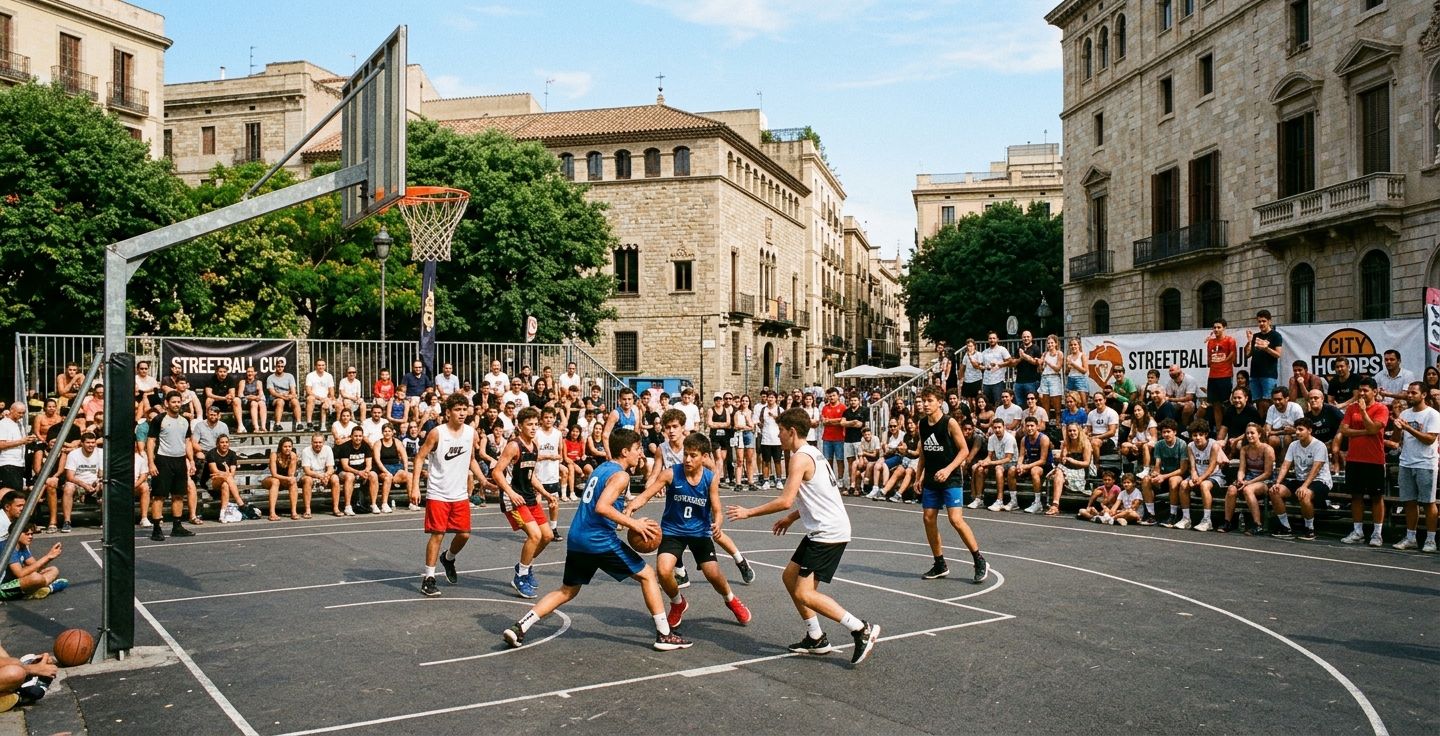
The team did not just win a gold medal that summer. They launched a massive unstoppable global obsession. A young boy living in a German apartment watched those games. A teenager in Argentina watched them. A child in China watched them. They all walked outside the very next morning and tried to mimic the smooth fadeaway jumpers and the flashy no look passes they had seen on television. The sport exploded on an unprecedented scale inspiring an entire generation of international youth to pick up a ball and start practicing in their driveways and local parks.
A Beautiful Future For the Game
When I look at the state of the game today my chest swells with immense pride and hope. The very best players in the American professional leagues are now frequently young men born overseas. We watch incredible talents from places like Serbia Greece Slovenia and Cameroon. They bring a fresh joy a high basketball IQ and a unique skill set that breathes wonderful new life into our old gyms. They learned the fundamentals watching us and now they are teaching us new ways to appreciate the sport.
The journey has come completely full circle. We gave the world a simple practical winter pastime to keep the blood flowing. The world has generously given us back a beautiful complex and highly elevated art form. The future of this game is incredibly bright resting safely in the hands of millions of diverse young athletes who share a common love for the swish of the net.
I would like to ask you to do something meaningful this week. Take a slow walk by a local park in your town. Stop for a moment and just listen to the rhythmic bounce of the ball on the asphalt. Watch the kids playing together. Notice how they communicate effortlessly without exchanging a single word. Better yet pick up a ball yourself. Step onto the court and show a young person how to square their shoulders and shoot a free throw. Share a bit of this rich history with them. Remind them that every great worldwide movement starts with something incredibly small.
Questions You Might Have About Our Beautiful Game
Why did James Naismith choose peach baskets instead of regular hoops?
Did the basketball always look the way it does today?
How did the 1992 Olympics change international basketball?
In the end the journey of this wonderful sport is a reminder of how connected we all really are. From a freezing gymnasium in Massachusetts to the dusty trenches of France and all the way to the massive glowing arenas of modern international competition the bouncing ball has been a constant thread tying diverse people together. The simple rules of teamwork practice and joy remain unchanged. So I leave you with this thought to ponder. If a simple peach basket and a leather ball can cross oceans to unite the world what other small everyday ideas do we have today that might bring our future generations closer together?