
American Lifestyle
How the Suburbs Rewrote the American Family
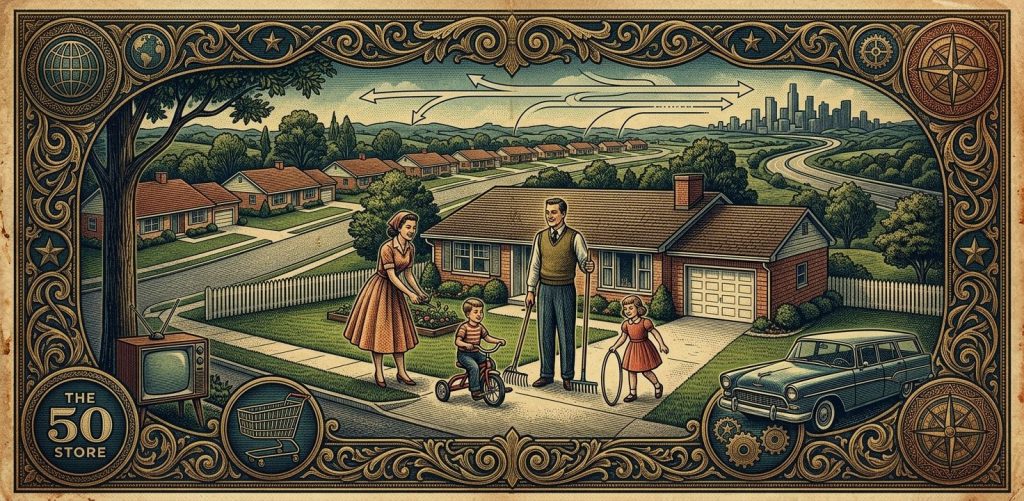
I remember the smell of Sunday afternoons in the city when I was a very young boy. The air in our apartment building was always thick with roasting garlic, damp wool coats, and the sound of a dozen overlapping conversations echoing down the narrow hallways. It was the late nineteen forties. We lived with my grandparents, my parents, my older sister, and an unmarried aunt, all squeezed into a handful of modest rooms. We did not have much money in the bank. However, we had each other. We lived practically on top of one another. The stone stoop out front was our true living room. The cracked concrete sidewalk was our playground. We knew everyone on the block by their first names. We knew who was sick, who was celebrating, and who needed a pot of soup brought over. The American family back then was a dense, tangled web of relatives and neighbors constantly leaning on one another.
The Great Migration to the Suburbs
Then the great war ended. A massive wave of young men came home in uniform, carrying a deep, aching yearning for peace, quiet, and a piece of land to call their own. Our country was about to experience the post-war boom, a period of rapid economic growth and explosive housing expansion that would completely reshape the map of the United States. Fields and farmlands at the edges of our cities were suddenly paved over to make way for thousands of identical roofs.
But we did not just redraw the map. We rewired the human heart. We fundamentally changed how we defined a family.
To truly understand how this happened, we have to look at the numbers. They are quite staggering when you see them laid out. I recently read some historical reports from the United States Census Bureau, and the sheer volume of the migration still shocks me today. Between nineteen forty seven and nineteen fifty three, the suburban population in the United States grew by an astonishing forty three percent. Millions of people packed up their city lives. By the time we reached the year nineteen sixty, a full one third of all Americans lived in the suburbs. Pew Research Center historical data highlights an even more profound shift inside our living rooms. Back in the nineteen forties, multi-generational households were the standard for many families. Grandparents helped raise the babies. By the time we reached nineteen eighty, the rate of families living with multiple adult generations under one roof had plummeted to a historic low of just twelve percent.
How did moving from crowded city blocks out to quiet green lawns change the very soul of our households? How did the promise of a private backyard rewrite the rules of who we loved and how we took care of each other?
Uncle Arthur and the Quarter Acre Dream
Let me tell you a story about my Uncle Arthur and Aunt Helen to answer that.
Arthur was a brilliant mechanic, a quiet, sturdy man who survived the brutal beaches of Normandy. When he returned home, he married Helen, and they dreamed of a life far away from the clatter of the elevated trains and the soot of the city windows. In nineteen fifty, they bought a brand new house in a development modeled directly after the famous Levittown, New York. The pioneer of this suburban model, William Levitt (1907-1994), had realized that you could build houses the exact same way Henry Ford built cars. You could mass produce the American Dream on an assembly line of concrete slabs and timber.
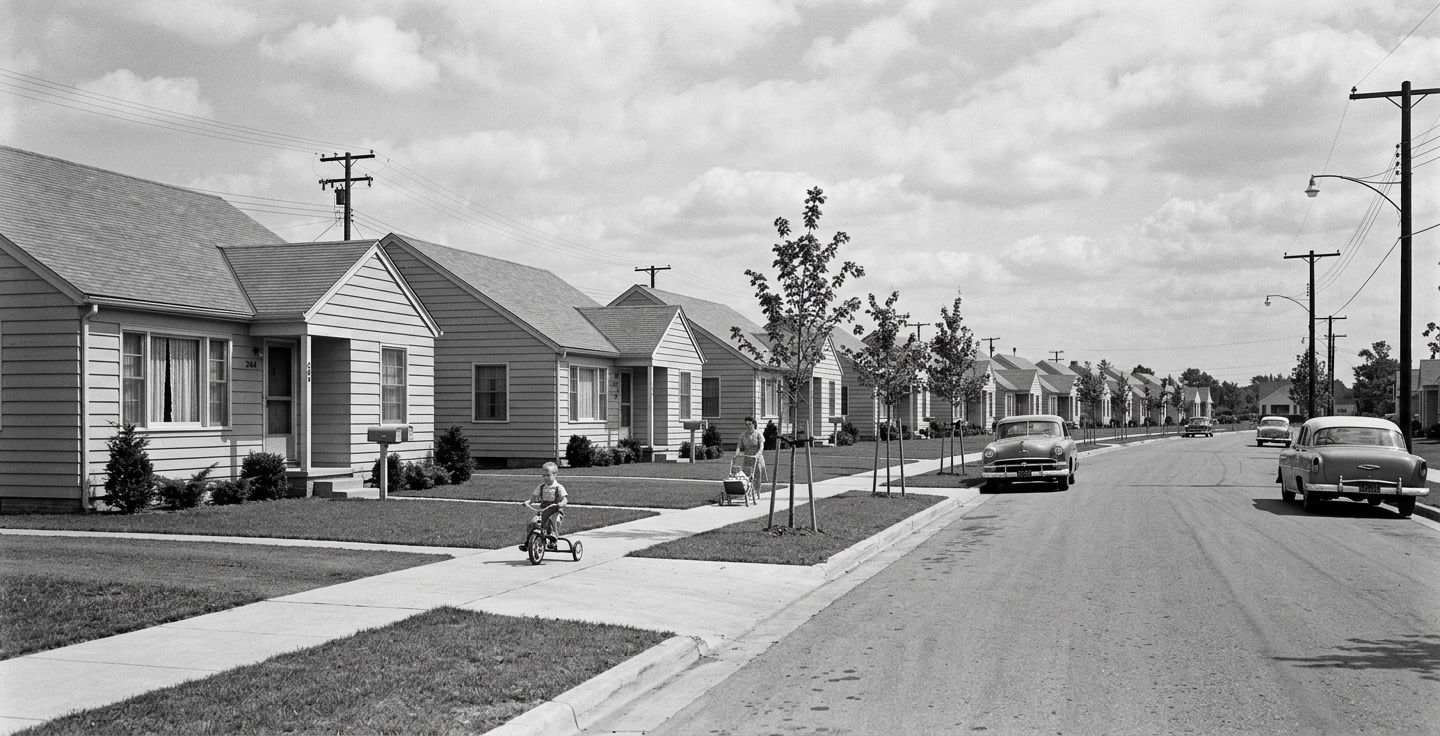
Arthur and Helen packed up a borrowed truck and drove an hour away from the city limits. They were absolutely thrilled. They had a paved driveway, a sparkling modern kitchen with a shiny new washing machine, and a patch of green grass entirely their own. It felt like paradise.
But a few months later, the bitter winter set in. The quietness of the neighborhood became deafening. Back in the city, if Helen needed a cup of sugar or a spare set of hands to watch the baby while she cooked, my grandmother was just in the next room. My aunt was right down the hall. Now, Helen was alone in a house with a crying infant while Arthur drove his car a long distance to work. The grandparents were a whole hour away. The cousins were gone. The built-in village had vanished.
This was the true birth of the nuclear family as the center of American society. A mother, a father, and their children, living in a self contained, isolated unit. It was a beautiful dream of independence. However, it also required a tremendous amount of self reliance. Arthur and Helen had to be absolutely everything for each other. They had to be the babysitters, the entertainers, the financial safety nets, and the emotional support systems. The sprawling, messy village of aunts and neighbors had been replaced by the sturdy, isolated island of the suburban home.
From the Front Porch to the Backyard
The architecture of the suburbs itself changed our daily habits. In the city, or in older rural towns, houses were built with wide, welcoming front porches. You sat on the porch after dinner as the sun went down. You watched the neighbors walk by. You exchanged local gossip. You kept a watchful eye on everyone else children playing in the street. The porch was a bridge between the private home and the public world.
The new suburban houses flipped this architectural design entirely around. The focus of the home moved to the private backyard.
Tall wooden fences went up. Concrete patios were poured in the back. We retreated into our own private sanctuaries. We gained incredible peace, quiet, and privacy. But we lost the incidental socializing that naturally binds a community together. You do not accidentally bump into a neighbor when you are sitting quietly in a fenced backyard. You have to make a formal appointment. You have to send a printed invitation. Family life became something that happened entirely indoors, or safely behind closed wooden gates, away from the eyes of the rest of the world.
The Automobile and the Loss of the Local Village
The automobile greatly accelerated this isolation. Before the war, you walked to the corner store. You saw the grocer, the butcher, the baker on a daily basis. You walked to your local church. You walked your children to the neighborhood school.
Then, visionary leaders like Dwight D. Eisenhower (1890-1969) championed the creation of the massive Interstate Highway System. It was a true marvel of modern engineering that connected the vast country from coast to coast. But it also fed directly into the rapid expansion of suburban sprawl. We moved further and further away from the dense commercial centers. Suddenly, you needed a car just to buy a simple loaf of bread. You needed a car to see your best friends. You needed a car to visit your aging parents.
Think about the sprawling, endless roads of Detroit, Michigan, the very beating heart of the automobile industry. The car gave us unparalleled physical freedom to explore. It also meant that our daily lives were increasingly spent in transit, enclosed in silent metal boxes, rather than walking shoulder to shoulder with our fellow neighbors. We stopped gathering on main street and started driving to massive, impersonal shopping malls.
A New Hope for the Modern Neighborhood
The family dinner table became the only place where people actually paused to look each other in the eye. The pressure on the parents to provide a perfect, happy life entirely within those four walls was immense. They worked hard, incredibly hard, to give their children a beautiful, safe slice of the world. I honor their incredible hard work. I know exactly what they sacrificed to give us those green lawns.
Yet, as I look around at the world today, I feel a profound, overwhelming sense of warmth and optimism. I watch the generations that followed us, the folks in their thirties and forties today who are currently raising their own children. You are doing something absolutely wonderful. You are taking the very best parts of the suburban dream and you are actively fixing the parts that left us feeling alone.
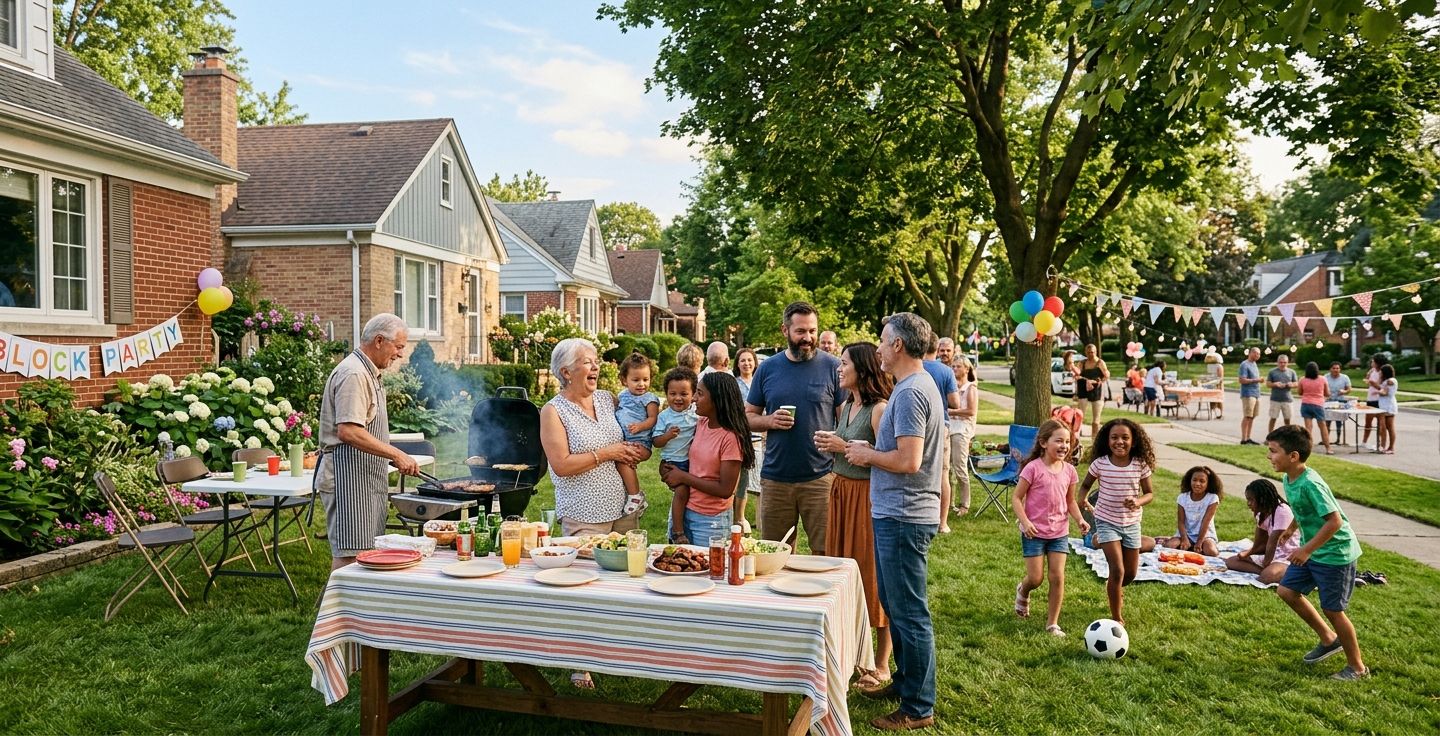
I see you planting beautiful front yard gardens instead of hiding in the back. I see you walking up driveways, knocking on doors, and introducing yourselves to new neighbors. You are actively, intentionally rebuilding the community connection that we accidentally left behind when we paved the endless driveways.
You recognize that raising small children, caring for aging parents, and simply getting through the exhausting work week is far too heavy a burden for just two adults to carry alone. You are bravely tearing down the invisible fences.
Even more beautifully, I see a gentle return to the old ways, beautifully modernized for today. The deeply rooted concept of generational living is making a very welcome comeback. I see younger families building small, comfortable cottages in their backyards for their aging parents. I see siblings coordinating to buy houses on the very same street. You are consciously choosing closeness over total independence. You are choosing to rebuild the village.
You have the incredible wisdom to know that true wealth is not just owning a square plot of land. True wealth is having wonderful people to share the harvest with. You are looking at the vast suburban landscape and asking how it can bring us together instead of keeping us apart. That beautiful realization fills an old heart like mine with immense hope for the future. We built the houses, but you are figuring out how to turn those quiet neighborhoods back into real, breathing communities.
Here are a few questions I often hear when people talk about this incredible shift in our shared American story.
Why did the nuclear family become so popular in the suburbs?
Are we seeing a return to older family structures today?
How can we build stronger communities in modern suburban neighborhoods?
A Look Back to Move Forward
The great migration to the suburbs was one of the most massive demographic changes in American history. We left crowded cities for quiet streets and private yards. In doing so, we gained independence and homeownership, but we accidentally traded away the daily, built in support of extended families and close knit neighbors. The sudden rise of the isolated household changed how we lived, how we socialized, and how we traveled.
Yet, the story does not end there. The beautiful thing about the American family is our enduring ability to adapt and grow. Today, we are learning to perfectly blend the safety and comfort of the suburbs with the warmth and support of the traditional village. We are reaching out, breaking down the walls of isolation, and choosing connection.
What is one small thing you can do this week to turn your street into a true neighborhood?