
American Sports & Pastimes
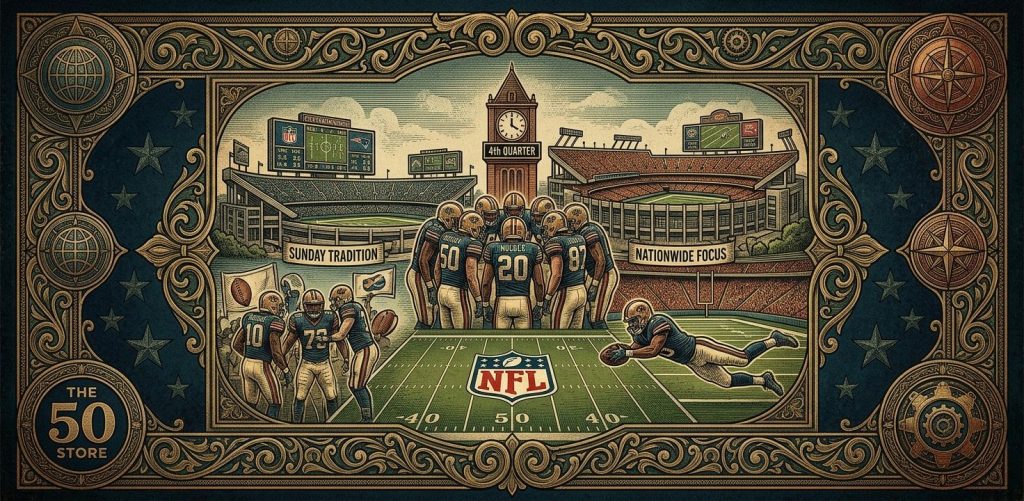
What Makes the NFL Different From Other Leagues
Grill Chill And Freedom BBQ T Shirt
Wear your story with pride! Celebrate classic American values, history, and heritage with our premium crafted apparel, designed for comfort and durability.
The Rhythm of the American Autumn
The air turns crisp. The leaves begin to brown. A familiar rhythm settles over our towns. You can smell woodsmoke in the evening breeze. You can feel a sudden chill that tells you summer has finally closed its doors. It happens every autumn. For as long as I can remember, this season brings a shift in the way we live our lives. We put away our garden tools. We pull our heavy coats from the back of the closet. And we gather around our screens and our radios.
We are a nation that loves our sports. Baseball gives us the gentle, daily hum of summer. It is the radio playing softly on the porch while you sit in the shade. It is a constant, comforting background noise. Basketball is the squeak of rubber on wood, a high wire act of athleticism that brightens the dark winter evenings. Hockey is the roar of the crowd behind thick glass, a glorious display of speed and grit. They all have their special place in our hearts.
But then there is Sunday in the fall. The world simply stops. Streets empty out. Grocery stores go quiet. Church pews clear out just in time for the early kickoffs. It is a phenomenon I have watched grow from a modest pastime into a grand national tradition.
We have so many choices today. We have endless streams of entertainment, thousands of channels, and leagues from all over the world demanding our attention. Yet, when the autumn winds blow, one single entity rises above the noise. It dominates our conversations at diners, barbershops, and office water coolers.
What makes the NFL so different from the rest? Why does this one league hold our massive, diverse country together on chilly afternoons? The answer is not just about the game itself. It is a rich mixture of brilliant planning, historical accidents, and a deep understanding of the American spirit.

Grill Chill And Freedom BBQ T Shirt
Wear your story with pride! Celebrate classic American values, history, and heritage with our premium crafted apparel, designed for comfort and durability.
Grill Chill And Freedom BBQ T Shirt
Wear your story with pride! Celebrate classic American values, history, and heritage with our premium crafted apparel, designed for comfort and durability.
A Staggering Cultural Monopoly
Before we look at the history, you have to look at the sheer scale of it today. The numbers tell a profound story. Did you know that in the year 2023, professional football broadcasts made up ninety three of the top one hundred most watched television programs in the United States? That is staggering. According to Nielsen ratings, a highly credible source for television viewership, this is a level of dominance we have never seen before in modern media. That list includes everything. It includes major news broadcasts, glamorous award shows, and popular sitcoms.
Furthermore, the league generates nearly twenty billion dollars in annual revenue. Forbes and other financial watchdogs confirm that it outpaces every other sports league globally by a very wide margin. It is an absolute cultural monopoly. But these massive numbers do not explain the soul of the game. They only prove that the soul resonates with nearly all of us.
The Power of Scarcity
If you play professional baseball, you step onto the diamond one hundred and sixty two times a year. If you lose on a Tuesday, you simply lace up your cleats and try again on Wednesday. Basketball and hockey teams play eighty two games. The sheer volume of games makes a single loss feel like a minor bump in a very long road.
The football season is incredibly short. For decades it was a fourteen game sprint. Then it became sixteen. Today, teams play seventeen regular season games. Every single week is a precious commodity. Every game feels like a heavyweight championship fight. If your team loses on Sunday, you have to sit with that ache for an entire week. You read about it in the paper. You debate it with your neighbors over the fence.
This scarcity creates immense urgency. You cannot take a week off from watching, or you might miss the turning point of the entire season. It turns a simple sporting match into an undeniable, mandatory event.
The Origins and the Structure
A Quiet Street in Canton
Let us take a step back in time. Great things often start in the most unassuming places. We think of modern stadiums as towering steel palaces. But the foundation of this league was built in a cramped room.
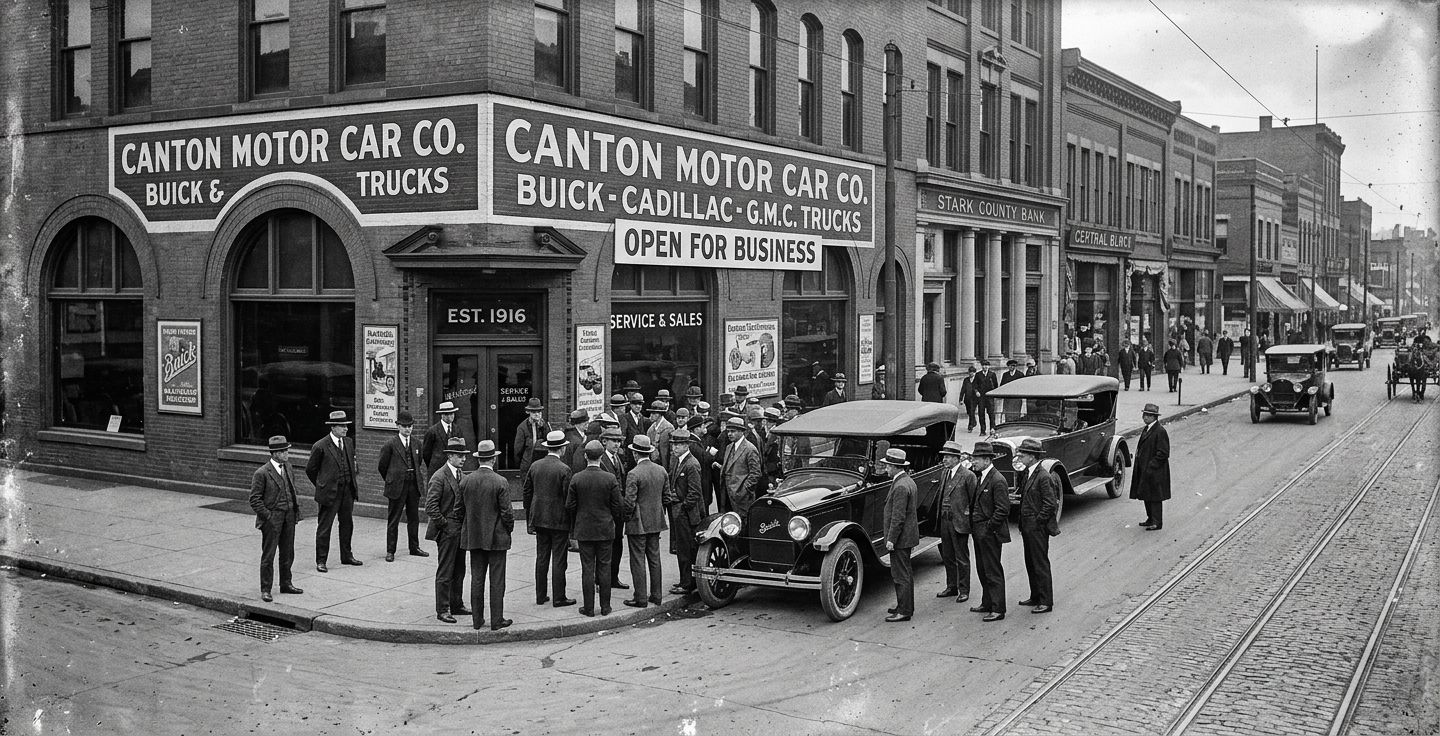
The year was 1920. September in Canton, Ohio was much like it is now, quiet and industrious. A man named Ralph Hay owned a Hupmobile auto dealership on a modest street corner. He invited representatives from various regional football clubs to a meeting.
It was a sweltering day. They did not even have enough chairs in the showroom for everyone to sit. So, these rugged men, dressed in their heavy wool suits, sat on the running boards of the shiny new cars. They drank warm beer from a bucket. They debated the rules and the structure of a new organization.
Right there, sitting on a car bumper, they elected the legendary Jim Thorpe (1887-1953) as their first president. Thorpe was a magnificent athlete, perhaps the greatest the world had ever seen at that time. He had won Olympic gold medals. He played professional baseball. He was a force of nature. By electing him, they brought instant credibility to the room. The newspapers had to pay attention because Jim Thorpe was involved. From that humble auto showroom, an empire was born. They started something that outlived them all. Whenever I watch a game broadcast in high definition today, I like to think about those men sweating in Ralph Hay’s dealership.
The Engine of Hope
Beyond the history, there is a structural brilliance to the league. In many sports, the richest clubs historically bought the best players. They built dynasties that lasted for decades while smaller clubs suffered in the basement. The professional football league chose a different path. They embraced a vital concept called parity.
They wanted the fan in a working class town to have the exact same hope as the fan in a massive coastal city. To understand how this happened, you have to know about a visionary named Pete Rozelle (1926-1996). When Rozelle took over as commissioner in 1960, the league was fractured. Teams in big markets were securing lucrative local television deals, while small market teams were struggling to survive.
Rozelle did something unprecedented. He went to Washington D.C. and convinced Congress to pass the Sports Broadcasting Act of 1961. This allowed the league to pool its television rights and share the money equally among all the teams. It was a revolutionary idea. The giants of New York agreed to share their wealth with the smallest towns.
Because of Rozelle, a team owned by the citizens of a freezing little city like Green Bay, Wisconsin can compete directly with the billionaires in Los Angeles or Dallas.
Then came the modern salary cap. Every single team is allowed to spend the exact same amount of money on their roster. Nobody can buy a championship. Furthermore, the draft system ensures that the worst team from the previous year gets the first pick of the new college talent. It is a brilliant, self correcting engine of hope. You can be at the absolute bottom today, and you can hold the championship trophy three years from now. Every summer, every fan base believes this will be their year.
Human Chess on a Grass Board
Many folks who do not watch American football think it is just a brutal clash of large men. But it is actually a game of profound intellect. It is human chess played at violent speeds. Every play is a highly coordinated dance involving twenty two people doing very specific jobs.
We owe much of this strategic depth to a man named Paul Brown (1908-1991). He started his coaching career at a high school in Massillon, Ohio. Brown treated the sport like an academic discipline. He treated his players like students. He was strict, but he was profoundly fair. He wanted his boys to understand the geometry of the field.
Before Paul Brown, coaching was chaotic. Brown invented the written playbook. He gave players classroom tests. He invented the draw play to counter aggressive defensive linemen. It was an accident born of a missed block, but his genius was recognizing it and writing it down. The playbook became the sacred text of the team. He was even the first to put face masks on helmets to protect the boys on the field. Back in the 1950s, he secretly placed a radio transmitter inside his quarterbacks helmet so he could call plays directly from the sideline.
Brown brought order and extreme tactical precision to the sport. Because of his innovations, watching a game today is a cerebral exercise. You sit on your couch, trying to guess the next move, reading the defenses, and analyzing the clock.
The Joy of the Gathering
Finally, we must talk about the ritual. The game itself is only half the experience. The rest is about the people we share it with.
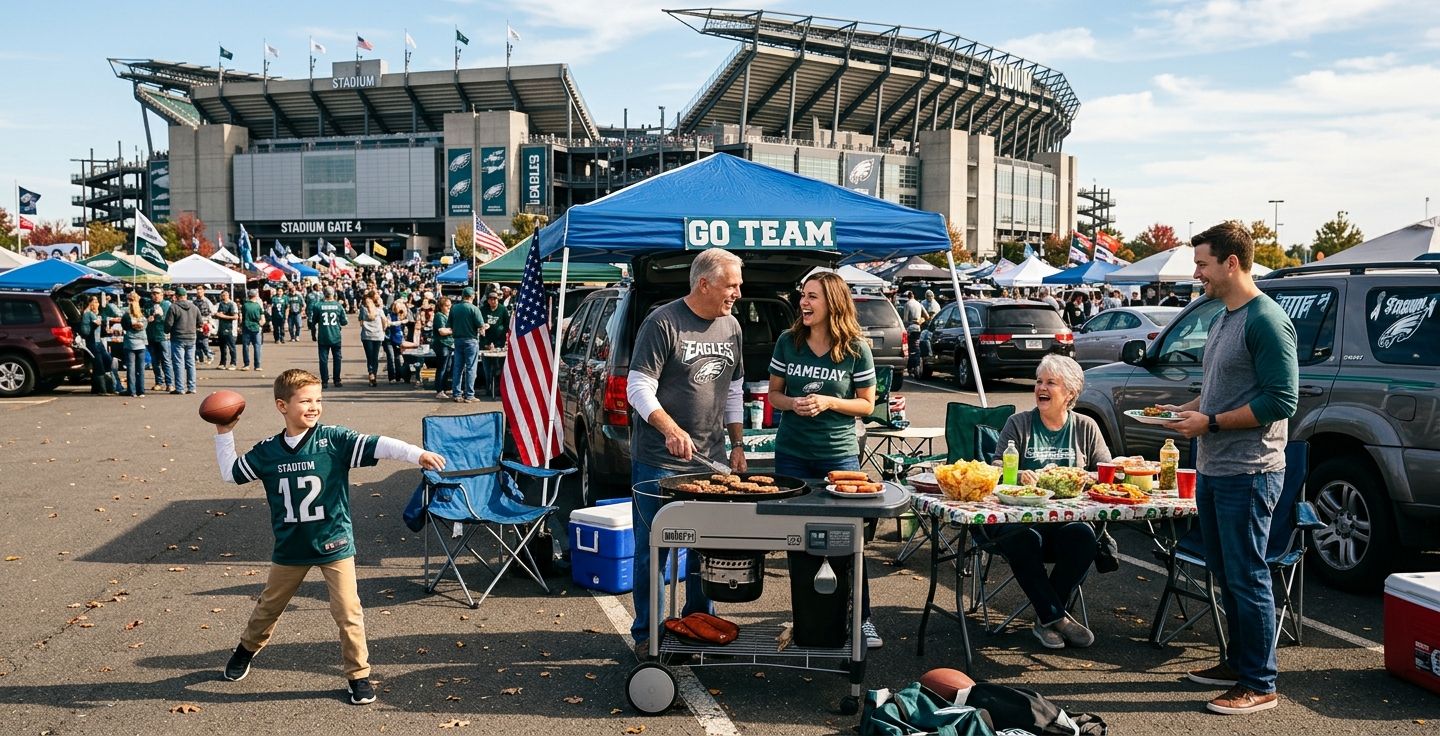
Tailgating is a distinctly American tradition. Hours before the gates open, parking lots across the country fill with pickup trucks and folding tables. You smell charcoal smoke mixing with the crisp autumn air. You hear music. You see neighbors sharing food with complete strangers. You see people of all walks of life. The bank manager is sharing a plate of ribs with the mechanic. The differences in our daily lives melt away when we wear the same jersey. It is a massive, decentralized family reunion that happens every single Sunday.
It is a place where generations meet. I remember listening to games on a scratchy AM radio with my father. Now, I see young children tossing a worn leather ball between parked cars, wearing the same team colors their grandparents wore. There is so much warmth in those moments. It gives me incredible hope for the future. As long as we have these simple traditions to bind us together, to give us a reason to gather and cheer, our communities will remain strong. The youth will carry these traditions forward, adding their own memories to the tapestry.
Questions We Often Hear on Sunday Afternoons
As you sit on the porch talking sports, you often hear the same curious questions from new fans. Here are a few things people always seem to wonder about.
Why does the professional football league only play one game a week?
The sport is incredibly physically demanding. Players need a full week to rest, heal their bodies, and prepare mentally for the next highly strategic opponent. This recovery time naturally creates the weekly Sunday event we all love.
How does the college player draft ensure fairness?
The draft system is strictly ordered backward based on the standings of the previous season. The team with the worst record is granted the very first choice of incoming amateur players. This helps struggling teams rebuild quickly and maintains a competitive balance across the country.
What makes the final championship game so immensely popular?
It is a single elimination spectacle. Unlike baseball or basketball which use a long series of games to determine a champion, football relies on one definitive match. The winner takes all in a single evening, which creates unmatched drama and turns the broadcast into a massive national holiday.
A Timeless Tradition
To summarize our journey, this league stands apart because it relies on the scarcity of a short season to make every game matter. It uses financial parity and a strict draft system to ensure every city has a fair chance at glory. It blends brutal physical exertion with the brilliant tactical legacy of pioneers like Paul Brown. And most importantly, it gives us a reason to gather around a tailgate grill or a living room television with the people we love.
We live in a fast moving world. Things change before we even have time to understand them. The technology in our pockets would look like pure magic to the men who sat on those running boards in Ohio. The stadiums are larger, the screens are brighter, and the athletes are faster. But a beautiful pass spiraling through a crisp November sky remains exactly the same today as it was fifty years ago. The rules have evolved, but the heart of the contest is untouched. It is a test of will, a test of strategy, and a brilliant display of human cooperation.
So, as the leaves begin to fall next season, ask yourself: which cherished Sunday tradition will you pass down to the young fans in your life to keep the spirit of the game alive?