
American Lifestyle
What Weekend Life Looks Like in America
Grill Chill And Freedom BBQ T Shirt
Wear your story with pride! Celebrate classic American values, history, and heritage with our premium crafted apparel, designed for comfort and durability.
The Dawn of the Rest Day
The light hits the front porch differently on a Saturday morning. I have sat on this same porch for decades, watching the neighborhood wake up. There is a distinct quiet, a brief pause between the frantic rush of Friday evening and the lawnmowers of Saturday afternoon. The air smells like fresh coffee and damp grass. Down the street, a newspaper lands on a driveway with a soft thud. A dog barks in the distance, answered by the cheerful call of a morning bird. These fleeting moments remind me of the countless weekends I have witnessed, from the days of my youth when we rode bicycles until the streetlights came on, to the present day where my grandchildren visit. We live in a large, bustling country. Our lives are busy. Our days are full of responsibilities. Yet, the weekend remains a sacred space in our calendar. It is a time we set aside to breathe. It is a deeply personal treasure that we all share.

Grill Chill And Freedom BBQ T Shirt
Wear your story with pride! Celebrate classic American values, history, and heritage with our premium crafted apparel, designed for comfort and durability.
Grill Chill And Freedom BBQ T Shirt
Wear your story with pride! Celebrate classic American values, history, and heritage with our premium crafted apparel, designed for comfort and durability.
How We Built the Weekend
If you walk down the older streets of Dearborn, Michigan today, you might still feel the echoes of a profound shift in American life. In the early days of the twentieth century, the factories hummed relentlessly. The scent of hot steel and machine oil was a constant presence. Men and women worked six, sometimes seven days a week. There was no real concept of leisure time. Life was a continuous cycle of labor and exhaustion. But then, a businessman named Henry Ford (born 1863, died 1947) looked at his workforce and made a decision that rippled across the nation. In 1926, he shut down his automotive plants on Saturdays and Sundays. He did not do this entirely out of charity. He understood a simple truth. If people had time off, they would travel. They would buy clothes. They would buy the very automobiles they were building. This single act essentially birthed the two day weekend. It transformed the American worker into the American consumer and explorer.
The Modern Complication
Yet, our modern era has brought a new set of complications to this sacred time. The clear boundaries we fought so hard to establish are slowly fading away. It is easy to assume that everyone is resting, but the reality tells a different story. According to the Bureau of Labor Statistics, an agency that carefully measures our employment habits, nearly thirty one percent of all employed Americans now work on the weekends. That is an astonishing figure. Nearly one third of our neighbors are serving coffee, running hospitals, stocking shelves, or answering emails while the rest of the world rests. Furthermore, the American Time Use Survey reveals a fascinating and somewhat surprising statistic about how we spend our remaining free hours. On average, Americans spend nearly half of their daily weekend free time, about three hours, watching television or looking at digital screens. We have traded the front porch for the glowing screen in our living rooms. We are more connected to the entire world, yet sometimes we forget to look at the people sitting right next to us.
Have We Lost Our Rest?
This brings us to a vital question. Have we lost the true essence of our weekend? Are we slowly giving up the peace that our ancestors worked so hard to secure for us? When the cell phone rings on a Sunday afternoon with a message from the office, it is easy to feel discouraged. It is easy to think that the golden age of American weekends has passed us by. When you see children staring at tablets instead of climbing trees, you might wonder if we have forgotten how to play. You might wonder if the relentless pace of our modern economy has finally consumed the last stronghold of our rest. It is a question that weighs heavily on the hearts of many who remember a simpler time.
The Heartbeat of Saturday
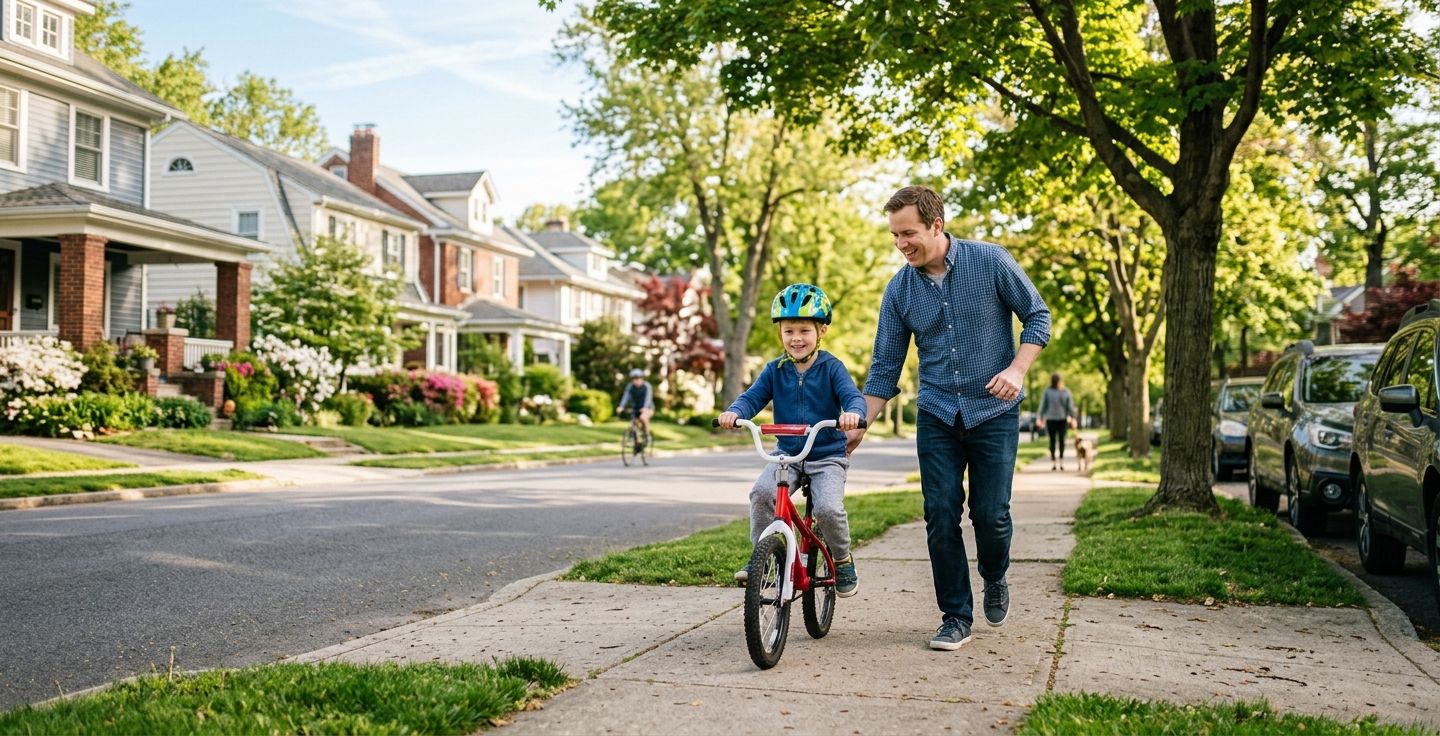
But then I look closely at my own neighborhood, and I realize the truth. We have not lost our weekend. We are simply navigating a new chapter. The spirit of the weekend is incredibly resilient. On any given Saturday morning, the energy is undeniable. It begins early with the migration of minivans to the local soccer fields. You can hear the shrill blow of the referee whistles and the cheers of parents huddled around thermoses of hot coffee. These weekend routines are the glue that holds our communities together. After the games, there is the inevitable trip to the hardware store. Aisles are filled with folks holding paint swatches and comparing garden hoses. There is a beautiful optimism in a Saturday hardware store trip. It is the belief that we can fix things, that we can improve our homes, that we can create something lasting with our own two hands. We still gather in backyards to barbecue. We still lean over fences to chat with our neighbors about the weather and the local high school football team. It is a joy to see the local bakery bustling with neighbors buying fresh rolls for breakfast. The methods may have changed, but our deep desire for connection remains strong.
Green Spaces and Breathing Room
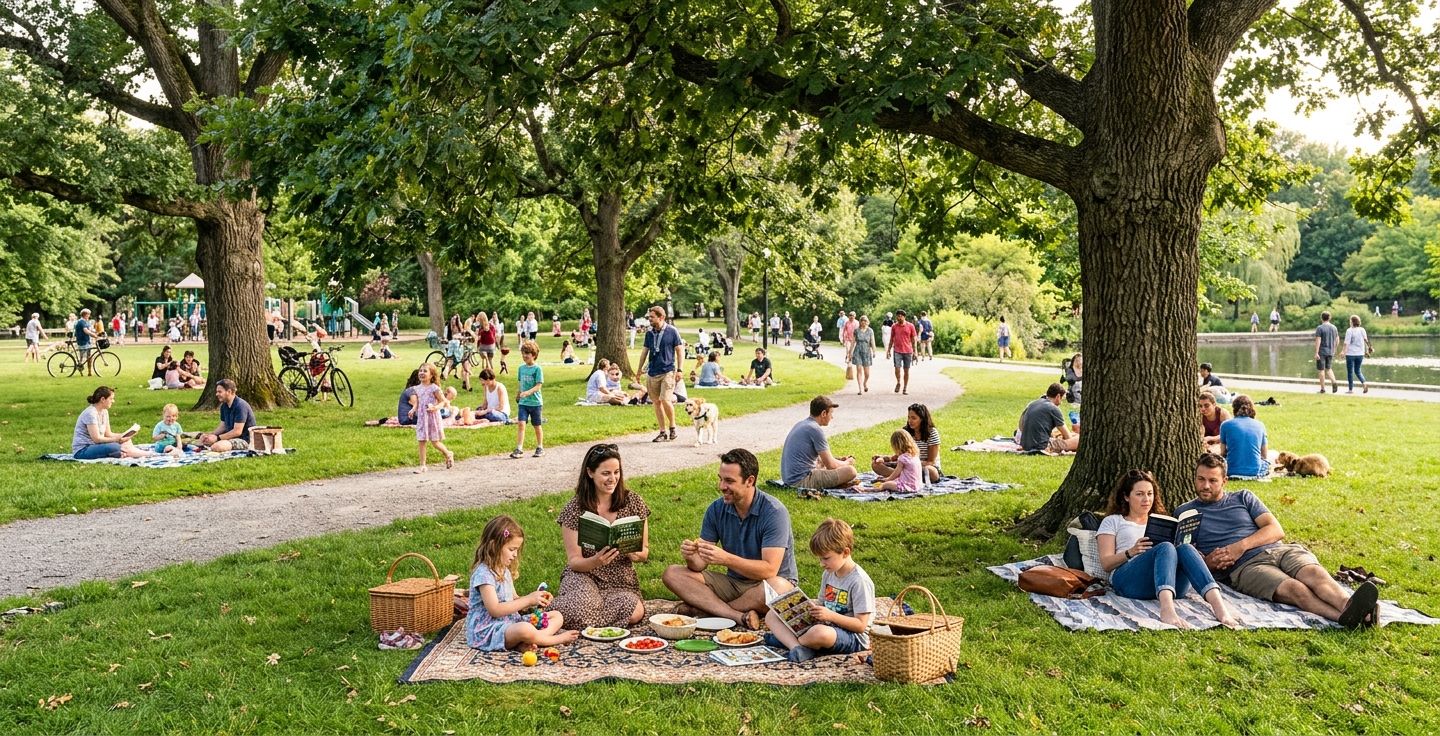
I often picture the brilliant mind of Frederick Law Olmsted (born 1822, died 1903). He saw the cities growing taller and more crowded. He understood that a healthy society needs green pastures. When he designed Central Park in New York City, he was building an outdoor living room for the working class. He engineered winding paths so people could escape into nature. Today, when families gather for picnics under ancient oaks, they are fulfilling Olmsted’s grand dream. They are breathing free air.
The Enduring Need for Community
Throughout our lives, we experience the joy of community gatherings. Think of the summer block parties with folding tables weighed down by potato salad and sliced watermelon. These events are beautiful expressions of who we are. Whether it is an autumn tailgate outside Fenway Park or a simple potluck in a neighborhood cul-de-sac, we find immense joy in others. The faces change over the decades, but the laughter sounds exactly the same. It is a joyful noise echoing through the generations, proving our need to belong to one another.
The Quiet Grace of Sunday
Then comes Sunday. Sunday has always possessed a different rhythm. It is a slower, quieter movement. For generations, this was a day defined by spiritual reflection and family meals. While church pews may not be as crowded as they were fifty years ago, the search for meaning and rest is just as strong. Sunday afternoons are a universal sanctuary. It is the time for a well deserved nap on the sofa while a baseball game hums quietly on the television. It is the time when the heavy, savory smell of a roast or a slow cooked stew fills the kitchen. These moments are rich with family traditions. We take this time to gather our strength. As the sun begins to lower in the sky, a subtle shift occurs. The relaxation of the afternoon slowly gives way to the preparation for Monday. Backpacks are packed. Shirts are ironed. We mentally brace ourselves for the week ahead. But we do so refreshed, knowing we have spent time with the people we love most.
Passing the Torch
I watch the younger generations with a great deal of pride. It is common to hear complaints about young people, but I see a remarkable wisdom in them. They are setting boundaries that my generation often ignored. They are actively choosing to put their phones in another room. They are rediscovering film cameras, vinyl records, and board games. They understand that true wealth is not just found in a bank account, but in the hours you get to spend under a clear blue sky. Many young families prioritize these simple weekend joys:
- Visiting local farmers markets
- Spending time in nature
- Sharing meals without digital distractions
They are returning to local growers and valuing experiences over material goods. This is the positive evolution of American culture. They give me tremendous hope for the future.
Common Questions About Our Weekends
Are traditional weekends disappearing in America?
How much free time do Americans actually have on weekends?
What are the most common weekend activities today?
Protecting Our Peace
We must never take these two days for granted. The weekend is a gift, handed down to us by workers who demanded a better life, and by visionaries who designed spaces for our weary souls to rest. It is a vital part of what makes our country so resilient. When we rest, we heal. When we play, we learn how to dream again. I encourage you to look at your upcoming weekend with a fresh perspective. Turn off the notifications if you can. Step outside and let the sun warm your face. Talk to your neighbor across the fence. Reclaim the quiet hours. In the end, our lives are not measured by the endless tasks we complete, but by the love we share and the memories we create during our hardest earned hours of freedom.
What is one small tradition you can start this weekend to reclaim your own sense of peace and connection with the people you love?