
Icons & Symbols of America
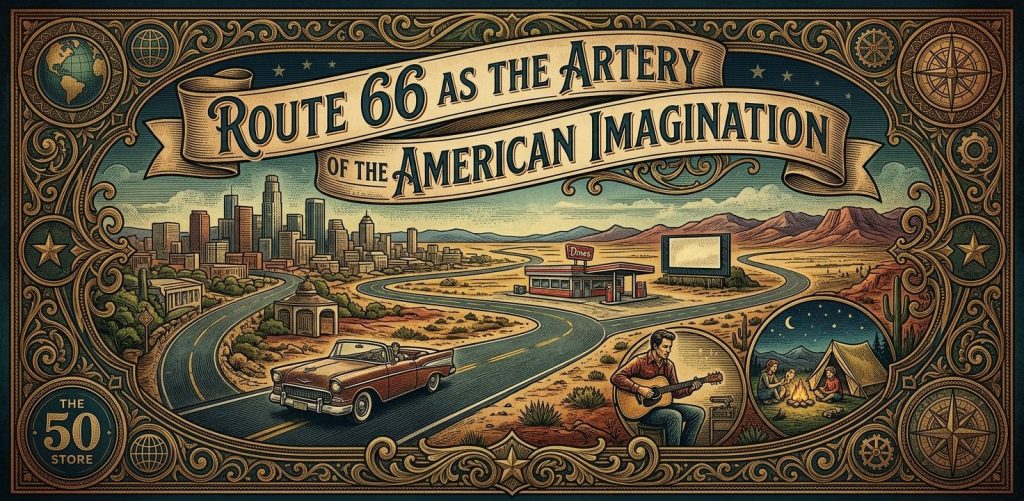
Route 66 as the Artery of the American Imagination
Fibermaxxing For Maximum Efficiency T Shirt
Wear your story with pride! Celebrate classic American values, history, and heritage with our premium crafted apparel, designed for comfort and durability.
The Rhythm of the Highway
I remember the steady hum of tires on cracked concrete. It was a rhythm that settled deep into your bones. You would roll your windows down to let in the hot summer air. The smell of sagebrush mixed pleasantly with exhaust fumes. We were not just driving from one place to another. We were moving through the heart of the country. That stretch of pavement is known to many as the Mother Road. It started in Chicago, Illinois and wound its long way across eight states. It finally met the ocean in Santa Monica, California. I have driven it more times than I can count. Every time I did, I found something entirely new. We often forget how big this country is until we try to cross it.
Fibermaxxing For Maximum Efficiency T Shirt
Wear your story with pride! Celebrate classic American values, history, and heritage with our premium crafted apparel, designed for comfort and durability.
Fibermaxxing For Maximum Efficiency T Shirt
Wear your story with pride! Celebrate classic American values, history, and heritage with our premium crafted apparel, designed for comfort and durability.
The Visionaries of the Pavement
Consider the story of Cyrus Avery (born 1871, died 1963). He was a farmer and a dedicated businessman from Tulsa, Oklahoma. He looked at a map of muddy dirt roads and saw a unified path connecting the heartland directly to the coast. He fought very hard for a highway that would run down through the Southwest. Avery knew that a road brings fresh life. He understood perfectly that pavement meant progress for folks who had been isolated in rural areas for generations. He spent years arguing with politicians and planners just to secure the route number we all know today. Avery essentially paved the way for the great American road trip. He connected towns that had never seen a tourist before. He built an artery that would pump life across the continent.
The Price of Progress
Then things changed. The world started moving much faster. People wanted to get from coast to coast without stopping at every red light in every small town. The Interstate Highway System arrived. It was considered a marvel of modern engineering. It was also a heartbreaker for folks who made their living on the old highway.
Let me share some numbers that might genuinely surprise you. According to research from the Route 66 Economic Impact Study conducted by Rutgers University, this highway was an absolute economic powerhouse. At its peak, it supported tens of thousands of small businesses. When the federal government passed the Interstate Highway Act in 1956, the consequences were devastatingly immediate. Small towns bypassed by the new freeways lost up to eighty percent of their commercial traffic almost overnight. Imagine waking up to find four out of five customers gone forever.
The National Trust for Historic Preservation notes that less than eighty five percent of the original alignment remains drivable today. Over two hundred historic buildings are currently at risk of collapsing. The bustling diners closed. The beautiful neon signs went dark.
The Mother of the Mother Road
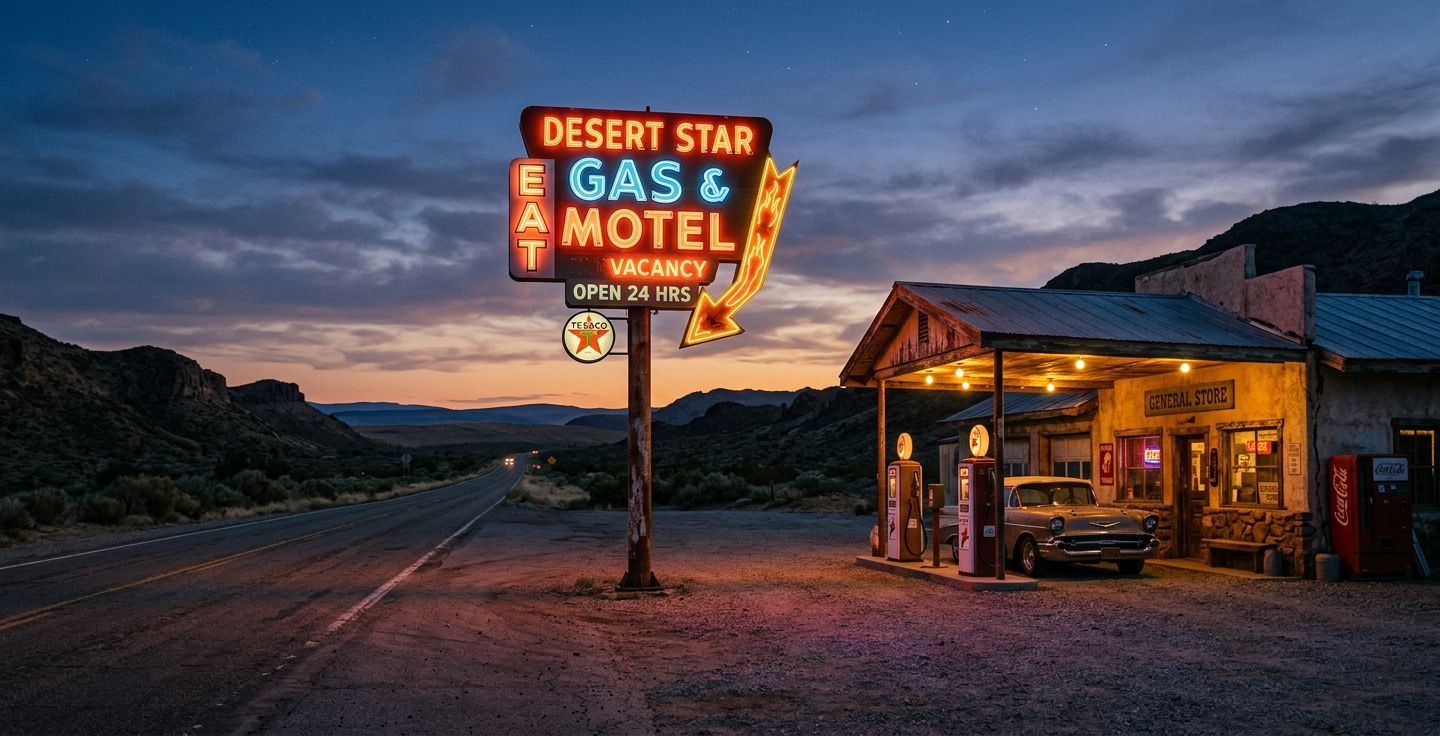
I want to tell you a small story about Lucille Hamons (born 1915, died 2000). She was known to nearly everyone out west as the Mother of the Mother Road. Lucille ran a modest small gas station and motel in Hydro, Oklahoma. Lucille bought that little station in 1941. For decades, she served absolutely everyone who came through her doors. She regularly gave gas on credit to migrating families who were down on their luck. She offered a warm meal to exhausted truckers working through the night.
When the massive Interstate 40 was built, it bypassed her little station by just half a mile. Half a mile might as well be a million miles when cars are zooming past at seventy miles an hour. Lucille did not pack up her bags. She stayed right there. She kept her warm lights on for anyone who still wanted to take the slow path. She ran that station faithfully until the day she passed away. Lucille is a perfect example of the stubborn resilience found on the Main Street of America.
The Writers and Dreamers
Let us talk about the writers who cemented this road deeply into our minds. John Steinbeck (born 1902, died 1968) gave the highway its most recognizable nickname. He wrote passionately about the massive migration of families escaping the Dust Bowl in the 1930s. He called it the path of a people in flight. These folks had lost everything to the howling wind. They packed whatever meager belongings they could fit onto rickety jalopies and pointed their headlights toward California. Steinbeck saw their immense struggle and the profound hope that kept those engines running. The highway was an essential artery of survival. It carried the blood of a wounded nation westward toward the promise of steady work.
The Soundtrack of the Journey
You cannot talk about this highway without humming that famous tune. Bobby Troup (born 1918, died 1999) was a musician who decided to pack up his car and head west to Hollywood in 1946. His wife Cynthia suggested he write a catchy song about the highway they were driving on. Troup spent the entire drive scribbling down city names. By the time he reached California, he had composed a masterpiece. The song urged folks to get their kicks on the highway. It was recorded by Nat King Cole (born 1919, died 1965). That song sold the pure romance of the open road to a generation eager to explore.
Why We Still Care
This brings up an important question for all of us today. Why do we still care? The road was officially decommissioned decades ago. It was removed from the United States Highway System entirely. By all logical measures, it should have faded away into the blowing dust of the American West.
Yet, it did not fade away. Today, you find eager people from all over the world coming to America just to rent a classic car and drive from Chicago to California. They actively seek out the old cracked pavement. They take smiling pictures next to giant fiberglass statues. Why does this decommissioned stretch of ancient asphalt hold such power over our shared imagination?
I have thought a lot about this over the years. I think the answer is quite simple. We deeply crave connection. We crave stories told on a human scale. When you drive on a massive interstate highway, you basically fly over the landscape. You eat at chain restaurants. It is efficient, but it is soulless. When you drive the old way, you become part of the actual landscape.
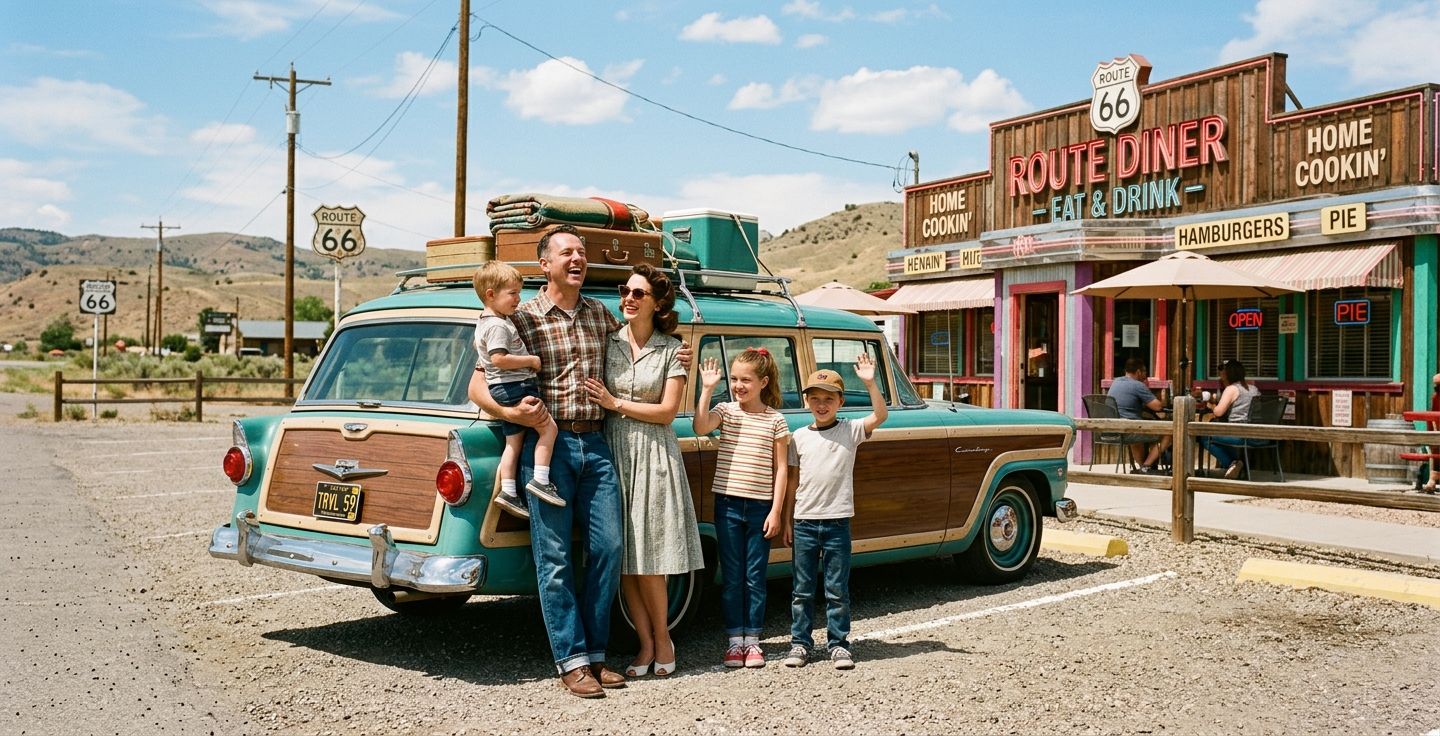
You meet the proud grandson of the man who built the local diner. You eat a slice of pie made from a family recipe that has been handed down for three generations. You see the deep pride in a small community that absolutely refuses to be forgotten. This beautiful highway represents a time when the journey itself was just as important as the final destination.
I look at the younger generations today with so much joy. Some older folks like to complain that young people only look at their bright screens. I do not see it that way at all. I see young people who are deeply hungry for authenticity. I have seen young couples enthusiastically buying up abandoned motor courts in places like Tucumcari, New Mexico. They are carefully scraping off fifty years of peeling paint. They are rewiring the gorgeous old signs. They are opening their welcoming doors to a whole new generation of curious travelers. They are doing the incredibly hard work of historic preservation.
It gives me so much hope for the future. They are not just saving old buildings. They are saving our shared story. They are making sure that my grandchildren will be able to roll their windows down, smell the desert rain, and feel the rich history vibrating right through the floorboards of their car.
Questions You Might Have About the Journey
What is the best starting point for a cross country journey?
How much of the original paved alignment can you still drive today?
Why was the highway officially decommissioned?
The End of the Pavement
We have walked through a lot of fond memories today. We talked about the brave visionaries who built this great path. We remembered the struggling families who used it to survive very hard times. We looked closely at the tough realities of progress and the sad statistics of small towns left behind. Most importantly, we recognized the wonderfully bright future that lies in the capable hands of a new generation eager to preserve our history. The road is not just concrete and tar. It is a living record of exactly who we are.
When you plan your very next vacation, will you choose the fast lane of convenience, or will you take a beautiful detour to find the beating heart of America waiting for you on an old dusty road?