
Immigration, Diversity & Identity
The Italian-American Story Through Food
The Magic of Sunday Morning
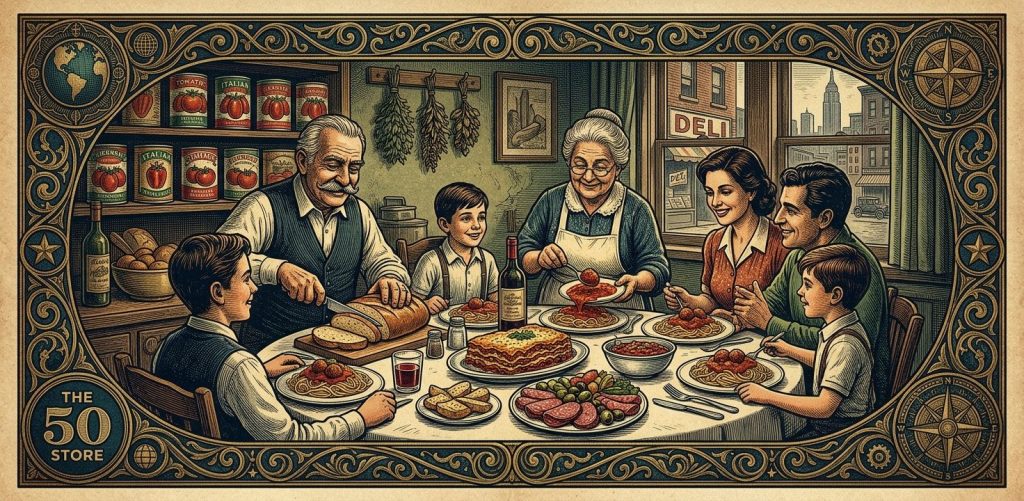
I close my eyes and I can still smell it. It is early morning, and the sun is barely up over the city. The scent of garlic sizzling gently in olive oil drifts down the narrow hallway of our apartment. It wakes me up better than any alarm clock ever could. This is the enduring magic of the italian american sunday dinner. For as long as I have lived in this country, that distinct aroma has meant one thing above all else. It means home. It means the family is gathering. It means you are safe.
You hear the rhythmic tapping of a wooden spoon against the side of a heavy metal pot. You hear the radio playing softly in the background. Our italian american food history is not just a dusty list of old recipes written on stained index cards. It is a living story of survival. It is a profound story of love. Every pot simmering on the stove holds a century of memories. It holds the laughter and the tears of people who came here with nothing but hope.
I see my own grandchildren now, standing on step stools, trying to reach the counter to help roll out the dough. My heart swells with a quiet pride. The traditions are safe in their small, flour covered hands.
Surprising Numbers Behind Our Plates
You might look around today and think this food was always a staple of the American diet. It is so easy to take it for granted when there is a slice shop on every corner. But the scale of what we created here is truly astonishing. According to the National Pasta Association, the average American eats about twenty pounds of pasta every single year. We love our macaroni.
The pizza numbers are even more staggering to think about. Industry reports show there are over 78,000 italian american pizzerias operating across the United States today. We consume roughly three billion pizzas annually in this country. Think about that massive number for a moment. A humble food that was once entirely foreign, completely unknown to the wider public, is now the ultimate American staple. It fuels little league teams, college study sessions, and Friday movie nights. How did we get here? How did a food so localized become a nationwide phenomenon?
Arriving on New Shores
The situation back then was dire. Millions of families left everything they knew in places like Naples, Calabria, and Sicily. They packed their meager belongings into worn trunks and sailed across a vast and frightening ocean. They arrived at Ellis Island tired, disoriented, and deeply hungry. These ellis island italian immigrants carried something very precious in their minds. They carried the memory of the food from their homeland. It was a treasure nobody could confiscate.
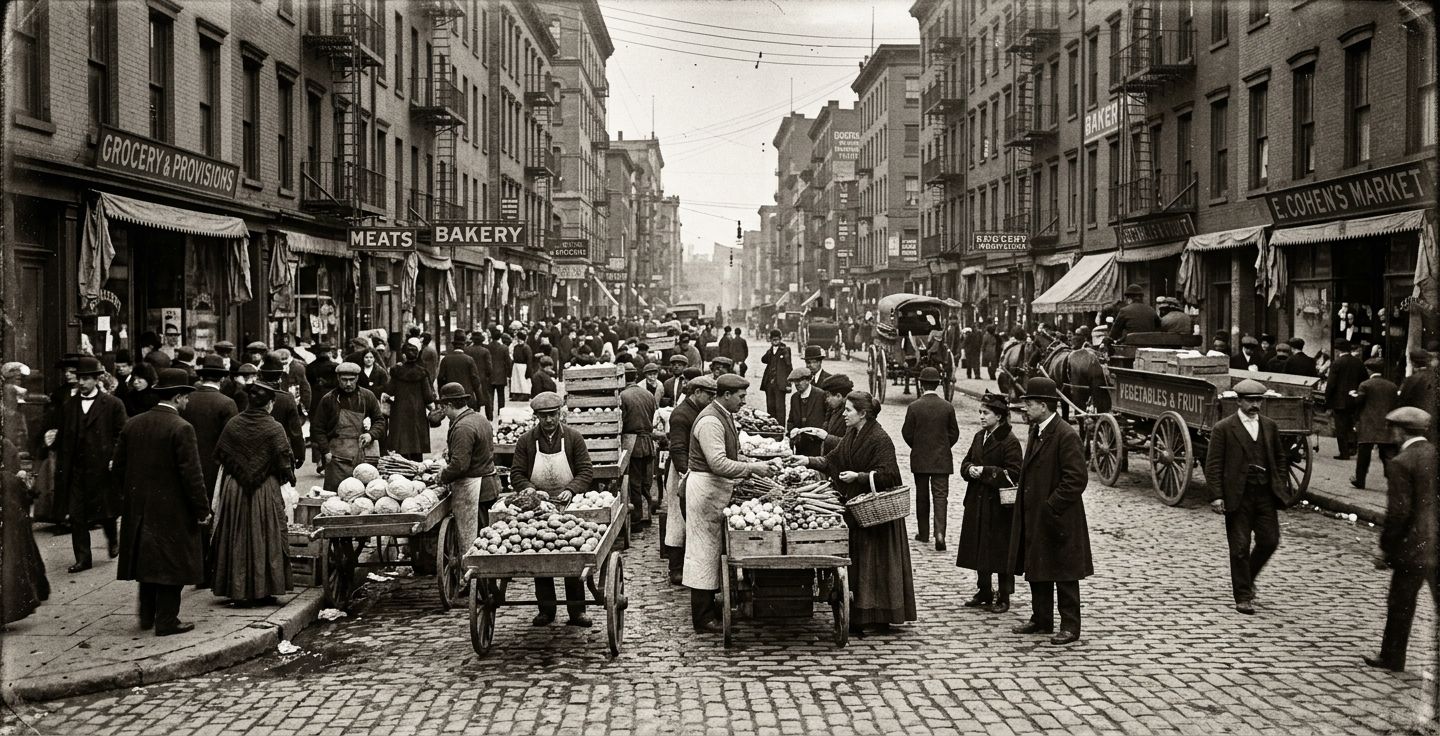
But there was a sudden complication. When they settled in the crowded tenement buildings of cities like New York, Philadelphia, and Boston, they could not find the exact ingredients they used back home. The olive oil was scarce and tasted different. The tomatoes were not the same as the ones grown in the volcanic soil of Mount Vesuvius. Back in the old country, meat was a rare luxury. It was reserved for the very wealthy or for special religious occasions. The average person simply ate vegetables, grains, and whatever they could grow.
Here in America, things were entirely different. The butcher shops on the corner sold cuts of beef and pork for just a few pennies. Meat was surprisingly affordable and incredibly plentiful. This raised a profound question for these new arrivals. How do you cook the food of your ancestors when the world around you has completely changed?
The Birth of a New Cuisine
The answer was beautiful adaptation. They used the cheap meat. They bought the canned tomatoes. They created a hybrid cuisine that married the old world memories with the new world abundance. This brings us to the fascinating spaghetti and meatballs origin. Back in Italy, cooks made tiny meatballs called polpettine. They were small, delicate, and often eaten entirely separately from the pasta course.
In America, with ground meat so cheap, those tiny meatballs grew to the size of baseballs. Families proudly served them right on top of a towering mountain of pasta. It was a bold symbol of their new American prosperity. They wanted to show that they had finally made it. They were no longer hungry.
This incredible abundance of meat also gave birth to the rich and hearty italian american meat sauce. You probably know it well. We simmer beef, pork, and sometimes sweet sausage in a massive pot of italian american tomato sauce all day long. The flavors meld together into something entirely new. This is the beating heart of a proper sunday gravy recipe. Every family has their own deeply guarded secret version. Some grandmothers add a little sugar to cut the acidity of the tomatoes. Some add a pinch of baking soda. The truth is, the absolute best recipe is simply the one your own family makes. That familiar taste is the ultimate italian american comfort food.
The Oven on Spring Street
Let me tell you about a specific man who changed everything. His name was Gennaro Lombardi (1887-1958). Gennaro was a skilled baker from Naples. He arrived in America and opened a small grocery store on Spring Street in New York City. He started selling simple tomato pies wrapped in paper to the local factory workers. Those workers needed a cheap, hot, and filling lunch to get through their long shifts.
By 1905, Gennaro received the first official license to run a pizzeria in the United States. He hired local kids from the neighborhood. He taught them the difficult trade of managing a hot coal oven. Those kids eventually grew up and opened their own shops in different boroughs. From that one small oven on Spring Street, an entire national obsession was born. I remember walking down those streets as a boy and seeing the warm glow of the ovens. It felt like standing near a blacksmith forging something spectacular. Before long, places like Mulberry Street became the center of a bustling new universe of flavor.
Holidays and Sacred Traditions
Our food naturally marks the passage of time. When the weather turns bitterly cold, we look forward to the holidays. An italian american christmas eve is a sacred thing. The entire night revolves around the legendary italian american feast of the seven fishes. The origins of this tradition are firmly rooted in the Catholic practice of abstaining from meat on holy days. Yet, we somehow turned a day of fasting into a massive, joyous banquet.
The tables literally groan under the weight of stuffed calamari, fried smelts, baccala, and shrimp scampi. These italian american seafood dishes are true labors of love. We clean the fish by hand. We chop endless cloves of garlic. We stand over hot, steaming stoves for days beforehand. The smell of the ocean fills the house.
Then comes the gentle spring. The cold snow finally melts away. We celebrate the new season with a sweet, citrus scented italian american easter bread. The braided dough is baked with whole, brightly colored eggs nestled right in the middle. It represents new life. It represents optimism.
Of course, we do not just celebrate on major holidays. Even a simple weeknight dinner can feel like a grand feast. A deep pan of bubbling italian american lasagna can cure just about any bad day. The rich layers of creamy ricotta, melted mozzarella, and heavy meat sauce meld together perfectly in the oven. It is dense and warm. Sometimes, on a chilly Tuesday evening, a simple bowl of italian american wedding soup is all you truly need. The tiny meatballs and tender green escarole floating in rich chicken broth bring absolute comfort to the weary soul.
The Words We Speak and the Sweets We Eat
We even created our own unique language around the dinner table over the decades. If you spend enough time in our lively neighborhoods, you will undoubtedly hear a specific italian american food slang. Prosciutto becomes proshoot. Capicola becomes gabagool. Mozzarella is lovingly called mootz. Ricotta is rigott. This beautiful dialect was born from the southern Italian immigrants dropping the final vowels of their words. It was essentially frozen in time by the people who arrived a century ago. It is a wonderful linguistic time capsule wrapped up tightly in white deli paper.
And we absolutely cannot forget the sweets. A proper meal is never truly over until the italian american pastries appear on the table. We serve big trays of crispy cannoli filled with sweet ricotta and chocolate chips. We pass around rainbow cookies with their distinct almond flavor and jam filling. We share sfogliatelle with their hundred crispy, crunchy layers. You always bring a white cardboard box tied neatly with red string to any house you visit. It is just basic good manners.
Questions I Hear All the Time
Over the many years, folks from all walks of life have asked me a lot of questions about our food. I genuinely love answering them. It keeps the vibrant history alive for the next generation.
What is the difference between sauce and gravy?
This is the great neighborhood debate! In many communities, if the tomato sauce has meat cooking in it for hours, it is officially called gravy. If it is just tomatoes, garlic, and fresh basil cooked very quickly, it is called sauce. But honestly, it depends entirely on what city your family settled in and what specific region of Italy they originally came from. Do not let anyone ever tell you your family is saying it wrong.
Why are there exactly seven fishes on Christmas Eve?
The number seven has very deep religious significance. It often represents the seven Catholic sacraments or the seven days of creation. However, some families do nine fishes. Some even do thirteen to represent Jesus and the twelve apostles. The exact number on the table does not matter nearly as much as the gathering of the family around that table.
Did chicken parmesan come directly from Italy?
Not at all. In Italy, they traditionally make eggplant parmesan. When Italians came to America, chicken was highly affordable and plentiful. They cleverly applied the old world breading and frying technique to the new world chicken breasts. It is a perfect, delicious example of our dual heritage.
Why do we eat those tricolor rainbow cookies?
Those three colorful layers of soft almond cake were originally created by patriotic bakers to honor the green, white, and red flag of Italy. It was a very sweet way for immigrants to remember the old country while standing firmly in the new one. Today, they are beloved by just about everyone.
Passing the Plate Forward
I look at my grandchildren today and my heart fills with immense pride. I see them standing in the kitchen, laughing together. I see them carefully dropping those giant meatballs into the simmering pot. The modern world moves so incredibly fast now. Everything is instant and rushed. But you simply cannot rush a good pot of gravy. It demands your patience. It demands your dedicated time.
I want you to try making these historic dishes yourself. Look up an old family recipe. Buy the good imported tomatoes. Take a quiet Sunday afternoon and just cook. Invite your neighbors over to your home. Share the meal warmly. Our history was written in those simmering pots and hot ovens. It is a resilient history of people who took what very little they had and built a beautiful life full of flavor and immense joy. You do not need to be Italian to appreciate that deep sentiment. You just need to be hungry for genuine human connection.
We built a solid life here, plate by plate, meal by meal. We adapted to new surroundings, we survived difficult times, and we truly thrived. Food is the ultimate, unbreakable bridge between where we came from and where we are going. So, I leave you with this thought to ponder. What is the one family recipe that tells the story of your own history?