
Icons & Symbols of America
The America We Nearly Lost: The Bald Eagle’s Fall—and Its Miraculous Return
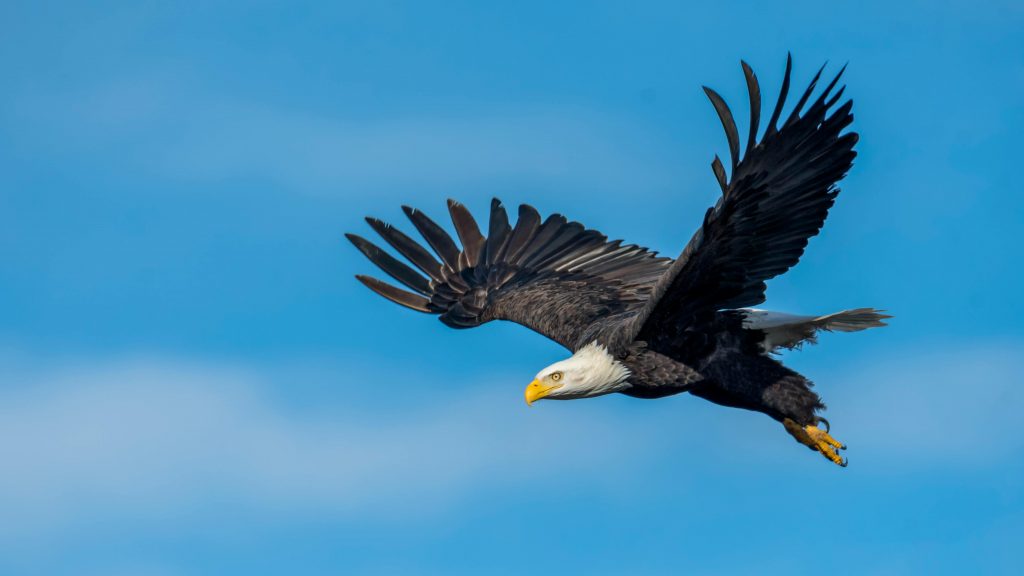
How do you measure a nation’s soul? Is it in the soaring skyscrapers of Manhattan, the quiet power of the ballot box, or the restless movement of the Mississippi? For generations of Americans, the answer has often been found not in a structure built by human hands, but in the effortless, silent arc of Haliaeetus leucocephalus—the Bald Eagle. Yet, here is a truth that might surprise many of you, our fellow Americans, who grew up seeing this majestic bird on every quarter and presidential seal: there was a moment in the not-so-distant past, within the lifespan of many reading this, when the very symbol of American freedom was on the fast track to extinction.
We often gaze at the Bald Eagle with a sense of entitlement, believing its place in the sky is as eternal as the Constitution. But the story of its near-demise and stunning recovery is not just a tale of conservation; it is a profound, reflective mirror on the American spirit—our capacity for profound damage, and our equal capacity for magnificent, redemptive effort. It is the story of The America We Nearly Lost.
Patriotic Bald Eagle Vintage USA Flag T-Shirt
Wear your story with pride! Celebrate classic American values, history, and heritage with our premium crafted apparel, designed for comfort and durability.

Patriotic Bald Eagle Vintage USA Flag T-Shirt
Wear your story with pride! Celebrate classic American values, history, and heritage with our premium crafted apparel, designed for comfort and durability.
Patriotic Bald Eagle Vintage USA Flag T-Shirt
Wear your story with pride! Celebrate classic American values, history, and heritage with our premium crafted apparel, designed for comfort and durability.
The Shadow of Silence: When Our Symbol Vanished
In the mid-20th century, the silence where an eagle’s call should have been was deafening. The vibrant tapestry of American wildlife was fraying, and the Bald Eagle was the most poignant victim. Unlike the great bison herds, which were hunted to the brink over a century ago, the eagle’s demise was a quiet, insidious chemical war waged by one of the most celebrated innovations of the time: DDT.
This powerful, persistent pesticide, lauded for saving millions of human lives from mosquito-borne diseases, became an ecological ticking clock. DDT didn’t kill the adult eagles outright; it accumulated in the food chain—from insects to fish, and finally to the top predator. The critical effect, as documented by groundbreaking research, was the thinning of the eggshells. When the parent eagles, unaware of the chemical contamination, would sit on their nests to incubate their future, the shells would simply crack under the weight of their own commitment. This tragedy of shattered eggs and failing births was a grim, biological metaphor for a society that had yet to fully grasp the cost of its own technological progress.
By the early 1960s, the lower 48 states held a pitifully small population—perhaps only 417 confirmed nesting pairs. Imagine: a nation of hundreds of millions, its revered symbol reduced to a few hundred fragile families clinging to existence in isolated pockets of the contiguous United States. It was an embarrassment, a cultural alarm bell, and, most importantly, a challenge to the deeply-held American value of stewardship.
“The decline of the Bald Eagle was a stark realization that freedom—the freedom represented by the eagle—is inextricably linked to responsibility. We had enjoyed the spoils of progress without honoring the ecological contract.”
The Turning Point: Legislation and Lighthouses of Hope
The comeback of the Bald Eagle is a powerful narrative of bipartisan resolve and legal muscle, a rare moment where the American political system aligned perfectly with the American conscience. The key turning point came with two landmark pieces of legislation: the 1940 Bald and Golden Eagle Protection Act, which offered initial sanctuary, and the far more consequential 1972 ban on DDT.
Crucially, this effort was cemented by the Endangered Species Act (ESA) of 1973. This wasn’t merely a feel-good piece of legislation; it was a strong, legally-binding commitment to protect the habitat and ensure the survival of threatened species. The ESA provided the scaffolding for decades of meticulous, difficult work:
- Scientific Monitoring: Decades of tracking nesting sites, often in remote, unforgiving American landscapes.
- Rehabilitation & Hacking: Scientists developed “hacking” techniques, carefully placing young eaglets from healthier populations (often from Alaska or Canada) into nests in depleted areas like New York and the Midwest, re-introducing the bird where it had been functionally eliminated.
- Habitat Protection: The Act mandated the protection of vast stretches of wetlands, riverbanks, and coastlines—places often coveted by commercial developers—for the sake of the eagle’s survival.
This endeavor was an almost archetypal American project: a pragmatic, expensive, and determined investment in something greater than immediate economic gain. It required the collaboration of the Fish and Wildlife Service, state conservation agencies, private landowners, and thousands of dedicated volunteers.
More Than a Symbol: An Indigenous Legacy
To truly appreciate the eagle’s return, we must look beyond its official status. For countless Indigenous American cultures, the eagle was never merely a symbol of state power; it was a sacred messenger, a representative of the Creator, and a powerful spiritual guide. The feathers are among the most revered ceremonial objects, representing honesty, truth, and respect.
The near-extinction of the bird was, therefore, not just an environmental crisis but a profound cultural wound for Native American communities, who often risked legal trouble to collect naturally-shed feathers to continue their most sacred practices. Its return is an immense healing, allowing for a renewed connection to ancestral lands and traditions, underscoring that the protection of the eagle is also the protection of a deep, unique layer of American cultural history.
The Velvet-Rope Insight: A Lesson in Humility
Today, the Bald Eagle has made its triumphant return. It was officially removed from the list of threatened and endangered species in 2007. From those few hundred pairs, the population has rebounded to well over 70,000 individuals across the lower 48 states.
But the real, exclusive insight, the velvet-rope lesson in this story, is this: The eagle’s recovery is a testament to the fact that when we set aside short-term gains and act on our deepest values—responsibility, foresight, and humility—we can reverse even the most severe ecological and cultural damage.
When you see a Bald Eagle now—perhaps swooping over a river near your own hometown—do not simply see a national icon. See a miracle of American commitment. See the proof that the same fierce, determined spirit that built this nation can also heal it. And remember the silence that almost was, so we may never let the sky go empty again. The America we nearly lost is the America we worked together to save, proving that our greatest strength lies not in our dominance, but in our care.