
Culture & Traditions
What Makes American Breakfast Unique
The Dawn of a New Day
I wake up before the sun. I always have. There is a quiet magic in those early hours before the world starts its busy engine. You can hear the birds waking up in the oak trees outside. You can feel the cool morning air drifting through a cracked window. And soon, the house fills with the richest scent on earth. Coffee brewing slowly. Butter melting in a heavy cast iron skillet.
I watch my neighbors these days. They are good folks, hardworking and kind. But their mornings are a blur of motion. A car engine starts in a hurry. A travel mug is balanced precariously on a car roof. A protein bar is torn open on the highway. We are trading our quiet, peaceful mornings for the relentless rush of the clock. We are losing a sacred daily ritual.
It makes me wonder. How did our morning plate become this towering, sweet, and savory masterpiece? What exactly makes the American breakfast so incredibly unique compared to the rest of the world?
The answer lies in our history. It is a beautiful reflection woven into the dirt of our farms, the glowing neon signs of our highways, and the blending of a hundred different cultures into one hot cast iron pan.
The Surprising Truth About Our Plates
To truly grasp the magnitude of our morning appetite, you have to look at the numbers. The statistics are quite staggering when you pause to think about them. According to a comprehensive study by the American Meat Institute, a highly respected organization that monitors our agricultural output, Americans consume over 1.5 billion pounds of bacon every single year. Furthermore, data from the NPD Group, a trusted source for tracking consumer habits, reveals that we eat more than a billion servings of pancakes annually. This is not just a light snack. This is a monumental daily harvest brought directly to our tables.
But it was not always this way. Let me tell you a small story about a man named Edward Bernays (1891-1995). Back in the 1920s, Americans were actually eating very light breakfasts. Toast, maybe a little juice. The Beech-Nut Packing Company had a surplus of bacon they needed to sell. They hired Mr. Bernays. He went to a prominent doctor and asked if a heavy, hearty breakfast was better for a working person than a light one. The doctor agreed. Mr. Bernays then sent that opinion to thousands of doctors across the country. They all agreed. The newspapers quickly declared that doctors recommended a hearty breakfast. The beloved staple of bacon and eggs was born. A single idea shifted the habits of an entire nation.
A Symphony of Sweet and Savory
You travel across the ocean to Europe, and they hand you a delicate pastry and a tiny cup of strong coffee. It is lovely, do not get me wrong. But it is delicate. Our breakfast is not delicate. It is a hearty, welcoming handshake.
We mix the sweet and the salty right there on the exact same plate. The rich maple syrup will inevitably run across the warm china and pool under your sausage links. Some folks try to build little defensive walls out of shredded potatoes to stop it. I say let it happen. That mingling of sweet tree sap and savory pork is the authentic taste of America.
The Magic of the Lunch Wagon
If you want to understand our breakfast, you have to explore our diner culture.
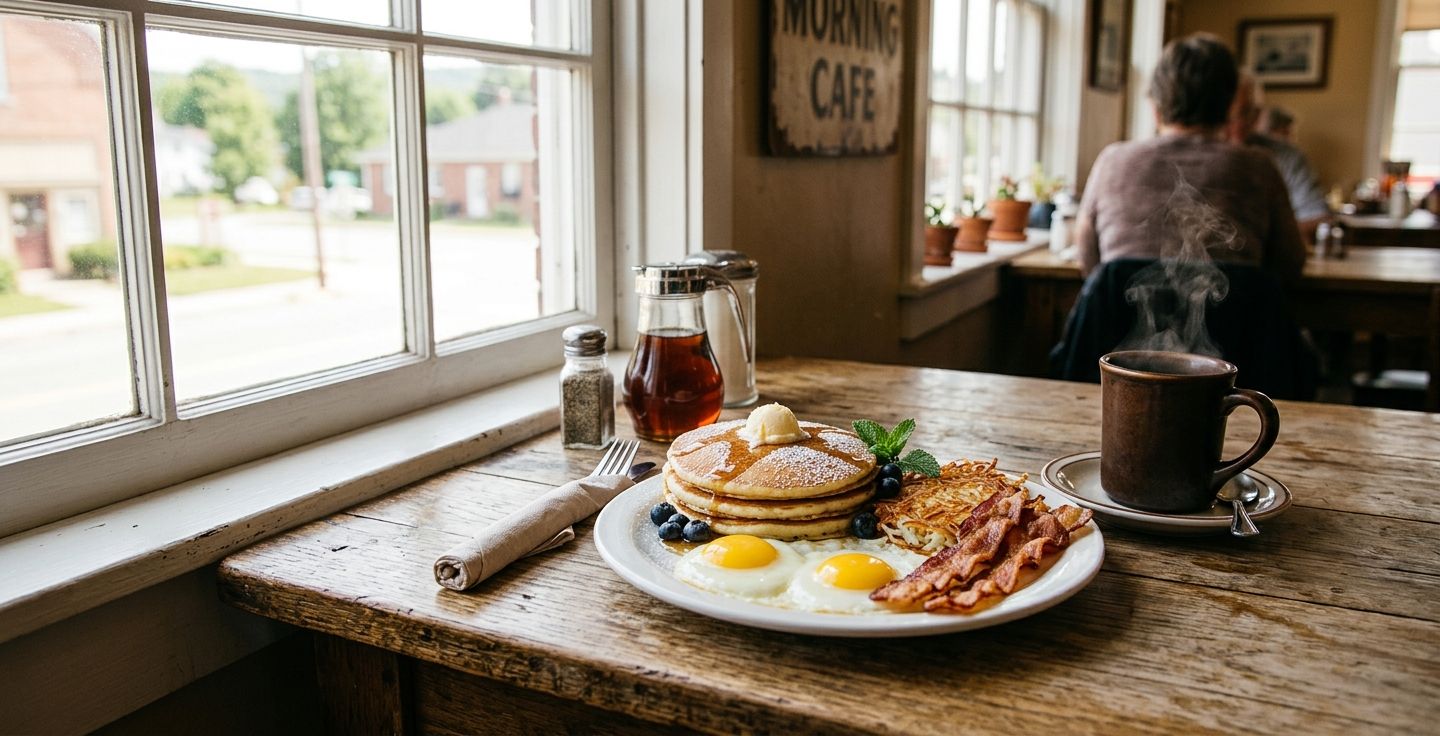
It started long ago with a resourceful man named Walter Scott (1841-1924). Down in Providence, Rhode Island, Walter had a simple idea. He took a horse drawn freight wagon, cut windows into it, and parked it outside the bustling offices of the Providence Journal. He sold hot coffee, fresh pie, and hearty sandwiches to the tired men working the late night shifts.
From that little wooden wagon grew the grand, gleaming diners of the mid-twentieth century. I recall taking road trips with my family when the interstate highway system was just spreading its concrete ribbons across the land. We would look for those glowing silver dining cars. If you ever find yourself in Illinois, you simply must visit Lou Mitchell’s in Chicago. It has been sitting right there near the historic start of Route 66 since 1923. You walk in, and they hand you a warm donut hole before you even sit down. The waitresses call you sweetheart. The coffee pours endless and hot.
Diners became our great democratic meeting places. The banker in his tailored wool suit sat on a red vinyl stool right next to the mechanic in his grease stained coveralls. They both ate the exact same eggs. They both drank the exact same coffee. For that brief hour in the morning, they were absolute equals.
The Cereal Revolution in Battle Creek
Then there is the cold side of our breakfast. The quick bowl of cereal. That story takes us up to Battle Creek, Michigan. A dedicated physician named John Harvey Kellogg (1852-1943) ran a popular health sanitarium there. He believed deeply in clean living and proper digestion for a rapidly industrializing nation.
He and his brother, Will Keith Kellogg (1860-1951), were experimenting with wheat, trying to make a digestible bread substitute for their patients. They accidentally left a batch of boiled wheat sitting out. When they rolled it, the wheat broke into little thin flakes. They baked those flakes. They created toasted wheat flakes, and later, corn flakes.
It was originally meant to be strict health food. But Will Keith knew that ordinary folks liked a little sweetness in their lives. He added malt and sugar. The brothers famously fought over this, but Will Keith’s sweet version won the hearts of the American people. He started his own company. Soon, a quick, convenient, and tasty morning meal was available in every local grocery store. A simple kitchen mistake created a global industry and gave tired parents a reliable way to feed their children before the school bell rang.
The Comfort of the Griddle
Let us talk about the hotcakes. Flapjacks. Griddlecakes. Whatever you call them in your neck of the woods, they are a fundamental cornerstone of our homes.
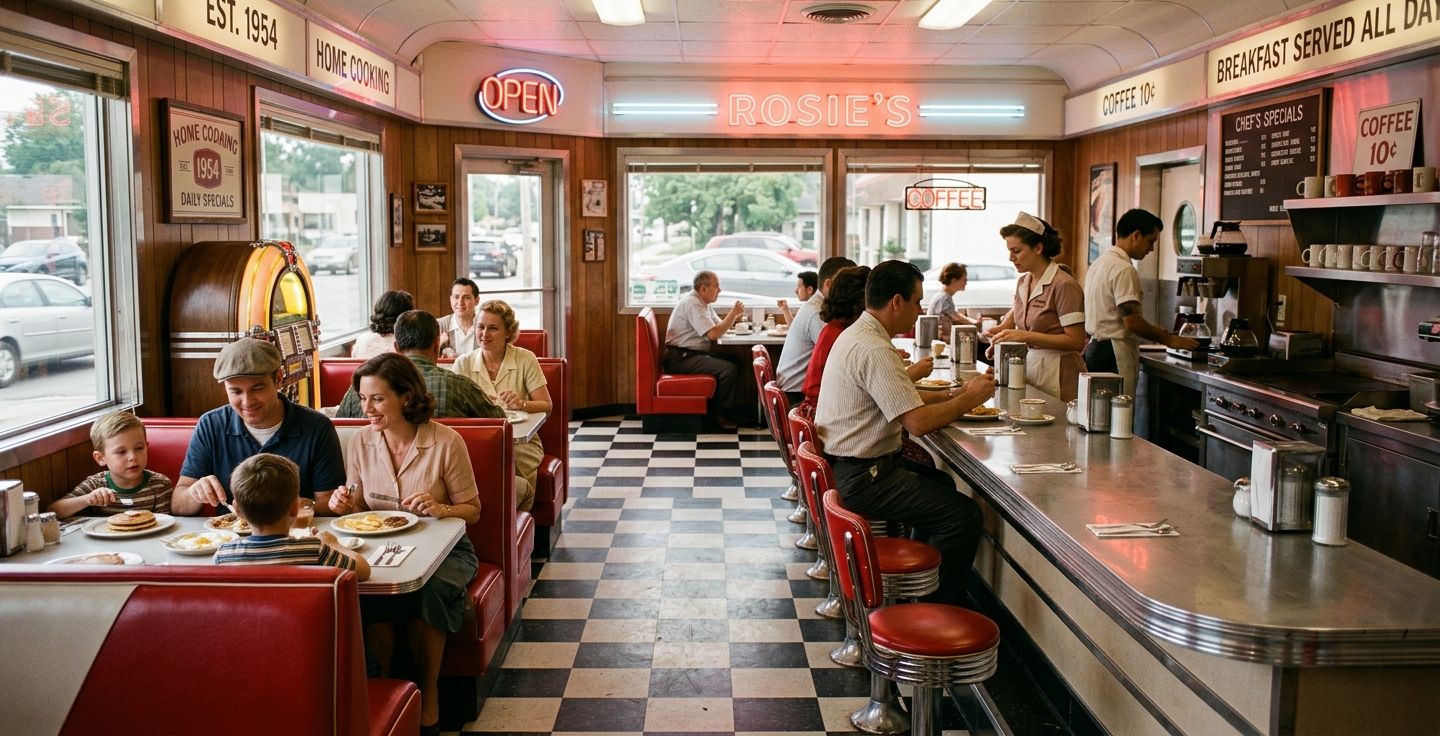
There is a rhythmic, almost musical peace to making them. You mix the thick batter. You watch it hit the hot, greased iron with a satisfying hiss. You wait patiently for the little bubbles to form on the top. That is the true secret, you know. You do not flip them until the bubbles pop and stay open. It is a daily lesson in patience.
My grandmother used to stand by her old gas stove, flipping them by the dozen. She never measured a single ingredient. A generous handful of flour. A splash of rich buttermilk. A tiny pinch of salt. It was pure instinct. It was love made visible on a plate. I try to do the same for my grandchildren now. When they sleep over, they wake up to the sound of my metal spatula tapping the skillet edge. They come running down the stairs, their hair messy and their eyes wide and bright. They pull up a wooden chair to the kitchen counter.
I see the future in their young faces. I see immense hope. The world is changing incredibly fast, and they will have to navigate a complex, noisy future. But if I can teach them to slow down, to appreciate the simple joy of cooking a shared meal, I know they will be alright. They will carry that warm light with them forever.
Reclaiming Our Mornings
We have built a truly wonderful country, full of brilliant innovation and incredible speed. But some things are just not meant to be rushed.
I encourage you to try something different this coming weekend. Do not set your alarm clock. Let the natural sunlight wake you. Walk into your kitchen. Pull out your heavy pans. Fry up some thick cut bacon. Scramble a few fresh eggs with a little butter and milk. Make a pot of coffee and let it percolate until the aroma fills the hallway.
Sit down at the table with the people you love most. Put your phones away in a drawer. Look at each other. Talk to each other. Share the stories of your week. Listen to the sound of laughter echoing over clinking forks. This is what our breakfast was designed for. It is not just fuel for the physical body. It is vital fuel for the soul. It binds us together.
Questions You Might Be Wondering About
What is considered a traditional American breakfast?
A traditional American breakfast typically includes a combination of eggs cooked to order, a savory meat like bacon or sausage, a carbohydrate like toast or hash browns, and a beverage like hot coffee or chilled orange juice. It is famous for its hearty portions and the unique pairing of sweet and savory flavors on the same plate.
Why do Americans eat so much ice and cold drinks with breakfast?
While hot coffee is a non negotiable staple, the tradition of serving a cold glass of orange juice or milk with ice water at diners stems from our unique history of abundant commercial refrigeration. By the mid-twentieth century, household refrigerators became very common, making chilled beverages a symbol of modern comfort and refreshment.
How did hash browns become a breakfast staple?
Potatoes have been a cheap and filling crop for centuries. But the crispy, shredded hash browns we know today gained massive popularity through roadside diners and early fast food chains in the mid-twentieth century. They provided a perfect, crispy texture to contrast with soft eggs and soaked up salt and pan fats beautifully.
Is the large American breakfast eaten every day?
Not anymore. During the early farming era, a large morning meal was absolutely necessary for physical labor in the fields. Today, most working folks save the large, traditional cooked breakfast for weekends or special holidays. Weekday mornings are usually reserved for quicker options like cold cereal, oatmeal, or a slice of toast.
What role did diners play in shaping our breakfast?
Diners democratized dining in the United States. They offered fast, highly affordable, and comforting food twenty four hours a day. They standardized the morning menu across the entire country, ensuring that whether you were in New York or California, you could rely on the exact same classic plate of eggs, meat, and potatoes.
Why are pancakes so incredibly popular in the United States?
They are popular because the basic ingredients are inexpensive and highly shelf stable. Flour, baking powder, and salt were easy for early settlers to carry in wagons. When topped with freshly churned butter and indigenous maple syrup from the Northeast forests, they became an affordable, delicious treat that defined morning comfort.