
Geography & the American Landscape
Why the Desert Southwest Attracts Adventurers
The Ancient Call of the Open Dirt
The landscape of the American southwest is an ancient and unchanging reality. It is a vast expanse of painted dirt, deep canyons, and jagged cliffs. For centuries, it was a place that people simply tried to bypass on their long journey to the golden coast of California. The environment is incredibly demanding. Water is scarce. The sun wraps around you like a heavy, suffocating blanket. In our modern world, we can control the temperature of our living rooms with a spoken word. We can have food delivered to our doorsteps. Stepping into a wild oven makes little logical sense. We have built a society of immense comfort.
Why, then, does the untamed desert continue to call out to the young and the old alike? What makes millions of people pack up their cars and leave their soft lives behind? The answer is simple. The desert strips away our illusions. It offers a raw and beautiful truth that we cannot find on a glowing computer screen or in a bustling city center.
The Numbers Behind the Magic
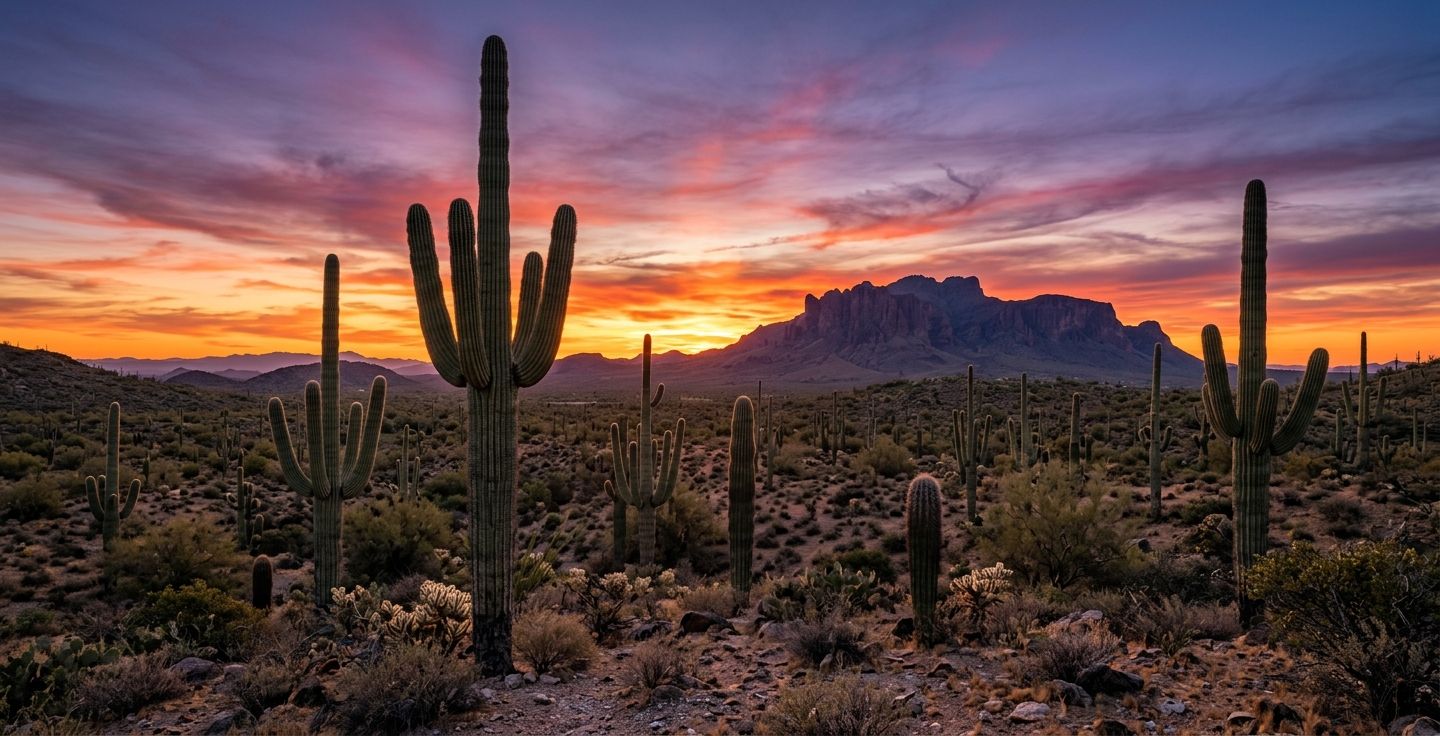
There is an undeniable gravity to the Desert Southwest. It holds a magnetic pull that defies our modern craving for convenience. Let me share some numbers that always make me smile. The National Park Service notes that the Grand Canyon National Park welcomes upwards of five million visitors every single year. That is five million souls seeking a glimpse of the unknown. Furthermore, the Sonoran Desert spans over one hundred thousand square miles. It is one of the most biologically diverse deserts on the planet. Credible botanical surveys show it is the only place in the world where the wild saguaro cactus grows naturally. Some of those giant green sentinels are over one hundred and fifty years old. They have stood through terrible wars, the birth of automobiles, and the dawn of the internet age. The desert is also surprisingly alive with water. Certain regions receive up to twelve inches of rain annually. Out here, it triggers a spectacular explosion of wildflowers that paints the valleys in brilliant purple and gold.
Rowing Into the Unknown
Let us look back at the folks who braved the unknown. Think about John Wesley Powell (1834, 1902). He was a veteran who lost most of his right arm in the Civil War. That injury would have kept most men sitting quietly in a rocking chair. But Powell had a burning curiosity. In the late eighteen sixties, he gathered a small crew and set off in wooden rowboats down the fierce Colorado River. They had no reliable maps. They were floating into a massive, deep crack in the earth, blind to what lay ahead. They faced violent rapids that threatened to smash their fragile boats into splinters. Yet, Powell kept meticulous notes. He mapped the rock layers. His daring expedition opened the eyes of the public to the breathtaking wonder of the canyon lands. He showed us that true adventure requires stepping into the dark, trusting your companions, and having the courage to keep rowing. It is a lesson that applies to almost every hardship in life.
Bowing to the Landscape
Another brilliant mind who helped us understand this land was Mary Colter (1869, 1958). Back in the early twentieth century, tourism was just starting to take hold in the west. Railroads brought curious folks from crowded eastern cities. Most architects wanted to build fancy European style hotels to make wealthy tourists feel at home. They wanted to conquer the dirt with polished marble. Mary had a completely different vision. Studying the ancient ruins of indigenous peoples, she decided that human structures should not fight the landscape. They should bow to it.
She designed the famous Desert View Watchtower. She insisted that her builders use local stones and leave the rough edges intact. She did not want straight lines. She wanted the tower to look like it had grown right out of the canyon rim. Through her simple buildings, Mary changed the way our entire nation viewed the wilderness. We stopped trying to pave over the wild places. We started trying to exist within them. That shift taught us that we belong to the land. The land does not belong to us.
Memories on the Blacktop
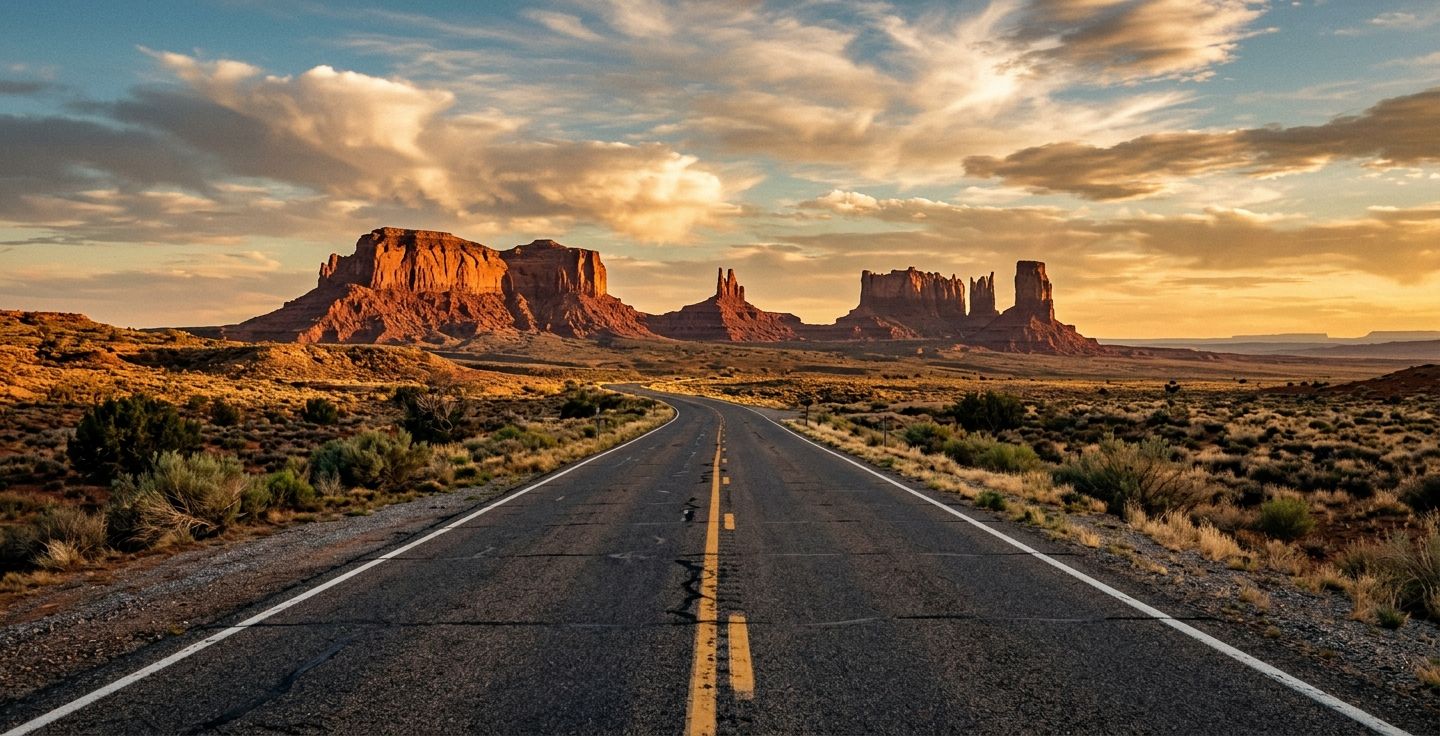
I think about these resilient folks every time I take a drive down the remnants of Route 66. The blacktop stretches on for miles, disappearing into heat waves on the horizon. I remember taking road trips with my parents back in the nineteen fifties. We drove a heavy steel car with absolutely no air conditioning. We rolled all the windows down. The hot wind rushed through the cabin like a living thing. We drank warm water from a canvas bag hung on the front bumper. We would stop in small towns where neon signs buzzed against the darkening sky. The towering red rocks of places like Sedona would glow like dying campfire embers as the sun dipped behind the mesas. It is a sight that demands your full attention. It makes you want to pull the car over, turn off the engine, and just sit in the profound silence. Under a sky that feels bigger than anywhere else on earth, you realize how small your daily worries truly are. It puts your whole life into perspective.
When the Desert Wakes Up
When you spend time in the Mojave or Sonoran landscapes, you learn that it is a land of beautiful extremes. During the day, the intense sun demands respect. You seek the shade of a mesquite tree. But when the sun sets, a remarkable change occurs. The temperature drops rapidly. Heat radiates off the baked rocks, and a cool breeze sweeps through the canyons. This is when the desert truly wakes up. You might catch sight of a curious coyote trotting along a rocky ridge. You might hear the distinctive call of a desert bird cutting through the absolute silence. The sharp, clean scent of the creosote bush fills the night air. And the sky overhead is a revelation. Without the glare of street lamps, the Milky Way stretches across the blackness like a glowing river of light. I remember laying on the hood of my truck in the nineteen seventies, staring up at that endless canopy of stars. It makes you feel incredibly small, but deeply connected to the beautiful universe.
A Sanctuary for the Human Spirit
Sometimes, folks my age grumble about younger generations. They say young people are too attached to phones. They say kids do not know how to work with their hands. But let me tell you, when I sit on a wooden bench near the trailheads of Zion National Park, my old heart swells with incredible hope. I see young men and women from all walks of life strapping heavy, worn boots to their feet. They carry massive packs. They are smiling. They are willingly seeking out the hardest trails. They choose to sleep on the hard dirt under a canopy of stars. They are fiercely protective of these natural spaces. They pick up trash left by careless folks. They respect the wildlife. They are learning the exact timeless lessons the desert taught me decades ago. They are learning resilience. They are finding peace. As long as these wild places exist, the human spirit will have a sanctuary. The future of our country is in very capable hands.
Pass on the Gift of the Outdoors
Do not wait for the perfect moment to plan your adventure. The wild does not care about perfect timing. Pack a good wide brimmed hat and a sturdy pair of shoes. Bring far more water than you think you will ever need. Take your children or your grandchildren out into the open air. Show them the painted skies of the southwest. Let them hear the satisfying crunch of dry desert dirt under their own two feet. Give them the absolute greatest gift you can offer. Give them a lifelong love for the great American outdoors. They will carry that beautiful memory in their hearts long after we have returned to the earth.
Frequently Asked Questions About Desert Adventures
What is the best time of year to visit the desert southwest?
The most pleasant times to visit are the spring and the autumn. During these seasons, the daytime temperatures are very comfortable, and the desert wildflowers are often in full bloom. Summer can be incredibly hot and requires very careful planning.
Do I need special gear to explore these areas?
You do not need expensive equipment, but you do need practical gear. A wide brimmed hat, sturdy walking shoes, and a reliable water container are essential. The sun is intense, so sun protection is your best friend.
Is the desert safe for young children?
Yes, it is a wonderful place for families. However, you must always keep a close eye on the little ones. Stick to well marked trails, avoid the midday heat, and make sure everyone drinks plenty of water.
Why do the rocks in the southwest have such bright red colors?
The beautiful red and orange hues come from iron oxide, which is essentially rust, present in the sandstone. Over millions of years, the wind and the rain have exposed these colorful layers for us to enjoy.
Are there many dangerous animals on the trails?
While rattlesnakes and scorpions do live in the desert, they generally avoid people. If you watch where you step and do not place your hands under rocks or bushes, you will rarely have a problem. They are just trying to live their lives in peace.
Can I take my regular car on a desert road trip?
Most major parks and historical sites are accessible by standard paved roads. If you plan to travel into the deep backcountry or on dirt paths, a vehicle with high clearance might be necessary. Always check local road conditions before you set out.