
American Lifestyle
Why Air Conditioning Changed American Living
Sweet American Summer Bomb Pop T Shirt
Wear your story with pride! Celebrate classic American values, history, and heritage with our premium crafted apparel, designed for comfort and durability.
The Weight of a July Afternoon
I remember the days when a July afternoon felt like a heavy woolen blanket draped over the entire neighborhood. The air would go perfectly still, so still that you could hear a dog barking three streets over. We would sit out on the front porch in sturdy wooden rocking chairs, nursing glasses of iced sweet tea, just hoping a tiny breeze might find its way through the leaves of the great oak trees. Houses back then were built specifically to breathe. They had high ceilings to let the hot air rise, and big double hung windows placed perfectly across from one another to catch any hint of a draft. Every family in town spent their evenings outside on the stoop. We watched the glowing fireflies blink in the gathering dusk while the cicadas hummed a loud, relentless chorus in the branches above. It was a beautiful, neighborly time in many ways. But the heat was an ever present master. It told us when we could work, when we had to rest, and how fast we could move. The simple truth is that the hot weather ruled our lives from June until September. We planned our chores around the movement of the sun, making sure the heavy work was done before ten in the morning. We learned to walk slower, speak softer, and accept the sweat on our brows as a natural part of existence.

Sweet American Summer Bomb Pop T Shirt
Wear your story with pride! Celebrate classic American values, history, and heritage with our premium crafted apparel, designed for comfort and durability.
Sweet American Summer Bomb Pop T Shirt
Wear your story with pride! Celebrate classic American values, history, and heritage with our premium crafted apparel, designed for comfort and durability.
When the Heat Won Every Battle
For a very long time, the stifling summer weather was just an unchangeable fact of life you had to endure. In the hottest months, daily life slowed to an absolute crawl. Schools universally shut their doors for the summer because the brick classrooms were simply too hot for any child to sit still and learn. In the deepest parts of the south, many retail businesses and banks closed early in the afternoon. People absolutely needed a few hours of quiet rest in the shade when the sun was highest and most punishing in the bright sky. Our ancestors were tough, resilient people who could farm rocky soil, build towering cities, and lay railroad tracks across vast deserts. But nobody can fight the blazing summer sun and win every single time. It drained our energy and dictated our economy.
This dynamic created a genuine problem for the growth of our entire country. Half the nation struggled to build modern, efficient industries simply because factories turned into dangerous, unbreathable ovens by mid afternoon. The brutal, unrelenting temperatures kept people from permanently moving to some of the most beautiful and resource rich parts of our country.
How Did We Finally Beat the Sun?
So how did we go from barely surviving those sweltering August days with handheld paper fans to actually thriving in them? How did a seemingly simple machine completely reshape the economic map of our country and change the very nature of American living?
The Birth of a Cool Breeze
The answer begins with a spark of pure genius and a whole lot of trial and error. The historic turning point arrived when a clever young engineer named Willis Carrier (1876-1950) figured out the mechanical secret to controlling both humidity and temperature indoors. He did not originally set out to make ordinary people comfortable. He was just trying to keep paper from wrinkling and ink from smudging in a sweltering Brooklyn printing plant. But his clever industrial invention planted the fertile seeds for something extraordinary that would change all our lives.
The actual facts about this monumental change are quite astonishing to look back on today. According to the United States Energy Information Administration, only about ten percent of American homes had any sort of mechanical cooling equipment in the early nineteen sixties. Fast forward to today, and nearly ninety percent of homes have it. Even more incredibly, a detailed study by the National Bureau of Economic Research notes that the introduction of residential air conditioning reduced summer mortality rates in the United States by over eighty percent since the nineteen sixties. That is not just a pleasant story of domestic comfort. It is a profound story of countless human lives saved, extended, and drastically improved.
A Tale of Main Street and the Movies
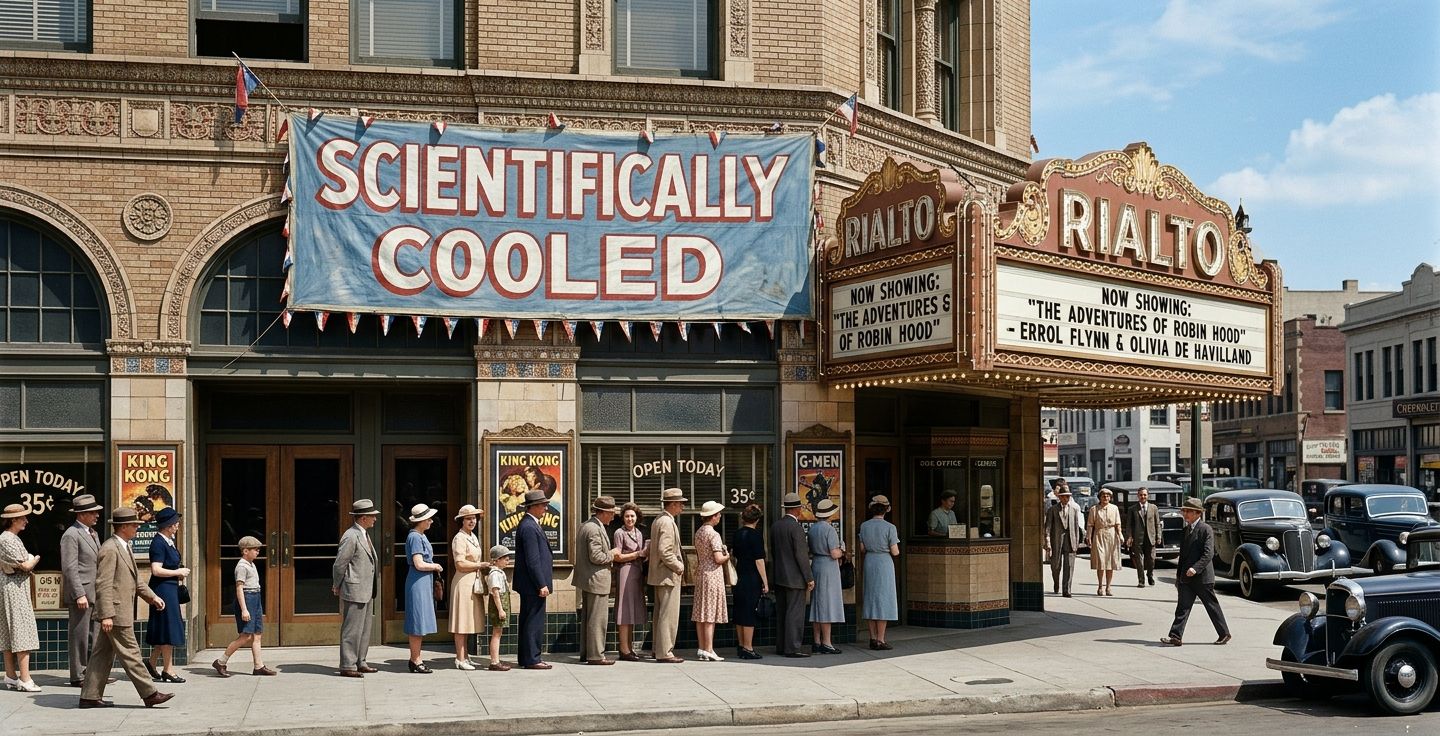
Let me tell you a little story about a small movie theater right down on Main Street in my hometown. Back in the nineteen thirties and forties, going out to the moving pictures was a special weekend event. But the real draw during the terrible dog days of summer was not the flashy Hollywood film itself. The clever theater owner had installed a newfangled commercial cooling system. He hung a massive, beautiful painted banner out front that proudly read Scientifically Cooled in bright, icy blue letters.
People would happily pay a nickel just to sit in the dark velvet chairs and feel that frigid air wash over their faces. I fondly recall a local baker named Mr. Abernathy who lived just down the block from us. He worked on his feet in front of blazing hot brick ovens all morning long. On his days off, he would buy a ticket to the afternoon matinee and fall fast asleep in the back row within ten minutes. He did not care one bit about the movie playing on the silver screen. He just wanted a few hours of genuine relief from the oppressive summer heat. That theater became a beloved community sanctuary. It was the very first time everyday folks experienced an environment completely divorced from the punishing weather outside. To all of us sitting in the dark, it felt like a true technological marvel.
A Changing American Landscape
Once ordinary people got a real taste of that cool indoor air, they desperately wanted it in their own homes. And slowly but surely, heavy metal window units started appearing in neighborhoods across the entire country. This incredible invention completely changed the traditional architecture of our homes. The grand front porches where we used to gather every single evening began to slowly disappear from new building plans. Builders started designing modern homes with lower ceilings and sealed picture windows to keep the precious cool air safely trapped inside.
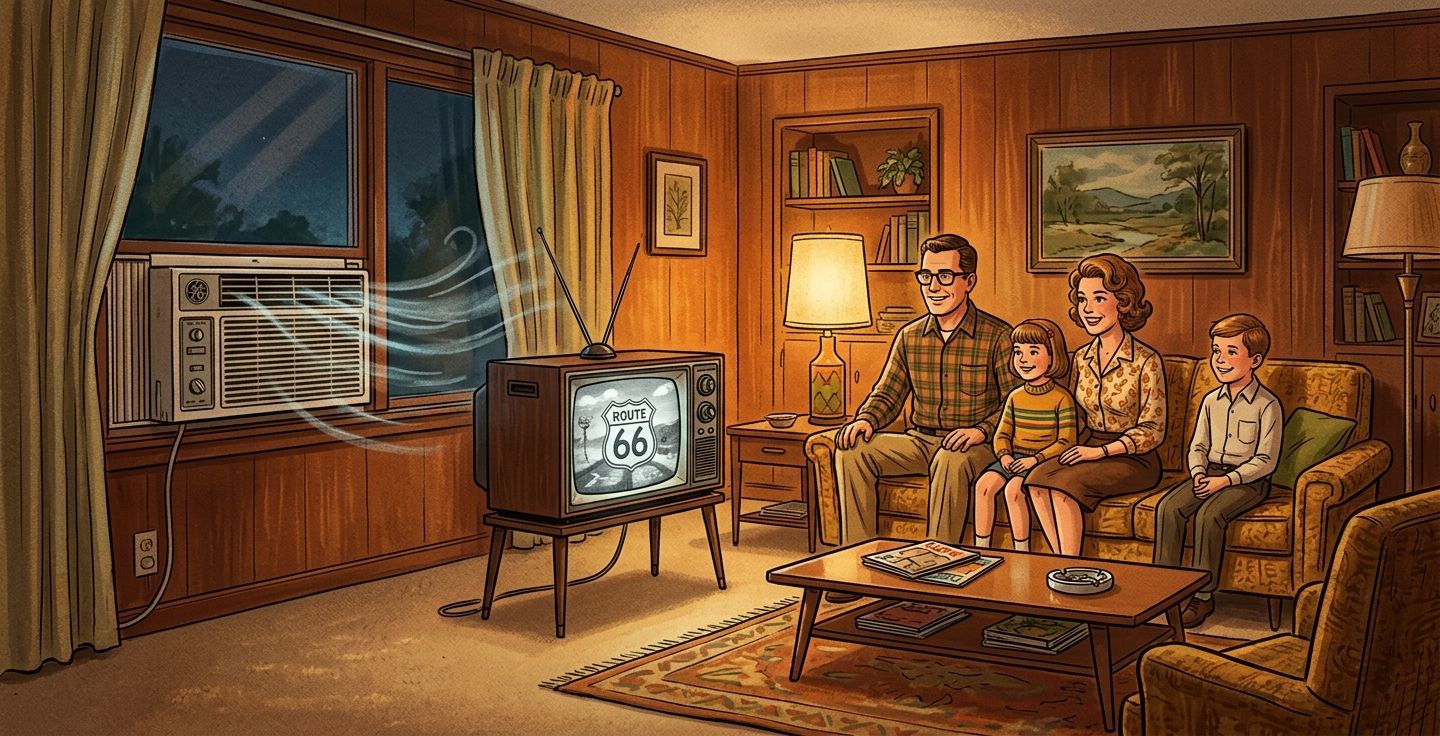
Families gradually moved their evening activities from the front steps to the private backyard patio, and eventually right into the living room to sit around the new television set. We traded our loud community stoop conversations for private, blissful comfort. I sometimes miss the closeness of those old neighborhoods, the sound of laughter drifting from porch to porch, and the shared experience of surviving another sweltering day. But I would never, ever trade away the comfort of a cool bedroom on a humid August night. We gained a reliable sanctuary of our very own.
This single invention also fundamentally redrew the demographic map of our growing nation. Without reliable indoor cooling, the incredible population growth of the American South would never have happened the way it did. Places that were once widely considered too geographically harsh for comfortable year round living suddenly became highly desirable destinations.
The Rise of the Sun Belt
You can easily look at rapidly growing cities in Florida or massive sprawling places like Houston, Texas and Phoenix, Arizona. Before artificial cooling became common, these distinct regions grew very slowly. After the nineteen fifties rolled around, millions of people packed up their lives and moved south. Entire major industries relocated to take advantage of the open space. The massive area we now lovingly call the Sun Belt boomed into an absolute economic powerhouse. Retirees from the snowy north found they could finally enjoy beautiful, sunny winters without suffering through unbearable, dangerous summers. Our entire nation completely shifted its geographic weight simply because of a marvelous machine that blew cold air.
Looking Forward to a Bright Tomorrow
We often take these wonderful daily comforts completely for granted now. You walk right into a house, push a small plastic button on the wall, and the room magically becomes a perfect seventy degrees. But I personally see this long history as a powerful testament to American ingenuity and spirit. We faced a massive, seemingly impossible obstacle in the climate itself, and we worked together to find a brilliant way to overcome it.
I look at my grandchildren today and I feel so much genuine hope bubbling up inside me. Your generation is incredibly bright, passionate, and clever. You are already figuring out fascinating new ways to make these vital cooling machines much more efficient and kinder to the beautiful earth we all share. You will absolutely find ways to keep us completely comfortable without harming the fragile environment. Just as we successfully tamed the difficult indoor climate over the last long century, I know in my heart that you will build a brilliant, sustainable, and comfortable world for the next one. Keep innovating, keep dreaming big, and always keep taking good care of one another.