
American Lifestyle
How Americans Spend Their Free Time at Home
Sweet American Summer Bomb Pop T Shirt
Wear your story with pride! Celebrate classic American values, history, and heritage with our premium crafted apparel, designed for comfort and durability.
The Porches of Our Youth
I remember the summer evenings of my childhood with a clarity that sometimes aches. The air tasted like honeysuckle and dust. The soundscape of our street was a symphony of human life. Cicadas hummed in the old oak trees. Ice clinked in heavy glass pitchers. Screen doors slapped shut as children ran in and out of the house. In those days, people lived their lives facing outward. The front porch was not just an architectural feature. It was the social network of the neighborhood. We sat on rocking chairs and wooden steps, watching the world go by. Our free time was a shared commodity.
The Great Inward Migration
Over the decades, I have watched the architecture of our lives turn slowly inward. The shift was gradual but absolute. The front porch gave way to the private back patio. Then, the back patio surrendered to the air conditioned sanctuary of the family room. We built fortresses of ultimate comfort. We enclosed ourselves in climate controlled boxes. The streets grew quiet. Today, if you walk down a residential sidewalk at seven in the evening, you will not hear the murmur of neighbors talking over the fence. You will see the soft, flickering blue light of television screens glowing through drawn blinds. We have more conveniences than our grandparents did. Yet, we often feel rushed and completely isolated.

Sweet American Summer Bomb Pop T Shirt
Wear your story with pride! Celebrate classic American values, history, and heritage with our premium crafted apparel, designed for comfort and durability.
Sweet American Summer Bomb Pop T Shirt
Wear your story with pride! Celebrate classic American values, history, and heritage with our premium crafted apparel, designed for comfort and durability.
The Mystery of Modern Leisure
This brings us to a fascinating question. How did we become a nation that spends the vast majority of our precious free hours tucked behind closed doors? What exactly are we doing with all that time once the deadbolts slide into place and the curtains are pulled shut?
The Surprising Reality of Our Evenings
To truly understand our modern habits, we need to look at the numbers. The Bureau of Labor Statistics conducts an ongoing study called the American Time Use Survey. Their findings paint a brilliant picture of how we manage our days. The average American enjoys roughly five hours of leisure time each day. That is a truly generous amount of freedom. But here is the part that might surprise you. Nearly three of those five hours are swallowed entirely by watching television or streaming videos. Reading books claims a mere twenty minutes of our day. Face to face socializing has dropped to around thirty four minutes. We possess more entertainment options at our fingertips than any generation in human history. Yet, we are spending our golden hours largely alone.
Our modern relaxation often involves staring at a screen until our eyes grow heavy. We scroll through endless images of other people living their lives, while our own lives tick quietly by in the background. It is a strange paradox. We are far more connected digitally, but we spend our time physically apart.
The Men Who Captured Our Attention
To understand how we got here, let me tell you a story about a brilliant young man named Philo Farnsworth (1906-1971). Philo was a simple farm boy with a mind that touched the stars. One afternoon, he was plowing a potato field in rigid, parallel lines. He looked back at the dirt and realized that an image could be sliced into lines and transmitted electronically. He literally dreamt up the electronic television right there in the soil. Philo hoped his invention would become a great educational tool. He firmly believed it would connect the world and end ignorance.
The Changing American Living Room
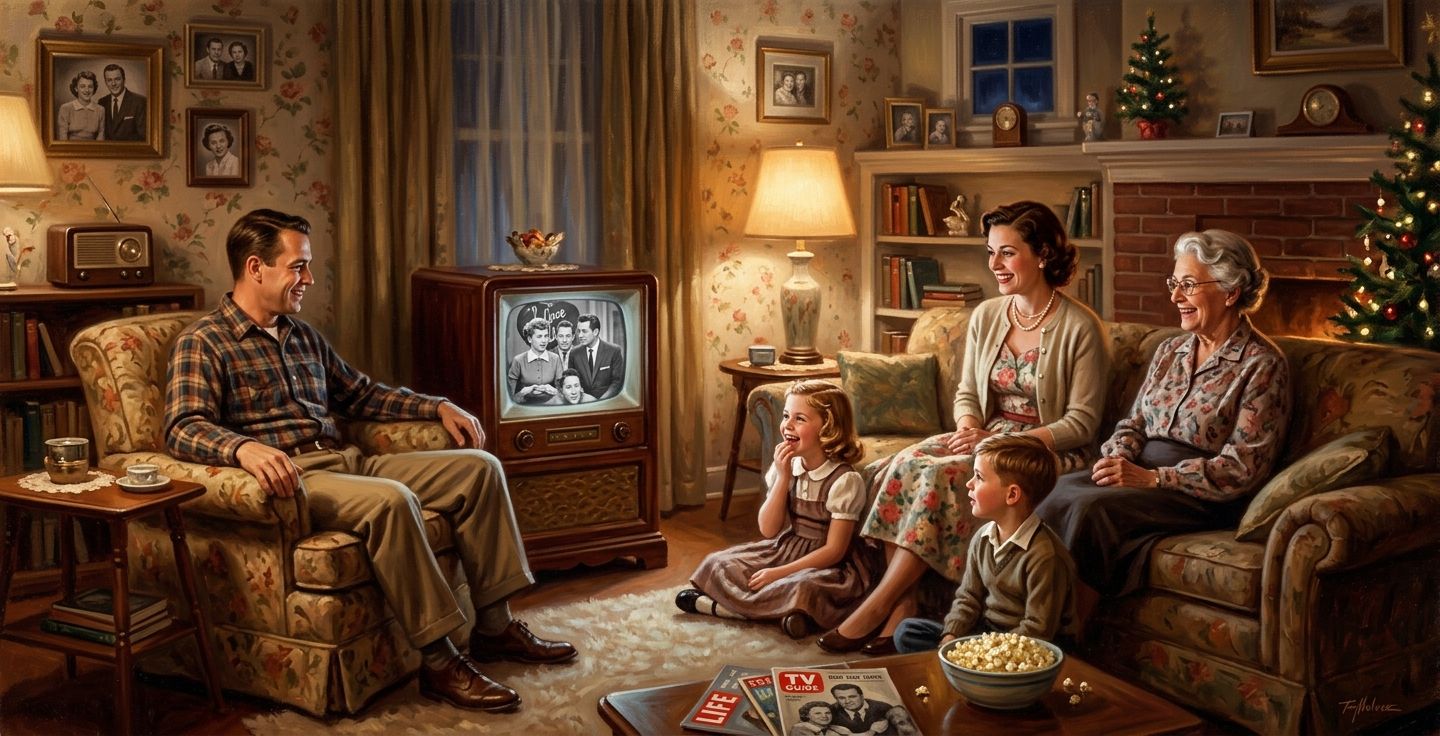
Consider what happened when those magical, wood paneled boxes arrived in places like Levittown, New York. Levittown was the absolute blueprint for the modern American suburb. Before the television era, the front room of a house was a formal parlor. It was a beautiful space reserved for entertaining guests. But in the years following the war, the television became the new hearth. The furniture was literally rearranged. Sofas and chairs that once faced each other for conversation were turned to face the glowing screen. I vividly remember when my neighbor Mr. Abernathy bought the very first set on our street. The whole block crowded into his small living room just to watch fuzzy test patterns. For a brief moment, the television brought us together. But soon, every house had their own set. The communal gathering splintered into private, quiet viewings.
The Golden Age of Analog
Before the screens took over entirely, we had very different ways of passing the time indoors. Radio was a massive part of our lives. Entire families would gather around a large wooden console to listen to mystery shows or news broadcasts. But radio allowed your hands to be free. Women would knit. Men would whittle or polish their shoes. Children would play on the rug. The radio required imagination.
We also played games. A wonderful man named Milton Bradley (1836-1911) popularized parlor games for families. He believed that game play was absolutely essential for human development. Playing a game required you to look at your opponent. It required negotiation, loud laughter, and sometimes a little bit of friendly arguing. It was active participation. We were alive in our homes.
The Modern Shift and Weekend Retreats
Fast forward to today. The screens have multiplied exponentially. They are no longer just sitting in the living room. They are in our bedrooms. They are in our pockets. They sit strapped to our wrists. Excessive screen time has become the absolute default setting for American rest. It is incredibly easy to look at this modern landscape and feel a profound sense of loss. It is easy for an old man like me to shake his head, complain about the youth, and say the golden days are gone forever.
Our weekends used to look vastly different as well. Saturday mornings were for chores, yes, but Saturday afternoons were for neighborhood baseball games or fixing old cars in the driveway. People were visible. The driveway was an extension of the public sphere. Now, our weekend leisure time is often just an extended version of our evening isolation. We binge watch entire seasons of television shows in a single sitting. We call it resting, but our minds are exhausted by Sunday night. We have forgotten how to let our hands be busy while our minds rest. That is the secret to true rejuvenation.
A Beautiful Reason for Hope
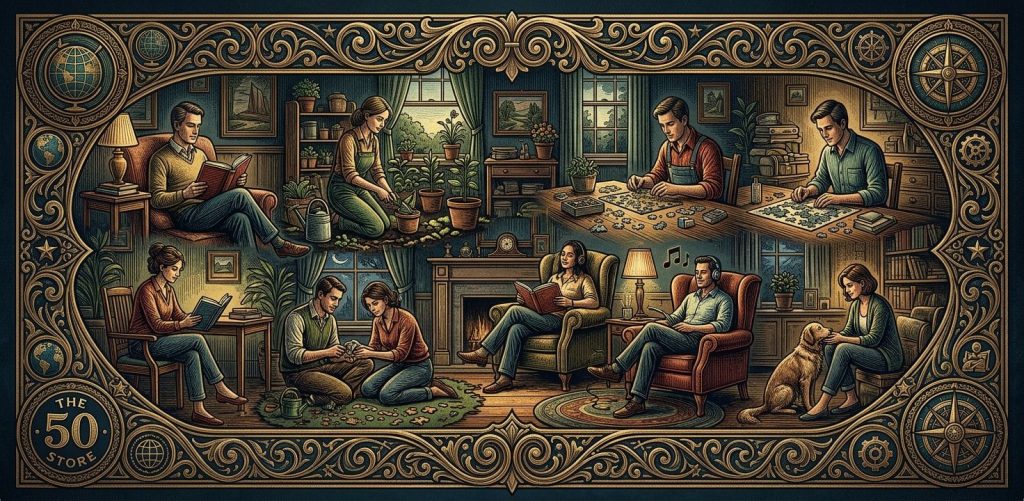
But I refuse to believe that the good days are behind us. I look closely at my grandchildren and their friends, and I see something incredibly wonderful blooming. There is a quiet, beautiful rebellion happening in American homes right now. The younger generations are starting to recognize the trap of endless digital consumption. They are beginning to crave the tangible, the real, and the authentic. They want to touch things with their hands again.
The Resurgence of the Maker
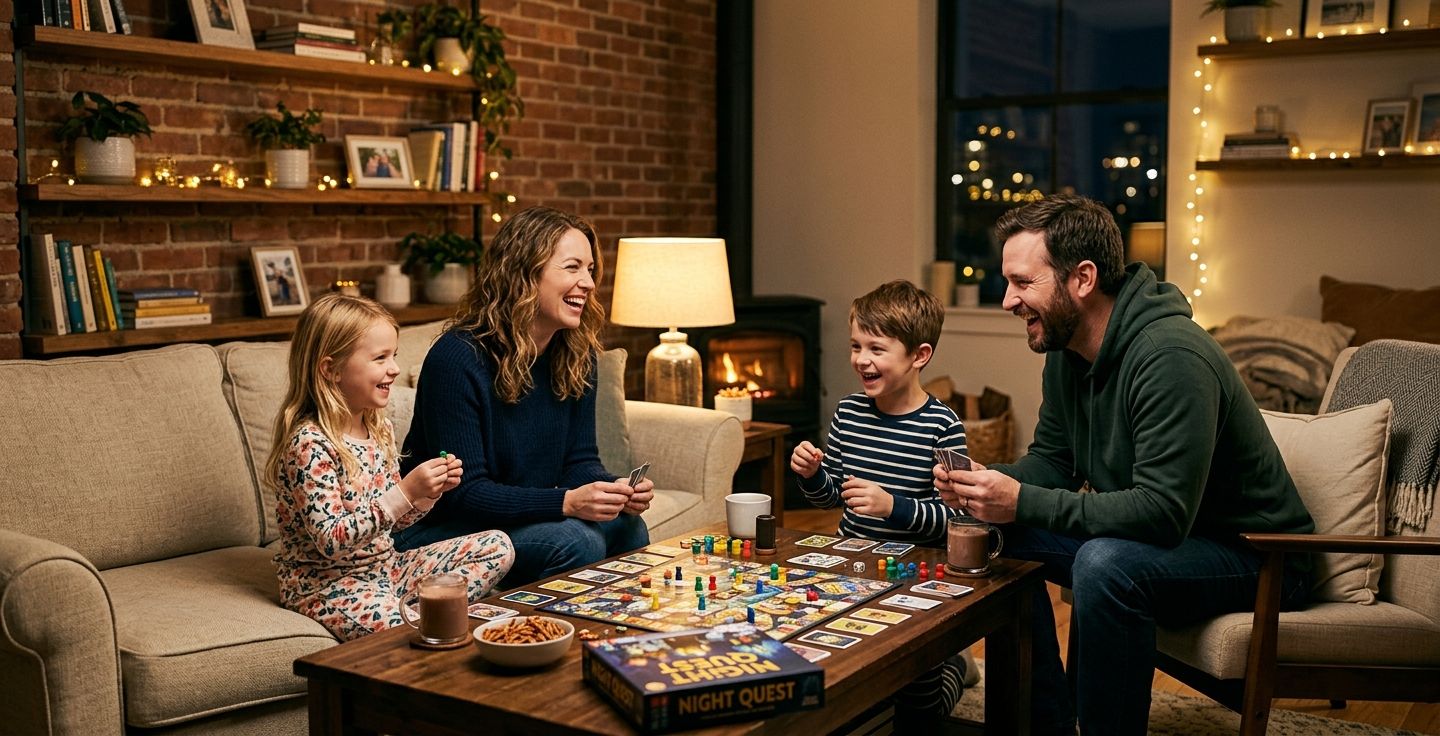
We are witnessing a massive resurgence in traditional hobbies. Just last week, my granddaugther brought me a thick loaf of sourdough bread she baked entirely from scratch. Her small apartment kitchen looked like a flour bomb had exploded, but her eyes were shining with genuine pride. Young folks are reclaiming their evenings. Board game sales have skyrocketed in recent years. People are gathering around kitchen tables to play complex games that take hours to finish. They are knitting sweaters. They are cultivating indoor jungles of house plants. They are recognizing that true, restorative rest comes from active creation, not just passive consumption.
Finding Balance in the Home
This shift gives me an immense amount of hope. The home is once again becoming a workshop, a bakery, and a playground. Even in tiny urban apartments near busy places like Central Park, New York, young professionals are setting up easels and mixing paints. They are turning off their phones and putting on vinyl records. They are listening to whole albums from start to finish. They are finding brilliant ways to make their indoor spaces feel alive again.
The Invitation to Reclaim Your Evening
This brings us to a beautiful crossroads. We all have a daily choice in how we spend our quiet hours. The convenience of the modern world is truly a magnificent blessing. Having access to every movie ever made is a marvel. But genuine family bonding requires deep intention. It requires us to make a conscious decision to occasionally turn off the router and step away from the glowing boxes. We have to choose each other.
Tonight, I want to offer you a gentle challenge. Leave the television dark for just one evening. Pull a dusty board game down from the top shelf of the hallway closet. Open a real book and feel the paper under your thumbs. Or better yet, step out onto your front porch or your apartment balcony. Just sit there and watch the clouds change color as the sun slowly goes down. Listen to the sounds of your neighborhood. The world is spinning incredibly fast right now. But your home can still be a place of deep, meaningful, and creative peace. You just have to build it that way, one evening at a time.
Common Questions About American Leisure Time
How many hours of free time do Americans actually have at home?
According to the American Time Use Survey, the average adult has about five hours of leisure time a day. It sounds like a lot. However, this time is often broken up into small chunks between chores, commuting, and taking care of the family, which makes it feel much shorter than it actually is.
What is the most common leisure activity for adults in the United States?
Watching television and streaming digital content takes the top spot by a wide margin. Most folks spend nearly three hours a day watching screens. It is our favorite way to unwind, though it often leaves us feeling more drained than genuinely rested.
Are traditional hobbies becoming popular again?
They absolutely are, and it warms my heart to see it. Things like baking bread, knitting, woodworking, and gardening have seen a massive revival. Younger folks are realizing that making things with their own two hands provides a deep sense of satisfaction that a phone screen simply cannot offer.
How does excessive screen time affect our ability to relax?
Staring at screens keeps our brains in a constant state of mild stimulation. The blue light tricks our minds into thinking it is still daylight. Real relaxation requires our nervous systems to settle down, which is much easier to achieve with a good book, a quiet walk, or a simple conversation.
What are some good ways to encourage family bonding at home without screens?
The simplest things work best. Bring out a classic board game, work on a large jigsaw puzzle together, or cook a meal as a family. The goal is to choose activities where you naturally have to look at each other and talk. Shared laughter is the best glue for any family.
Did the invention of the television change how our houses are designed?
It certainly did. Before the television, our living rooms were designed for conversation, with chairs facing one another. Once the TV arrived, it became the focal point of the room. Every piece of furniture was turned to face the screen, turning our communal spaces into private theaters.
How can I start spending my free time more intentionally?
Start very small. Pick one single evening a week to go completely screen free. Use that quiet time to sit outside, write a letter to an old friend, or practice a hobby you used to love. Treat your free time like a precious gift, because that is exactly what it is.