American Mythos & National Character
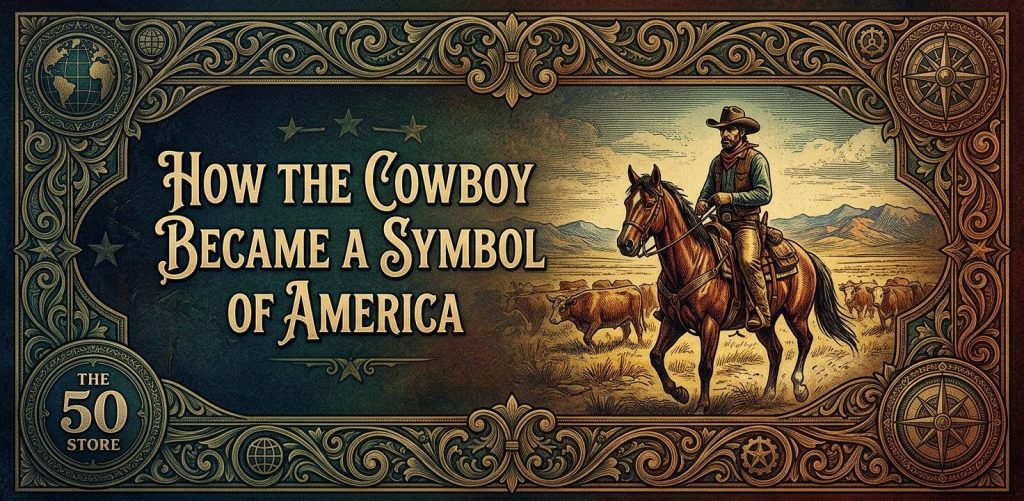
How the Cowboy Became a Symbol of America
Sweet American Summer Bomb Pop T Shirt
Wear your story with pride! Celebrate classic American values, history, and heritage with our premium crafted apparel, designed for comfort and durability.
The Call of the Open Plains
There is a certain scent that settles over the plains just before a rainstorm. It is a mixture of dry sage, restless dust, and sheer possibility. I have walked this American soil for many decades. I have seen seasons change, small towns blossom into sprawling cities, and wonderful new inventions arrive that I could never have imagined as a boy. Yet, despite all our modern progress, one image remains firmly planted at the center of our national identity. It is the lone rider, resting easy in the saddle, silhouetted against a brilliant sunset. Have you ever wondered why we love this image so much?
To understand this, we have to look back at the situation our nation faced just after the Civil War. It was a time of deep sorrow and healing. The country was physically and emotionally fractured. The economy in the southern states was completely devastated. However, roaming through the thick brush of Texas were roughly five million feral longhorn cattle. At the exact same time, the northern territories and the rapidly expanding eastern cities were desperate for food. The demand was immense, and the supply was hundreds of miles away across hostile, unmapped terrain. We needed a bridge. Somebody had to step up and connect the two halves of a broken nation. That was the monumental task at hand.
A Trail Blazed by Necessity
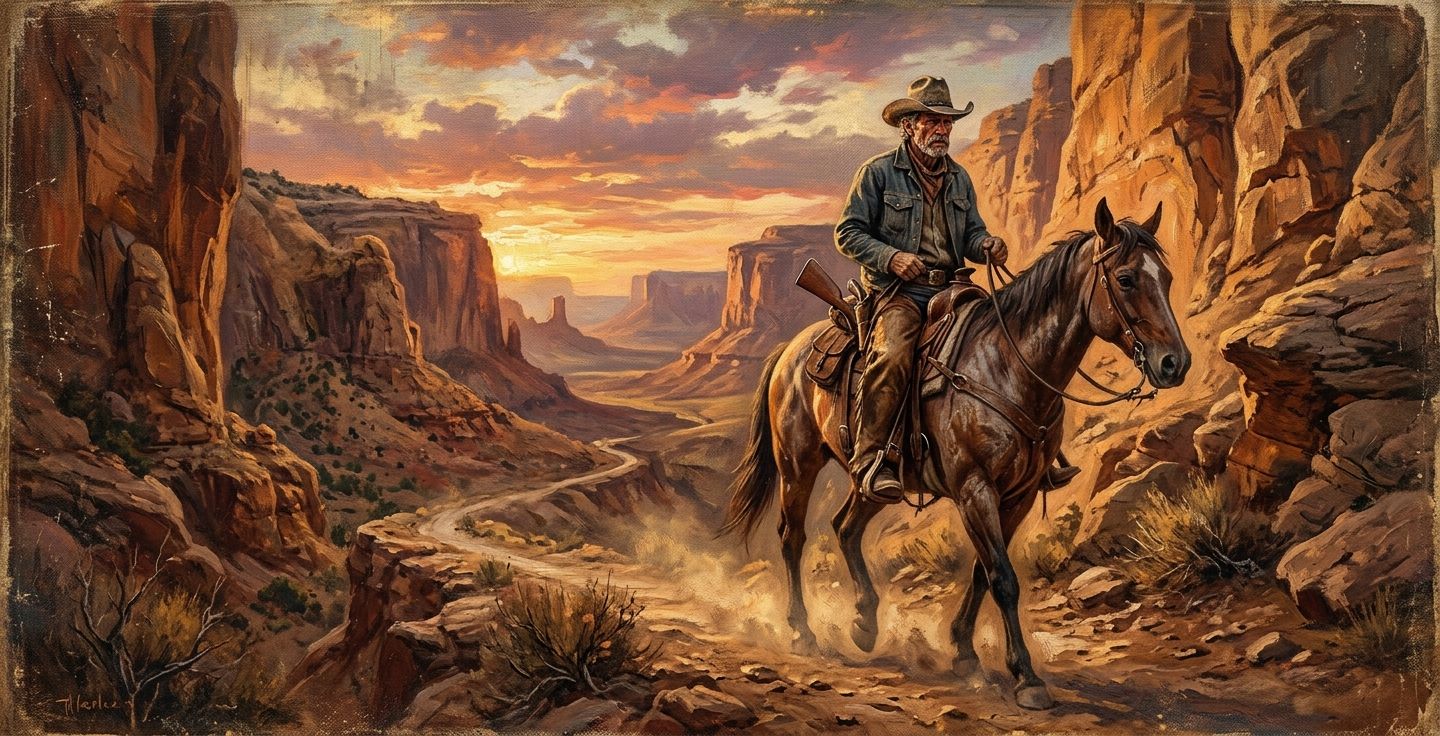
Let me tell you about a man named Charles Goodnight (1836-1929). When he returned to Texas after the war, the world he knew was entirely fractured. He saw the massive gap between the feral herds in the south and the hungry mouths in the east, and he decided to cross it. He teamed up with Oliver Loving, and together they blazed a route through some of the most unforgiving landscapes on earth. They drove their herds right through the deep, echoing red rock walls of Palo Duro Canyon, Texas. Goodnight even invented the chuckwagon just to keep his men fed on these grueling journeys. It was an astonishing feat of human endurance. It was not a grand adventure. It was deeply dangerous, exhausting labor.
Sweet American Summer Bomb Pop T Shirt
Wear your story with pride! Celebrate classic American values, history, and heritage with our premium crafted apparel, designed for comfort and durability.
Sweet American Summer Bomb Pop T Shirt
Wear your story with pride! Celebrate classic American values, history, and heritage with our premium crafted apparel, designed for comfort and durability.
A Short Ride into History
The cattle drive era was not a permanent fixture of American life. It was just a fleeting moment. According to historians at the Smithsonian Institution, the true golden age of the open range lasted barely twenty years, spanning from 1866 to roughly 1886. It is truly astonishing that such a brief period left such a permanent mark on our souls. The work was grueling. A crew of a dozen men would be responsible for moving thousands of stubborn, easily spooked cattle across rivers, through violent storms, and over miles of dry dirt. They slept on the hard ground. They ate beans and biscuits. For all this backbreaking labor, a standard hand was paid a meager twenty-five to forty dollars a month.
The Real Faces of the Frontier
The reality of who rode those trails might surprise you, too. Out of the estimated 35,000 men who rode the trails during this time, historians note that roughly twenty-five percent were Black Americans. Let us look at the remarkable life of Nat Love (1854-1921). Born into slavery, Nat had a deep yearning for freedom that led him out west. On the trail, a man was judged by his grit and his skill, not his background. Nat proved himself time and time again. In the summer of 1876, his trail boss sent the crew up to deliver a herd near the booming, chaotic mining town of Deadwood, South Dakota. A massive roping and shooting contest was being held. Nat entered the competition. He roped, tied, and saddled a wild mustang faster than any other man present. He won the grand prize and earned the legendary nickname Deadwood Dick. Furthermore, another fifteen percent of the riders were Mexican vaqueros, the true original masters of the trade. The actual frontier was incredibly diverse.
How the Myth Outgrew the Man
So, you might be asking a very reasonable question. How did this incredibly brief, exhausting, and low-paying job become the ultimate symbol of America? Why do we still celebrate this short chapter of our history?
It all started with cheap paperback books called dime novels. Writers sitting in comfortable offices in New York and Boston imagined a wild world of untamed outlaws and noble riders. They fed these stories to a public that felt trapped by factory walls and crowded streets. Then came the true mastermind of the myth, William Frederick Cody (1846-1917). You probably know him as Buffalo Bill. Cody understood the American heart perfectly. He knew that folks in the cities longed for the open sky. So, he packed up the dust, the horses, and the sharpshooters, and he brought the west directly to them.
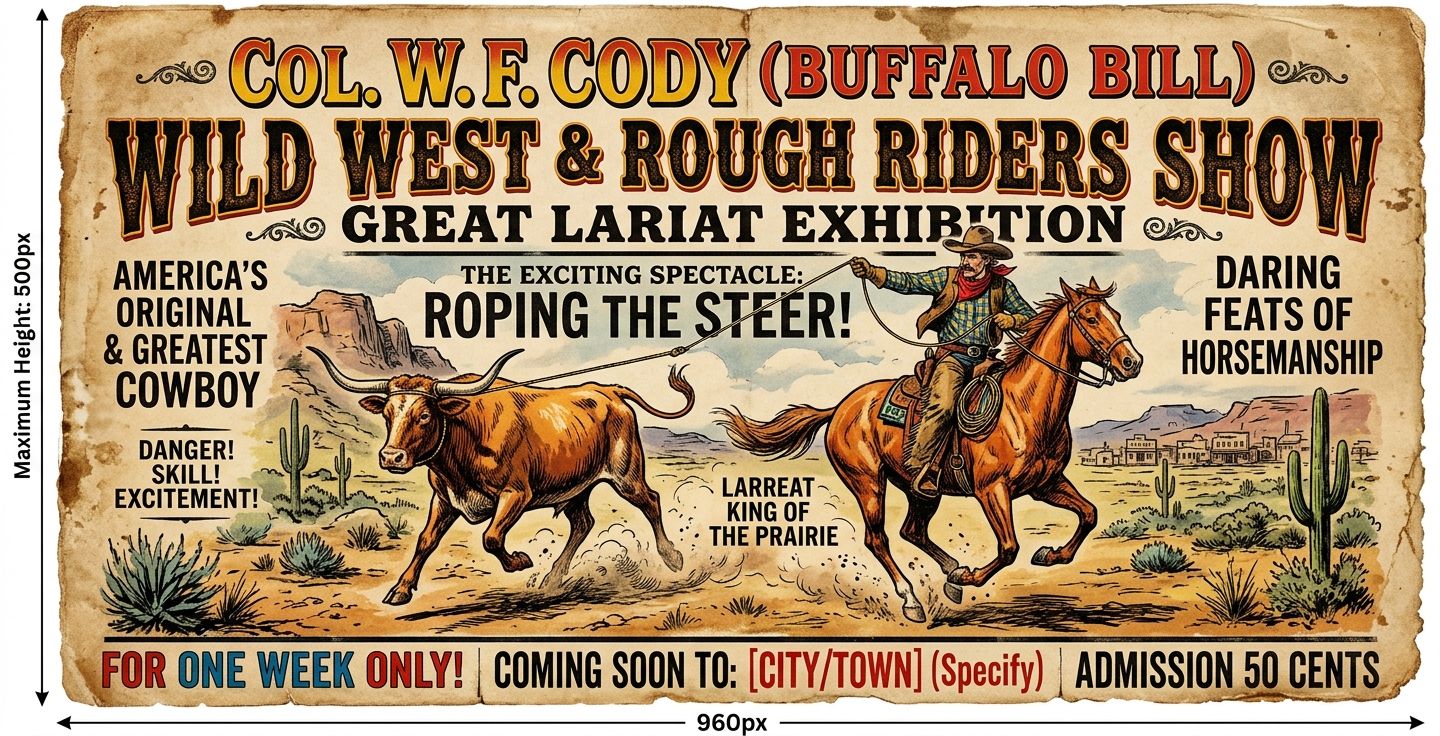
He created Buffalo Bill’s Wild West exhibition. It was an absolute marvel of a show. They performed in massive arenas with bright banners waving in the wind. The crowds smelled popcorn and gunpowder. They cheered as riders performed incredible feats of skill. Cody completely reshaped the narrative. He shifted the focus away from the difficult, low-paying labor of moving livestock. He turned the spotlight onto the romance of a fiercely independent hero.
The Spirit We Crave Today
As I sit on my porch and watch the evening light fade, I often think about why we still hold onto this image. Why does the cowboy still matter so much to us today? I believe it is because he represents a spirit we desperately crave. We all want to feel that we have the power to steer our own lives. We long for independence. The concept of manifest destiny might be a historical term about settling the land, but the feeling behind it still lives inside our chests. We want to push past our own boundaries.
The Wild West is no longer a physical place. It has become a state of mind. It is a symbol of American resilience. When the storms of life hit us, we do not want to fold. We want to put on our boots, pull our hats down tight, and face the wind head on. We want to be brave. The end of the open range came swiftly when barbed wire fenced in the plains, and the tragic, freezing winter of 1886 decimated the herds. The romantic days of riding completely free across boundless land were essentially frozen in time. Yet, the legend had already taken root in our hearts.
Saddling Up for Tomorrow
This brings me an incredible amount of hope. I see the younger generations today, and I see that exact same spirit shining through. You face a world that is complicated and fast-paced. You have challenges that my generation could never have predicted. Yet, you are meeting them with wonderful courage. You are forging new paths in your careers, your communities, and your families. You do not need to sit in a saddle to carry the heart of a pioneer.
It takes a special kind of bravery to wake up every day and choose to be kind, to work hard, and to build a better future. I see small business owners taking huge risks to chase their dreams. I see neighbors helping neighbors after heavy storms. You are carrying that torch forward. I encourage you to keep that spirit alive in everything you do. Wake up each morning with purpose. Treat your neighbors with a generous heart. When the trail gets steep, remember the grit of those who came before you. Saddle up for your own journey, my friends. The horizon is waiting for you, and it is beautiful.