
American History & Origins
What Life Was Like in Early American Colonies
Red White Brewed Eagle Beer T Shirt
Wear your story with pride! Celebrate classic American values, history, and heritage with our premium crafted apparel, designed for comfort and durability.
The Quiet Promise of a New Land
Welcome. Come sit and rest for a moment. I have spent my whole life walking the woods and streets of this beautiful country. Over the years, I have come to appreciate the deep roots that anchor us all. It is easy to look around today at our paved roads and glowing screens and forget how it all began. The situation in the early 1600s was a blank slate of untamed wilderness and quiet promise. People arrived with nothing but the clothes on their backs, a few iron tools, and hearts full of desperate hope.
The complication arose almost immediately upon their arrival. Survival was incredibly hard. Harsh winters, strange diseases, and the sheer physical labor of starting from scratch threatened to wipe them out completely. Many did not make it through those first few years. So, the question remains. How did ordinary folks survive and eventually thrive to build the foundations of the country we love today? They did it through sheer grit, relying heavily on one another, and adapting to a world completely different from the one they left behind. When I think of those days, my heart swells with a quiet pride. We are the descendants of survivors, and their strength is still running in our veins today.

Red White Brewed Eagle Beer T Shirt
Wear your story with pride! Celebrate classic American values, history, and heritage with our premium crafted apparel, designed for comfort and durability.
Red White Brewed Eagle Beer T Shirt
Wear your story with pride! Celebrate classic American values, history, and heritage with our premium crafted apparel, designed for comfort and durability.
Surprising Truths of Early Survival
We often picture the colonial era as a quiet time of quaint villages, peaceful church services, and folks in clean buckled shoes. But the reality was far more startling and much more difficult. To pique your interest, let us look at some numbers from early historical records. During the winter of 1609 in Jamestown, known as the Starving Time, the mortality rate was nearly 80 percent. That is a staggering figure. Yet, those who remained kept going. They refused to give up.
Water was often so contaminated in the marshy areas that colonists of all ages drank weak beer or fermented cider instead. Records show that the average colonist sometimes consumed up to a gallon of cider a day just to stay hydrated safely. It was a completely different way of living. It was not a life of leisure. It was a life of constant motion and grueling labor. The average life expectancy was very low at first, but slowly, as they learned the land, the numbers began to change. They adapted. They learned how to hunt new game. They learned how to build better shelters. They survived. It shows you the boundless resilience of the human spirit.
A Dusty Path in Massachusetts
Let us focus on a single, dusty path. Picture the earliest days of Leyden Street in Plymouth. Here, a big national shift happened not in grand meeting halls, but in small, muddy gardens. William Bradford (1590-1657) walked this very street as a wise leader. But I want you to think about the ordinary folks living next door to him. Think about a mother teaching her children to mound dirt around corn stalks, burying fish for fertilizer just as the local native tribes had so graciously shown them.
This simple act of planting a successful harvest was the absolute birth of American self reliance. It was not just about growing food. It was about severing the cord of dependence on supply ships from across the ocean. When that first good crop came in, it changed everything. The settlement went from a temporary outpost of starving strangers to a permanent home of hopeful neighbors. Families began to build stronger, timber framed houses. 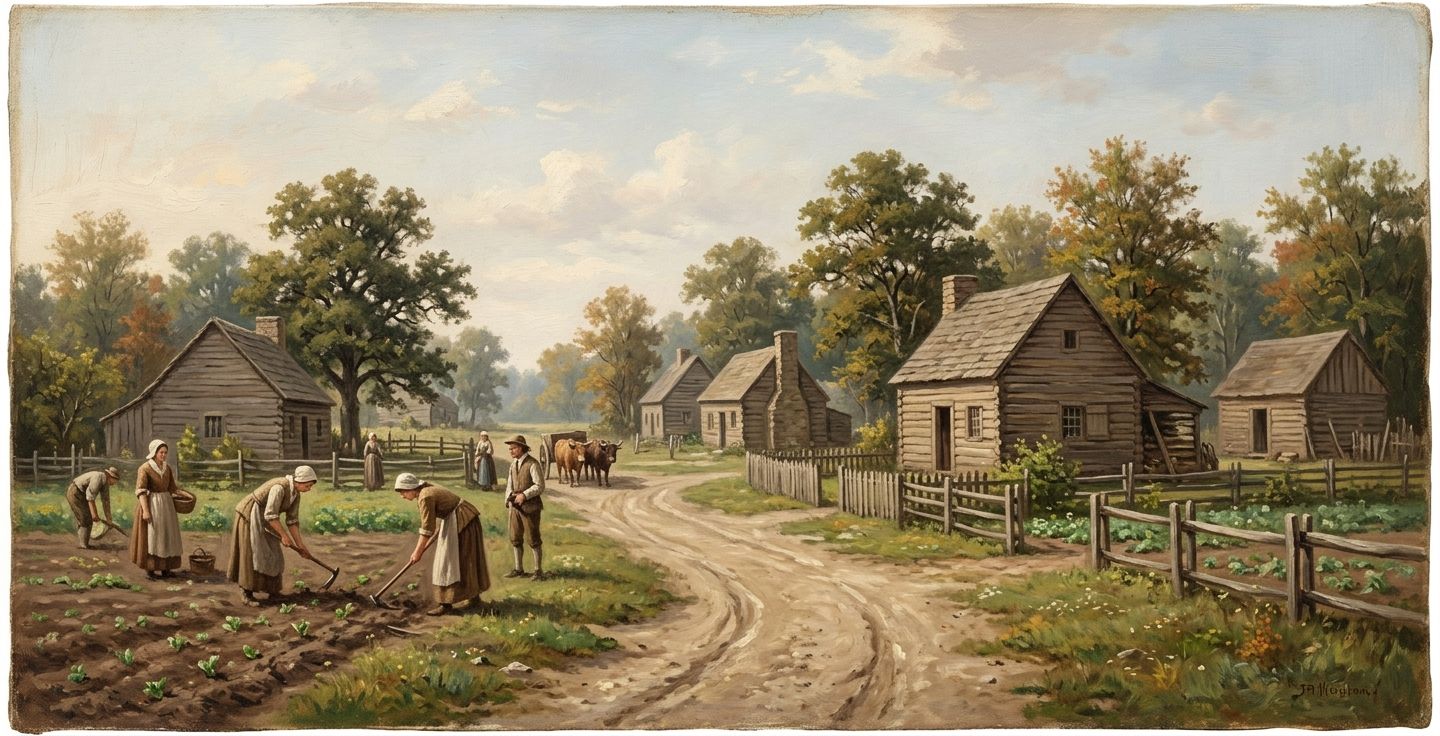
The Golden Leaf in Virginia
Farther south, another small story changed the course of history entirely. Let me tell you about a small patch of dirt in Virginia. A man named John Rolfe (1585-1622) arrived in a land that was struggling to find its economic footing. The people were working hard, but they had nothing of value to trade with the old world. Then, Rolfe managed to get his hands on some sweet tobacco seeds from the Caribbean. He planted them in the fertile Virginia soil.
He tended those small green shoots with care. That simple act created the first cash crop of the new world. It brought wealth, it brought more settlers, and it firmly established the economic foundation of the southern colonies. The entire trajectory of a nation was shifted by one man kneeling in the dirt, patting soil over a handful of tiny seeds. It reminds us that small actions can have incredibly large consequences.
The Warmth of the Hearth and Home
Life in those days was entirely centered around the hearth. In bustling places like Boston, the fireplace was the beating heart of every home. It provided heat against the bitter cold, light in the dark winters, and a place to cook every meal. Imagine the smell of woodsmoke clinging to everything you own, a constant reminder of the fire that kept you alive.
Anne Bradstreet (1612-1672), a brilliant poet of the time, wrote beautifully about the trials and quiet joys of this domestic life. Women spun their own thread from wool and flax. They wove their own cloth to make garments for their growing families. Men hunted the forests and worked the rocky fields from sunrise to sunset. Children did not have long childhoods. They worked right alongside their parents, carrying water, gathering firewood, and tending to the animals.
But there was also immense joy. Neighbors gathered to help raise a barn, share a meal, or celebrate a successful harvest. They shared what little they had. It was a community bound by absolute necessity and deep mutual respect. This spirit of helping your neighbor, of lifting up those who have fallen, is something that has stayed with us through the centuries. It is the very best part of who we are as Americans. 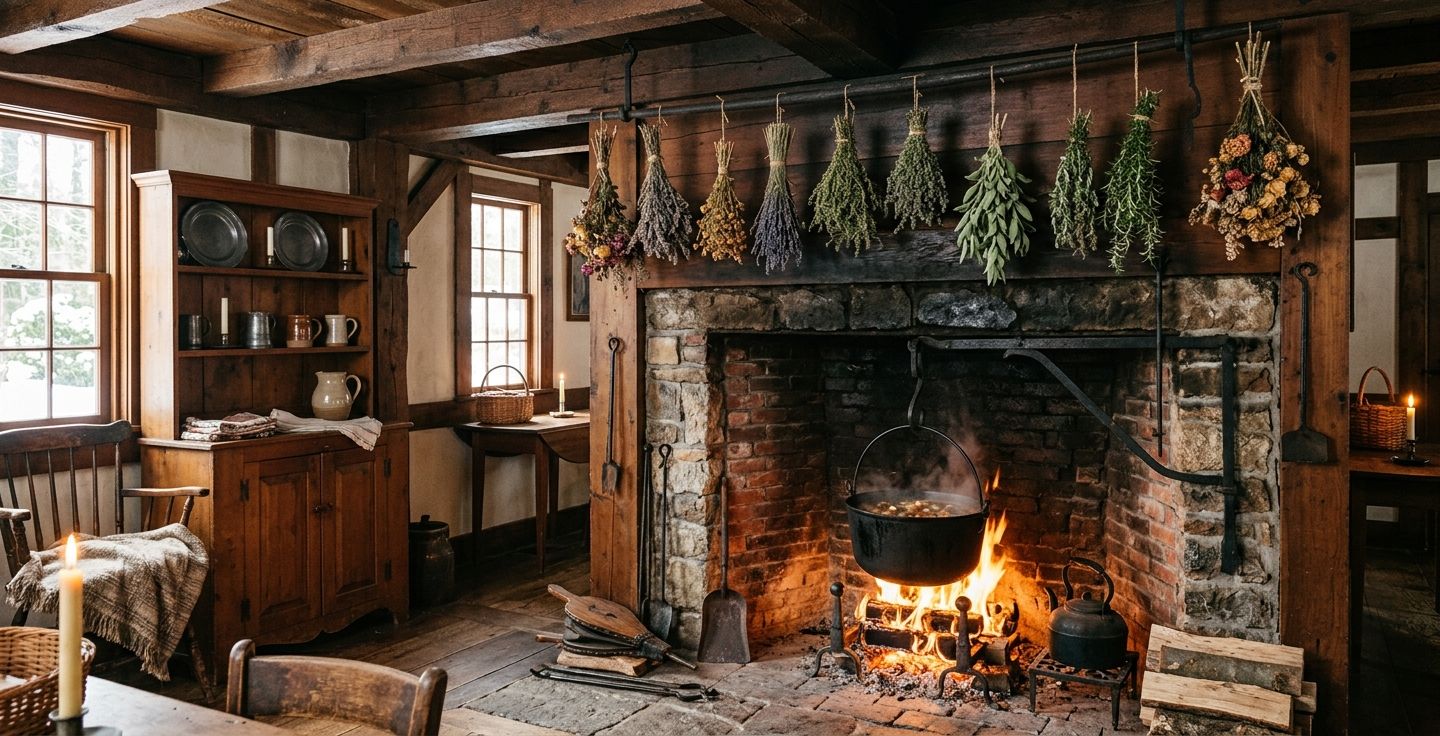
The Tools of Survival
You have to understand the sheer physical effort required to live back then. Everything had to be made by hand. If you needed a nail, a blacksmith had to hammer it out of raw iron. If you needed a bowl, someone had to carve it from a block of wood. The tools were heavy and crude. The broad axe, the crosscut saw, the simple wooden plow. These were the instruments that carved a nation out of the wilderness.
I often marvel at the strength of their hands. They felled massive oak trees, hewed them square, and hoisted them into place using nothing but ropes, pulleys, and human muscle. They looked at a dense forest and saw a future town. They looked at a rocky field and saw a future farm. This vision, this ability to look past the present hardship and see a better tomorrow, is a gift they have passed down to all of us.
Looking Forward with Endless Hope
As you go about your day, I encourage you to look into your own family history. Or perhaps take a weekend drive to visit some of these deeply historic places. Walk the dirt paths where they walked. Touch the old stones. Feel the wind coming off the water. It connects us directly to them. It fills the heart with immense hope for our future. We have overcome so much to get here. We will continue to build, to grow, and to care for one another. The future is very bright because our roots run so incredibly deep. I believe in this country, and I believe in the good people who call it home.