
Geography & the American Landscape
What Makes the Great Plains Unique
Sweet American Summer Bomb Pop T Shirt
Wear your story with pride! Celebrate classic American values, history, and heritage with our premium crafted apparel, designed for comfort and durability.
The Heartbeat of the Heartland
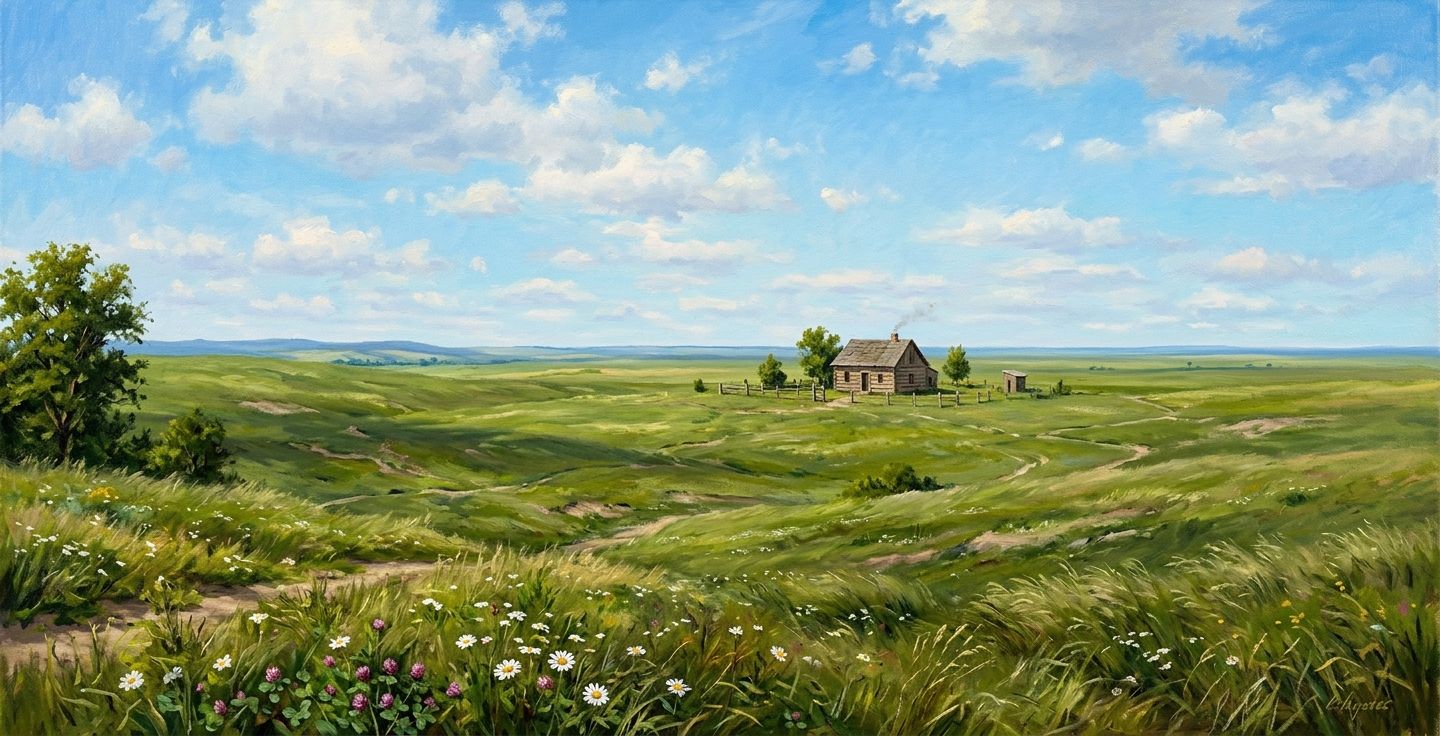
I have spent countless evenings sitting on my back porch, just watching the sun dip below the horizon. The sky out here stretches wider than anywhere else on earth. It is a canvas of brilliant oranges, deep purples, and fading golds. This is a place where the wind whispers through the dry grass like an old, trusted friend. I have lived my entire life in this great American center. It is a landscape that has quietly shaped our national character for centuries. The Great Plains span across the very middle of North America. They stretch from the scrubby brush of Texas all the way up to the frosty borders of Montana and the Dakotas. It is a land of extremes. The winters are unforgiving, with winds that howl down from Canada with nothing to stop them but barbed wire fences. The snow drifts high against the barns, creating a silent, white world. It is harsh. But then comes the spring. The thaw brings a vibrant, impossible green to the world. Meadowlarks sing their hearts out on the wooden fence posts. It is a rebirth that happens every single year. You never stop marveling at it.

Sweet American Summer Bomb Pop T Shirt
Wear your story with pride! Celebrate classic American values, history, and heritage with our premium crafted apparel, designed for comfort and durability.
Sweet American Summer Bomb Pop T Shirt
Wear your story with pride! Celebrate classic American values, history, and heritage with our premium crafted apparel, designed for comfort and durability.
More Than Meets the Eye
For many folks on the coasts, this vast expanse is just something to endure on a long cross country drive. It is viewed as a quiet backdrop. People fly over it at thirty thousand feet. They look down at the geometric patchwork of fields and see nothing but empty space. They call it flyover country. They miss the history. They miss the brilliant innovation. They miss the deep, enduring beauty that sustains us all.
Let me tell you something that might genuinely surprise you. People call this land empty, but it is absolutely bursting with life, energy, and power. According to the United States Department of Agriculture, the Great Plains region produces over twenty five percent of our entire national crop value. That is the food on your dinner table and mine. Even more fascinating is what is happening with the wind sweeping across these fields. The American Wind Energy Association reports that states in this region generate a massive portion of our country’s renewable energy. Texas and Oklahoma alone lead the charge, turning those endless breezes into clean electricity that powers millions of American homes. And beneath our very feet lies the glorious Ogallala Aquifer. The United States Geological Survey estimates this massive underground reservoir holds enough fresh water to cover all fifty states in a foot and a half of water. These are not just dry numbers on a page. They are the pulse of a living, breathing region that keeps our nation marching forward.
The Question We Must Ask
This brings us to an important realization. We face a complicated reality where the very land that feeds and powers the country is often the most misunderstood. So, what makes the Great Plains truly unique? How did a seemingly endless sea of grass become the very foundation of our modern American life, and why does it still matter so much to our children and grandchildren today?
A Window to the Soul of America
Let us look back to understand exactly where we are going. Consider a small, windswept town like Red Cloud, Nebraska. In the late nineteenth century, it was a bustling hub of hopeful pioneers. Among them was a young girl who would grow up to capture the indomitable spirit of this land. Her name was Willa Cather (1873-1947). When Cather first arrived in Nebraska as a child, she felt swallowed by the vastness of the open earth. There were no mountains to block the view, just a terrifying, beautiful ocean of land. But she soon saw the rugged poetry in the tallgrass prairie. Through her keen eyes, we can see an entire national shift unfold. We moved from wild, untamed frontiers to communities rooted deeply in the soil.
Her classic novels tell the intimate story of European immigrants and American pioneers working side by side in the dirt. They broke the tough, unyielding sod. They built warm homes out of the very earth they plowed. Red Cloud was just one tiny dot on the map, but it represented thousands of similar communities springing up under the promise of the Homestead Act. People came with nothing but a dream, a few tools, and a willingness to work until their hands bled. This spirit of sheer resilience is baked into the dirt here. It is a stubborn, beautiful hope that shaped our ancestors and continues to shape us. When you walk down the old dirt roads near Red Cloud today, you can almost hear the creak of the wagon wheels and the hopeful chatter of those early settlers.
The Backbone of Our Nation
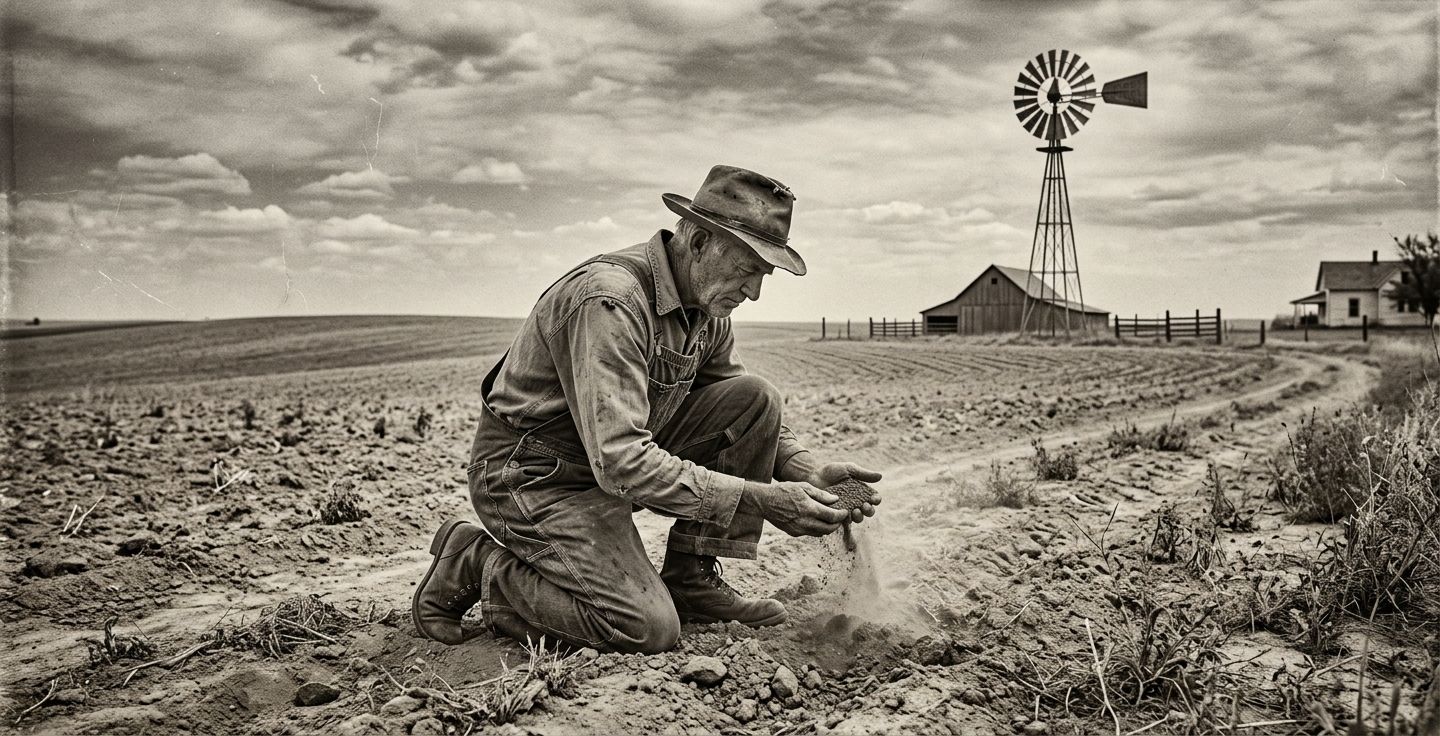
The journey was not always smooth. We learned hard, painful lessons along the way. I often think about the stories my parents told me about Dalhart, Texas during the terrible nineteen thirties. The wind picked up the loose topsoil and completely blotted out the sun. It was the dark era of the Dust Bowl. Families choked on dirt right inside their own living rooms. Cattle perished in the fields. The nation watched in absolute horror as the American breadbasket seemed to turn into a barren desert overnight. The pain was immense, and many gave up and moved west.
But out of that profound tragedy came a magnificent awakening. A determined man named Hugh Hammond Bennett (1881-1960) stepped forward. He traveled the country and passionately preached the gospel of soil conservation. He showed desperate farmers how to plow carefully along the natural contours of the land. He taught them to plant thick windbreaks of trees to slow the gales. A single, critical demonstration farm in Dalhart proved that the land could be saved if we finally treated it with respect instead of greed. This local victory sparked a nationwide movement in how we care for the earth. Today, when I look out and see modern farmers using no till practices and planting rich cover crops, I see Bennett’s legacy living on. We finally learned to work with the land instead of just taking from it.
Let us also not forget the original, majestic inhabitants of this vast space. Millions of Bison once thundered across these plains. Their heavy hooves beat a rhythm that you could feel in your chest from miles away. They provided food, clothing, and spiritual meaning for the Native American tribes who first understood and respected this great land. The herds were nearly lost to history due to reckless, tragic overhunting. But today, thanks to dedicated conservationists, local ranchers, and tribal nations, those magnificent creatures are returning to the grass. Seeing a herd grazing peacefully against a fiery summer sunset reminds us of the wild beauty that still endures despite our mistakes.
Looking Ahead with Bright Eyes
So, my friends, the next time you plan a family trip, consider taking the scenic route through the middle of the country. Drive slowly through the rolling, green hills of the Tallgrass Prairie National Preserve, Kansas. Get out of your car and walk among the stark, striking rock formations of Badlands National Park, South Dakota. Roll your windows all the way down. Smell the sweet, heavy rain hitting the dry earth after a summer storm. Talk to the kind folks at the local diners and hardware stores. They have wonderful stories that stretch back for generations, and they are always eager to share a cup of coffee and a tale.
I encourage you to teach your children about the deep roots we have in this soil. The future of our great country will undoubtedly be shaped by the same quiet strength that built it. The Great Plains are not empty, and they never were. They are full of magnificent promise, waiting patiently for you to discover their enduring magic. We have survived storms, droughts, and hardships, but the land always provides if we treat it well. I look at my grandchildren and I see that same pioneer spark in their eyes. The heart of America is still beating strong.