
Geography & the American Landscape
What Living in Rural America Is Really Like
Fibermaxxing For Maximum Efficiency T Shirt
Wear your story with pride! Celebrate classic American values, history, and heritage with our premium crafted apparel, designed for comfort and durability.
Waking Up With the Sun
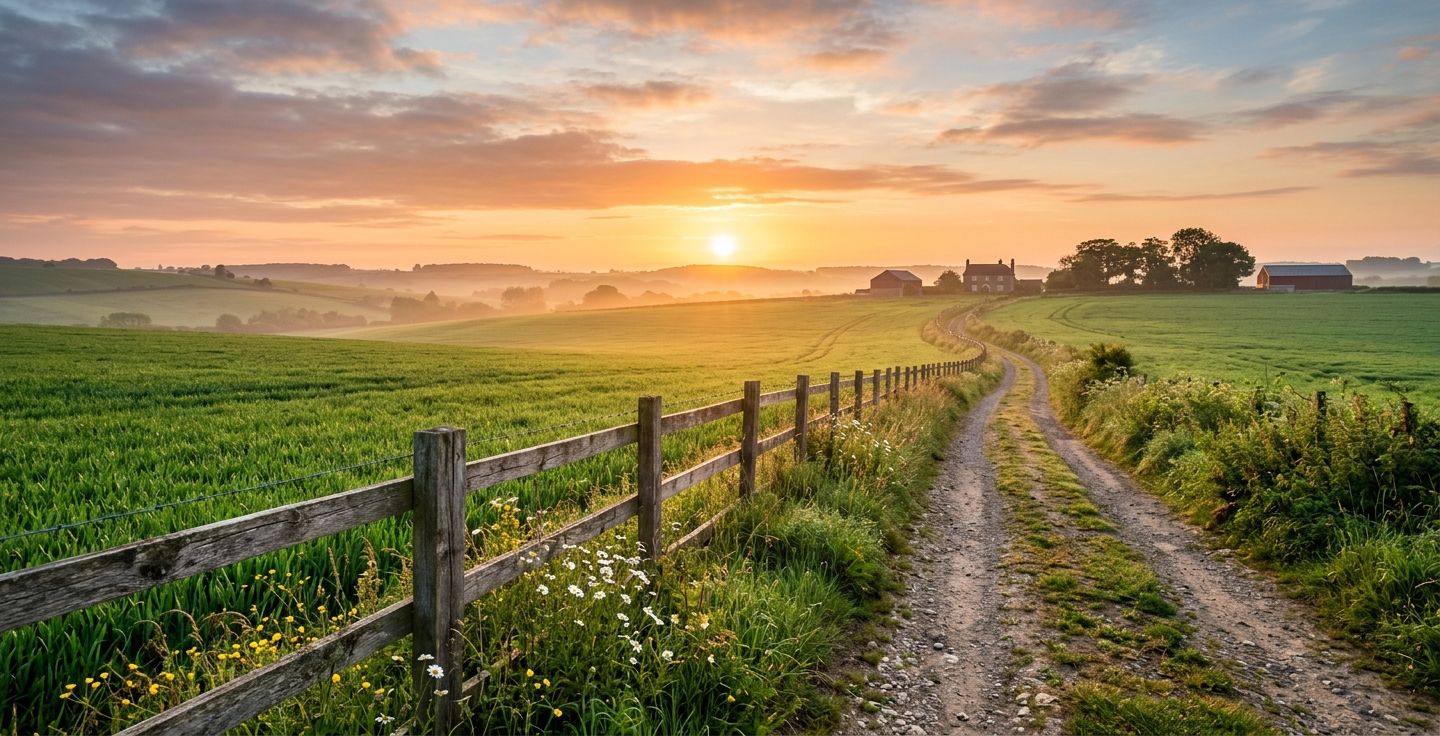
I have watched eighty winters turn the oak leaves from green to copper, and finally to a bare winter brown. There is a profound comfort in watching the same horizon change over decades. The morning light out here has a different quality when it does not have to fight its way through tall glass buildings. It spills wide across the fields, painting the frost in shades of pale gold. The only sound is the gravel crunching under the tires of a passing pickup truck. This is the rhythm of the morning in our part of the country. It is slow. It is deliberate. Out here, the sky is not an afterthought sliced up by skyscrapers. It is the main event. We wake up with the sun, and we feel the weather in our bones.
There is a rhythm to the seasons here that dictates everything we do. Spring brings the tractors turning the dark earth. Summer brings the heavy heat and sweet corn. Autumn is a flurry of harvest, the air thick with the smell of dry chaff. And winter turns the world white and still, giving us a chance to rest by the woodstove. Living close to nature teaches you patience. You cannot rush the harvest, and you cannot stop the snow.
Fibermaxxing For Maximum Efficiency T Shirt
Wear your story with pride! Celebrate classic American values, history, and heritage with our premium crafted apparel, designed for comfort and durability.
Fibermaxxing For Maximum Efficiency T Shirt
Wear your story with pride! Celebrate classic American values, history, and heritage with our premium crafted apparel, designed for comfort and durability.
A Walk Down Main Street
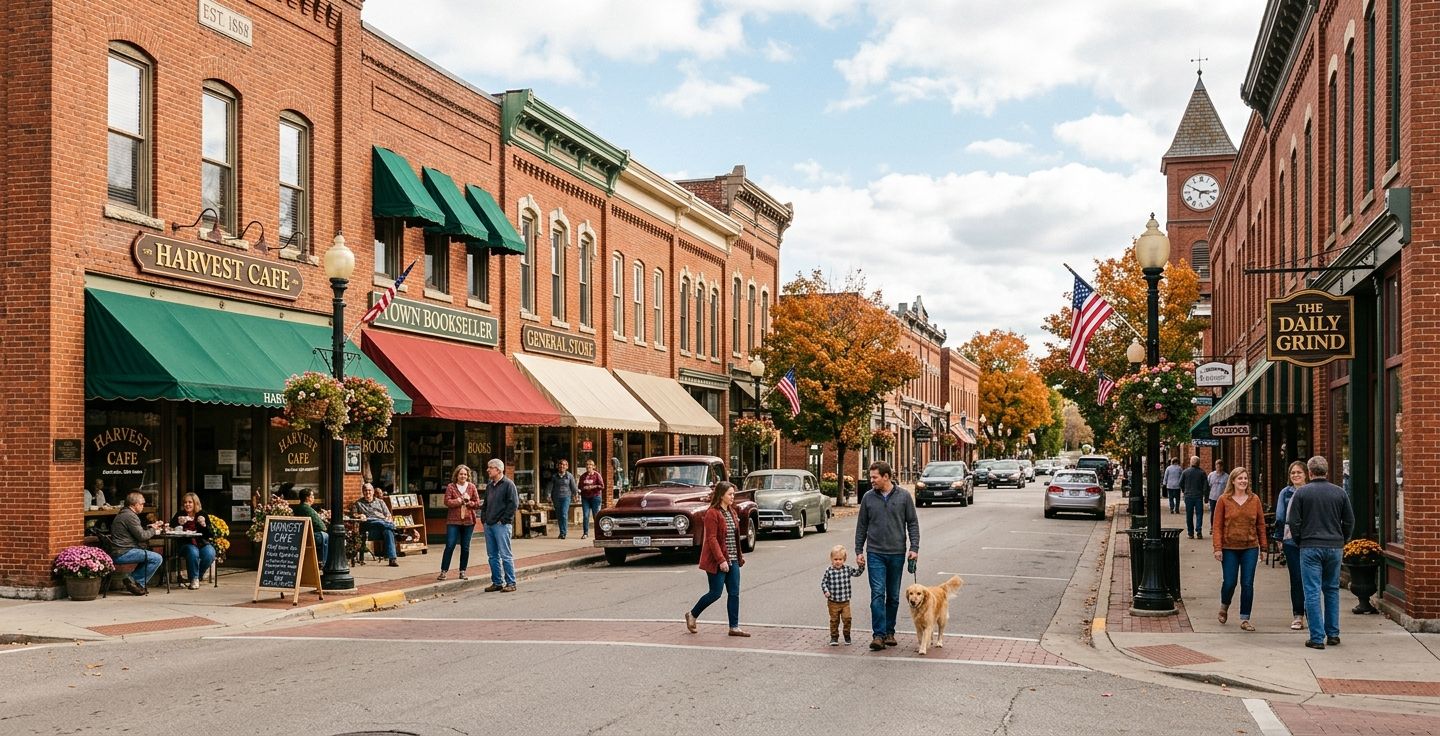
Let us walk down the main street of any given small town in the Midwest. You will likely find a brick building that has stood for over a century. In my town, it is the old hardware store. The wooden floorboards inside still squeak in the exact same spots they did when I was a boy buying nails for my father. The man behind the counter today is the grandson of the man who sold my father those nails. This continuity is a rare anchor in a world that feels like it is spinning completely out of control. It is not backwardness. It is stability. It is a quiet reminder that some things are meant to endure.
To understand how we got here, take a drive down to McCook, Nebraska. Walk the quiet streets of that town. It looks sleepy to the untrained eye today. But decades ago, it was the home of George W. Norris (1861 – 1944). He was a man who fought tooth and nail in Washington to bring electricity to the forgotten dirt roads. Before the wires came, the dark out here was absolute. A thick, heavy curtain fell over the farms at six in the evening. Families sat around a single kerosene lamp, straining their eyes to read or mend clothes. The women pumped water by hand. The men milked cows in the pitch black of the barn. Then, the utility poles went up. The lights flickered on. The world changed forever. It was a massive national shift, but it happened one porch light at a time. It brought the future to our doorsteps without taking away our roots.
Let us travel further east to the sweeping plains around Cresco, Iowa. Out on those open stretches of land, a young boy learned the deep secrets of the soil. Norman Borlaug (1914 – 2009) went from sitting in a tiny one room rural schoolhouse to developing disease resistant wheat. His work is credited with saving a billion people worldwide from starvation. A billion lives, saved by the curiosity of a farm boy. That is the kind of quiet brilliance this land can produce. The seeds of greatness are often planted far away from the noise of the metropolis.
The Changing Winds
We have lived this quiet life for generations, deeply connected to the seasons and the soil. This has always been our firm foundation. Yet, for a long time, the common story was that our towns were dying. Our young people were told they had to pack up and head to the crowded cities if they wanted to make anything of themselves. The media showed empty storefronts. They showed rusted tractors fading in the weeds. They made it seem like the quiet spaces were destined to be left behind completely by the march of progress.
So, the question naturally arises for anyone looking out at the horizon. Is rural America truly fading away into the history books? Is there a place for the next generation out here among the cornstalks, the rivers, and the pine trees?
Not by a long shot. The tides are turning. People are discovering that the very things they ran away from are exactly what they have been searching for all along. According to the United States Census Bureau, the narrative of a dying rural America is missing a massive recent shift. Between 2020 and 2022, rural counties actually saw a net influx of new residents. Surprised? I certainly was not. The Economic Research Service found that areas offering outdoor recreation are growing by leaps and bounds. In fact, a recent Gallup survey reported that forty eight percent of adults in this country say they would prefer to live in a town or rural area if given the choice. People are craving space. They are craving peace. The Pew Research Center tells us that roughly four in ten Americans currently live in or near these rural pockets, and that number is looking stronger every day.
Counting the Pennies and the Blessings
When the younger folks come out from the city to visit, we often sit on my front porch with a glass of iced tea. They look exhausted. They talk about rent that eats up half their paychecks. They talk about traffic that steals two hours of their day, every single day. They ask me how we manage out here. I tell them about the cost of living in rural areas. Out here, a young family can still afford to buy a home. You can have a yard big enough for a dog to run and for children to build a treehouse in the branches of an old maple. You are not paying a premium for the privilege of a city skyline. You are paying for the soil beneath your boots and the stars above your roof. You are paying for the freedom to breathe.
It is a trade off, certainly. You might not have a fancy coffee shop on every single corner. But the benefits of small towns reveal themselves in slower, sweeter ways. You get your morning coffee from a local diner where the waitress knows exactly how you like your eggs before you even sit down at the booth. This is the true lifestyle in rurality. It changes you. The way time stretches out instead of rushing by. The way you know the name of the person fixing your car, the person delivering your mail, and the teacher guiding your children.
The Heart of the Country
The very core of rural community living is showing up for one another. When the heavy winter snow piles up high against the barn doors, you do not even have to ask for help. You will simply hear the familiar rumble of a neighbor coming up the driveway in a tractor to plow you out. When someone falls ill, the casseroles appear on the front porch like absolute magic. We hold onto each other because, for a long time, we were all we had. That kind of reliance builds a community tighter than any concrete foundation ever could.
Planting Seeds for Tomorrow
I see the new families moving to the country today. They are bringing laptops and working jobs that exist entirely on the internet. They are planting gardens and learning how to can tomatoes just like my grandmother did. It warms my heart. The future is not about abandoning the past. It is about weaving the old ways with the new tools. If you are sitting in a cramped apartment right now, listening to sirens echo off brick walls, I encourage you to take a drive. Come out to where the roads turn to gravel. Roll your windows down. Breathe in the scent of fresh cut hay and rain on the dust. You might just find that this old way of living is exactly the fresh start you need.
Common Questions About Country Life
Is finding good internet a problem out there?
It used to be a real challenge but things are changing rapidly. Federal and local investments have brought high speed fiber optic broadband directly to many country roads. Many of my neighbors now work remotely for big technology companies without any trouble at all. The connection is as clear as a summer sky.
What are the biggest savings regarding the cost of living in rural areas?
Housing is by far the biggest relief. You can often buy a beautiful home with several acres of land for the price of a small city apartment. Additionally, taxes and everyday services like auto repair or local groceries often cost significantly less. You keep more of what you earn.
How does someone new make friends in a small town?
Just show up and be open. Go to the local diner for breakfast, attend the high school football games on Friday nights, and volunteer at the county fair. Small towns love people who want to be part of the community. Before you know it, you will be invited to more barbecues than you can handle.
Are there quality healthcare options available nearby?
We rely on wonderful regional clinics and critical access hospitals for everyday needs and emergencies. The doctors here take the time to know your whole family history. While seeing a highly specialized doctor might require a bit of a drive to a larger city, the daily care you receive is incredibly personal and deeply compassionate.
What is the lifestyle in rurality really like for families with children?
It is a life built on safety, connection, and nature. Kids run outside until the streetlights come on. They learn the value of hard work through agricultural clubs or helping neighbors. They grow up with a deep respect for the land and animals, enjoying a childhood that feels beautifully unhurried.
What do people do for entertainment without big city amenities?
We entertain each other and embrace the outdoors. We have lively county fairs, summer block parties, community theater, and church suppers. We also spend our weekends fishing in the creeks, hiking the trails, and sitting around fire pits under skies filled with thousands of bright stars.