
American History & Origins
Why Small Towns Defined Early American Life
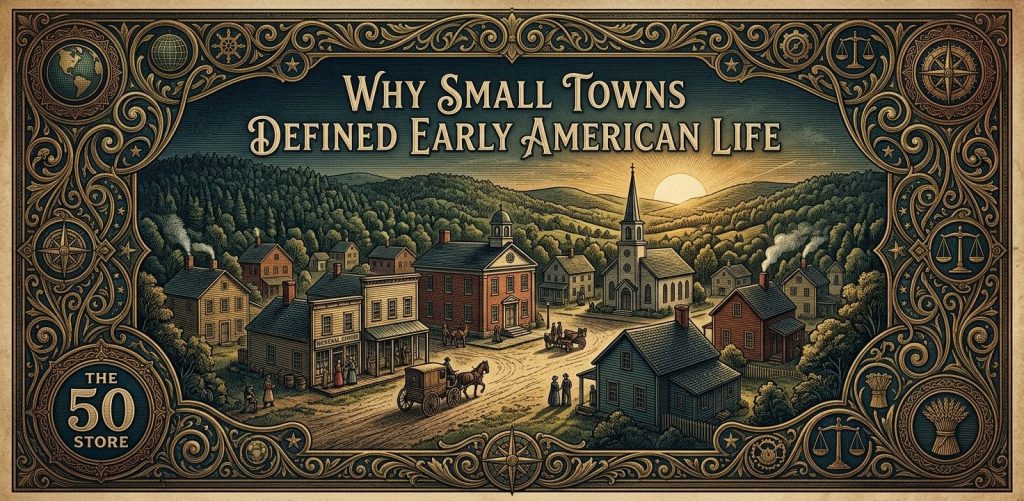
When the morning sun crests over the hills and warms the wooden planks of my porch, I often find myself looking out at the quiet streets of our town. The air is still, save for the distant hum of a tractor and the cheerful chatter of birds in the old oak trees. It is in these peaceful, golden moments that I think about the long road our people have walked.
Picture the landscape of early America. It was a place of endless forests where the canopy grew thick enough to block out the sun. Fast moving rivers flooded without notice, and plains stretched further than the human eye could see. Folks were scattered across a wild land, separated by miles of untamed earth. That was the daily reality our ancestors faced. The sheer, terrifying distance between settlements was the greatest enemy of human progress. Surviving out there in the elements was difficult enough. Building a unified country out of all that empty space seemed nearly impossible.
So, how did we take a sprawling wilderness and turn it into a vibrant nation? How did isolated pioneers become a united people? The answer did not come from grand laws debated in marble halls, nor did it come from bustling cities. It came from the quiet, steady rhythm of the American small town.
The Astonishing Truth of Our Early Numbers
Now, you might think of American history as a grand parade of big cities like Boston, Philadelphia, or New York leading the charge. But let us look closely at the facts. In the very first United States census recorded in 1790, an astonishing 94.9 percent of the population lived in places with fewer than 2500 residents. Most folks lived far outside even those modest limits, carving out homesteads in the deep woods. The frontier was the reality for the vast majority of our ancestors. We were a tough, resilient nation of farmers and pioneers who learned to rely on what we could grow or build with our own hands.
By the time the year 1820 rolled around, there were thousands of little townships scattered across the map, acting as completely self sufficient hubs of life and commerce. Fewer than a dozen places in the entire country had more than 10000 folks living in them. Small towns were not just a nostalgic part of early American life. They were the very foundation of it. They were the entire world for the people who called them home.
A Single Path Through the Trees
To truly understand how these towns came to be, we must look at the personal stories of the folks who built them. Let me tell you about a man named Ebenezer Zane (1747-1811). He was a pioneer with a strong back, callous covered hands, and a whole lot of grit. In 1796, Congress authorized him to cut a reliable road through the unforgiving woods of the Ohio territory. It was famously called Zanes Trace.
He swung a heavy axe from dawn until dusk to clear away heavy brush. He felled massive timber to create a path wide enough for a horse. He built simple ferries to carry travelers across treacherous rivers. The work was slow and painful. But wherever he stopped to rest, life gathered around him.
Because of that single dirt path carved through the wilderness, a settlement popped up in the middle of nowhere. Today, we know that vibrant place as Zanesville, Ohio. At first, it was nothing more than a humble wooden tavern and a simple ferry crossing run by his brother. But soon after, a blacksmith set up a hot forge to fix broken wagon wheels. Then a general store opened to sell vital supplies. A lone traveler could finally find a warm bed. A hard working farmer could sell his seasonal corn crop without traveling for weeks.
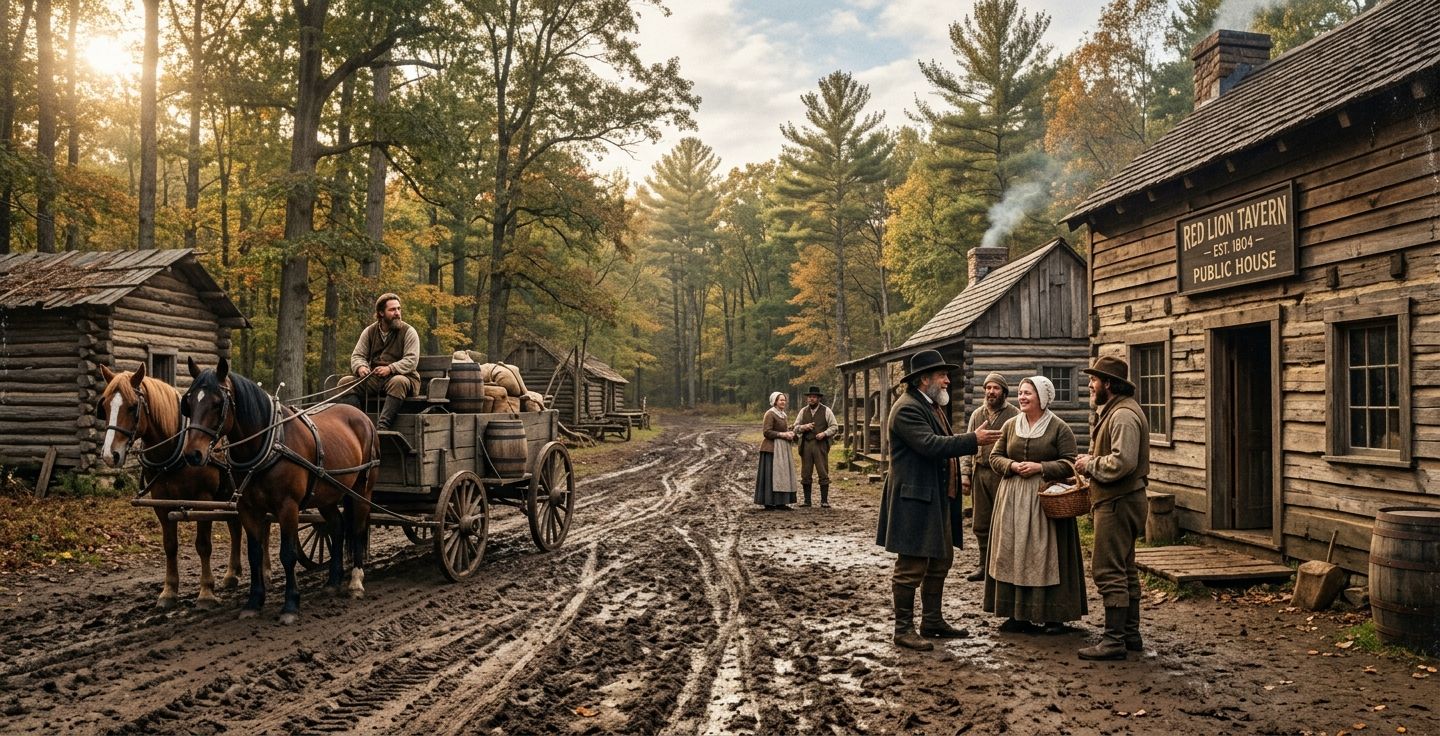
This beautiful story repeated itself thousands of times across the expanding continent. A brave soul or a determined family decided to plant their feet in the dirt and call a patch of land home. Others saw a chance for a better life and quickly joined them. Before long, a forgotten path turned into a noisy thoroughfare. It became an essential lifeline, turning the wild frontier into a grid of connected communities.
The Pulse of Local Commerce
What defined these early places was the unmistakable feeling of walking down a dusty main street where every face you saw was familiar. The local general store was far more than just a place to buy salt, nails, or calico cloth. It was the absolute beating heart of the growing settlement. It served as the local newspaper, the post office, and the prime debate stage all rolled into one room.
Folks would gather around the cracker barrel on a bitter cold afternoon. They would talk about the changing weather, share advice on crop yields, and passionately discuss national news that had arrived late by stagecoach. The smell of roasted coffee beans, raw wool, and sweet pipe tobacco filled the air. This daily interaction created a deeply rooted, unshakable community. You knew the people around you. You understood their quiet struggles and proudest triumphs. You celebrated their abundant fall harvests and mourned their tragic losses. We were bound together by shared experiences.
Bonds Forged in Pure Necessity
Life in those early, unpredictable days was incredibly fragile. A freezing winter could mean starvation for a family whose crops failed. A sudden barn fire could destroy an entire year of hard work in a single night. In those desperate moments, you did not call a distant government agency for relief. You called your neighbor.
If a young family lost their home to a lightning strike, the entire town gathered the very next week with hammers and saws to raise a new one. It was an unwritten rule, a sacred promise passed down through the generations. We help each other today because we know that tomorrow it might be me who needs the help. This daily application of mutual aid taught us the true meaning of civic duty. It was not a theory learned from a textbook. It was a daily habit born from pure survival.
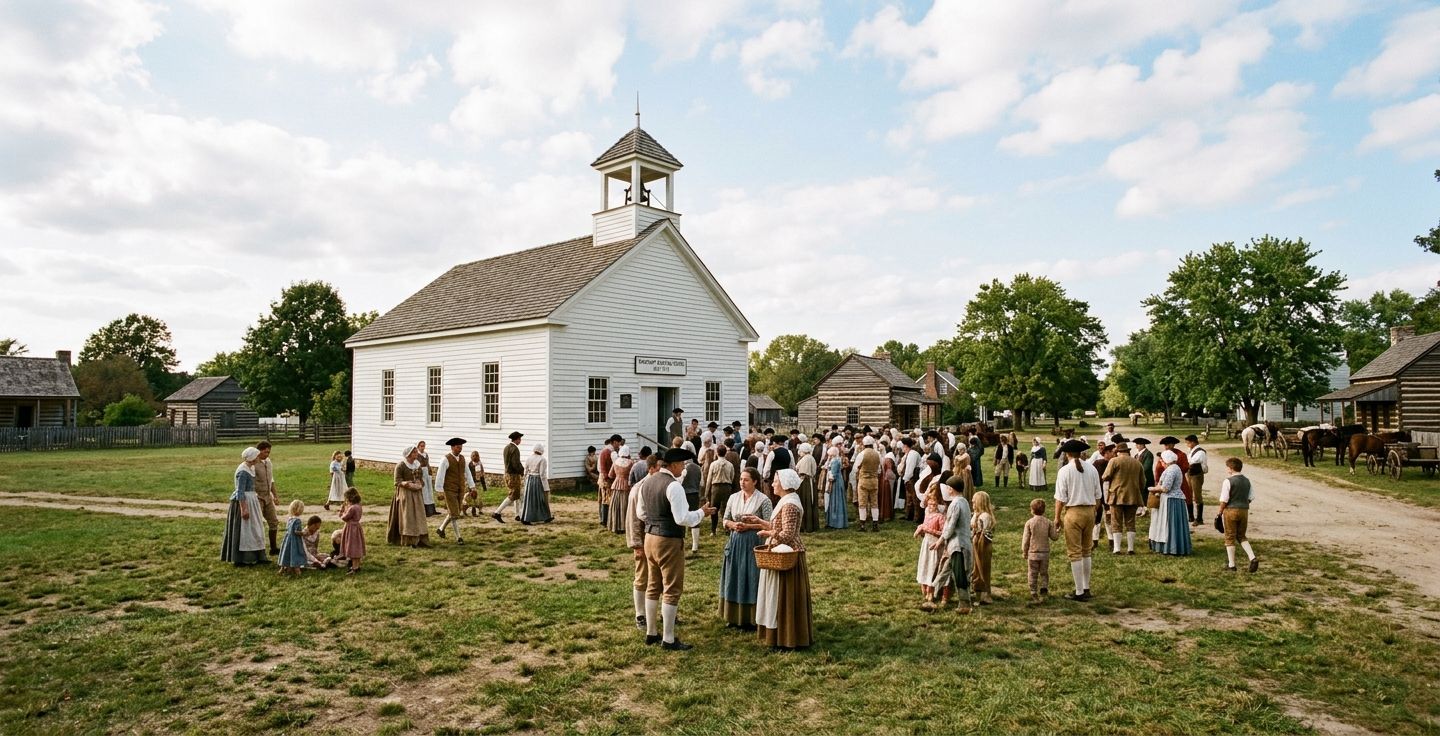
When the French writer Alexis de Tocqueville (1805-1859) traveled across the young United States in the early 1830s, he stood completely amazed at this phenomenon. Coming from aristocratic Europe, he had never seen anything like it. He noted with deep admiration that everyday Americans were always forming local associations. They enthusiastically pooled their meager resources to build small wooden schools. They raised humble, quiet churches together. They governed themselves openly in drafty town halls. They did not wait for kings or distant authorities to tell them what to do. They simply looked around, identified a problem, rolled up their sleeves, and fixed it together.
Carrying the Lantern Forward
It is incredibly easy to look around our fast paced modern world and feel a bit discouraged. We live in comfortable, temperature controlled houses. We order our goods instantly on glowing screens and have them delivered to our front doors. We sometimes do not even know the first names of the folks living right next door. But I urge you, do not let that make your spirit heavy.
When I look out at the young people today, I see the exact same bright spark that built those early towns. I see them organizing local food drives with boundless energy. I see them starting beautiful community gardens in empty city lots, bringing green life back to concrete streets. I see them using incredible new tools to gather people, raise funds, and wholeheartedly support local, family run businesses.
The physical tools have certainly changed over the long centuries, but the resilient human spirit remains exactly the same. We still need each other just as much as those early, brave pioneers did. We just have to be willing to take a chance and reach out a friendly hand.
So, I want to leave you with a bit of encouragement today. Go out and take a slow walk through your neighborhood. Support your independent hardware store instead of a giant, faceless retailer. Attend a local town hall or a school board meeting. Introduce yourself to the new family down the street. Plant those good, sturdy seeds of genuine connection right now. The comforting shade of those tall trees will protect and nourish generations of Americans we will never even meet. Let us honor the legacy of those who came before us, and keep building our towns, and our beautiful country, together.
Frequently Asked Questions
What constituted a small town in early America?
In the earliest days of our nation, the definition of a small town was quite modest. Generally, any settlement with fewer than 2500 residents was considered a town. Many of these places started as little more than a single tavern, a blacksmith shop, and a few scattered family cabins clustered together for mutual safety and trade along a dirt road.
Why were taverns so important to early American towns?
Taverns were much more than simply places to eat or drink. They served as the primary social, economic, and political hubs of early settlements. They were the one place where weary travelers could rest, where locals could hear the latest news from the outside world, and where important town meetings were frequently held.
How did isolated small towns communicate with the rest of the country?
Before the invention of the telegraph, communication relied entirely on physical travel. Stagecoaches, post riders on horseback, and travelers passing through carried letters and newspapers. News from the capital could take several weeks to reach a remote frontier settlement, making local self reliance absolutely essential.
What role did small towns play in early American politics?
Small towns were the true birthplace of American grassroots democracy. Through regular town hall meetings, everyday citizens had a direct, powerful voice in local affairs. They voted on taxes, elected local sheriffs, and decided on infrastructure projects like building roads and schools, establishing a strong tradition of self governance.
Are there still important lessons we can learn from early small towns today?
Absolutely. The deep reliance on mutual aid, personal responsibility, and local support is a timeless lesson. While our modern world is highly connected digitally, the physical practice of knowing your neighbors, supporting local businesses, and volunteering for civic duties remains the most effective way to build a resilient society.