
Culture & Traditions
Thanksgiving: A Tradition Rewritten by Each Generation
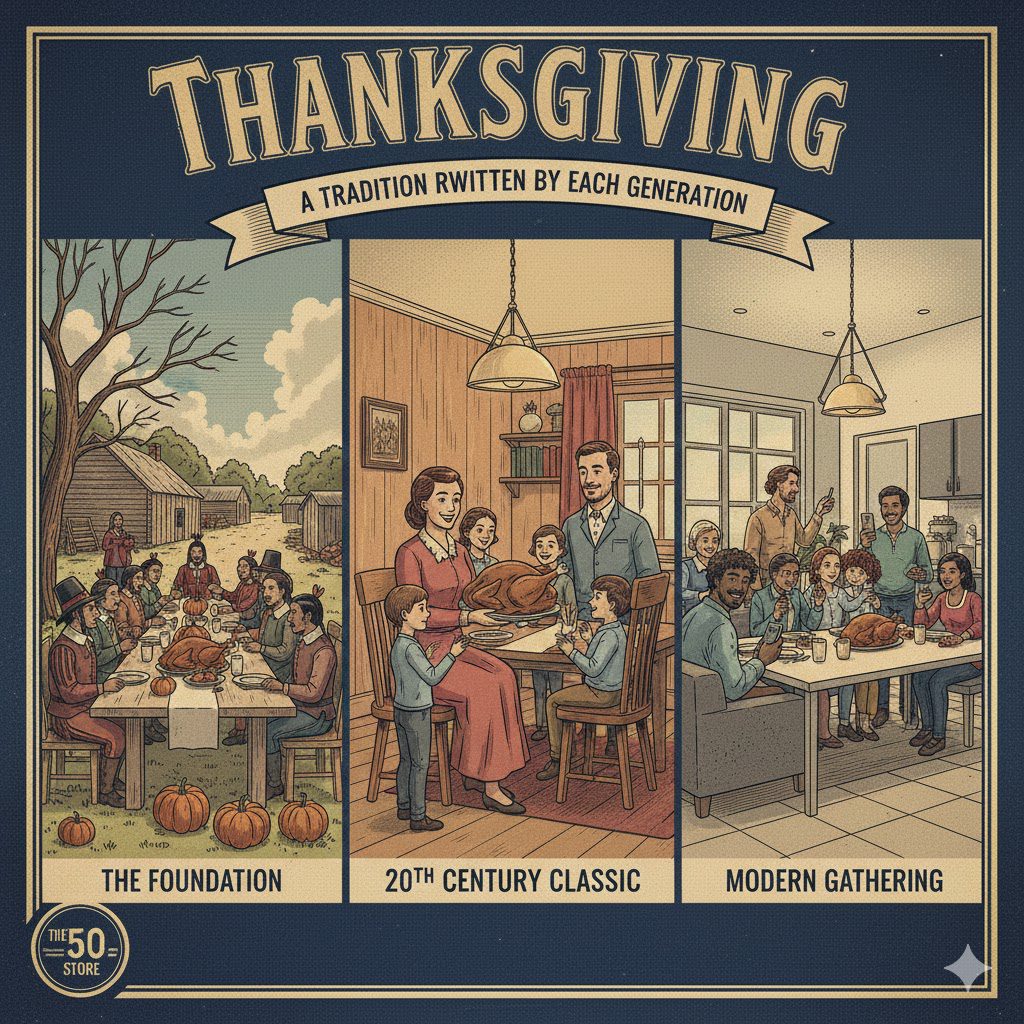
What makes a truly American tradition? Is it rigid adherence to a founding moment, or is it a resilient capacity to evolve, absorbing new meanings while retaining a core sense of purpose? For millions of Americans, the answer is found annually around a crowded dining table in late November, where Thanksgiving unfolds. This holiday, often framed by the nostalgic image of Pilgrims and Native Americans sharing a harvest meal, is in reality one of our most dynamic cultural rituals—a tradition constantly being rewritten, reinterpreted, and reclaimed by each succeeding generation.
Thanksgiving is more than just a feast; it is a national exercise in selective memory and domestic pilgrimage. Its persistent popularity lies not in its historical accuracy, which is complex and often painful, but in its ability to adapt its central theme—gratitude and gathering—to the ever-shifting needs of the American family and the evolving understanding of our nation’s history.
The Genesis of a National Myth
The holiday’s foundation rests on the 1621 harvest celebration shared by the Wampanoag people and the Plymouth colonists. This historical event, however, lay dormant for two centuries as a national observance. It was the relentless campaigning of writer Sarah Josepha Hale (the same woman who wrote “Mary Had a Little Lamb”) and the need for national unity during the Civil War that truly birthed the modern holiday.
In 1863, President Abraham Lincoln proclaimed a national Thanksgiving, specifically calling for a day of “thanksgiving and praise.” The holiday was thus institutionalized not as a celebration of colonial arrival, but as a plea for national healing and commonality during a period of profound fragmentation. This is the crucial, often overlooked, layer of the holiday: it was deliberately created to be a unifying event, a domestic truce where Americans could momentarily set aside political strife and focus on shared blessings.
The Great Migration and the Menu of Assimilation
As successive waves of immigrants arrived in the late 19th and early 20th centuries, Thanksgiving became a powerful vehicle for cultural assimilation. Unlike Christmas, which carried explicit religious or specific European cultural baggage, Thanksgiving was ostensibly a secular, American ritual—a required lesson in citizenship.
Immigrant families across the nation embraced the holiday, but they didn’t simply adopt the New England menu; they rewrote it in their own culinary language.
- For Italian-American families, the meal might begin with a large pasta course, or the turkey might be seasoned with Mediterranean herbs.
- For Jewish-American families, the meal often had to be adapted to be kosher, transforming traditional ingredients.
- Today, families of Asian or Latin American descent routinely incorporate rice dishes, unique spice blends, or non-traditional proteins alongside the turkey.
The Thanksgiving table, therefore, is a magnificent, annual census of American diversity. The traditional turkey, stuffing, and cranberry sauce remain the iconic framework, but the execution reflects the regional and ethnic tapestry of the family hosting the meal. The ritual remains constant, but the flavors—the very DNA of the meal—are perpetually diversifying.
Rewriting the Narratives: Acknowledgment and Reclamation
The most challenging and essential reinterpretation of Thanksgiving involves confronting the Indigenous perspective. For many Native American communities, particularly since the 1970s, the holiday has been observed as a National Day of Mourning, a painful reminder of colonization, land theft, and systemic violence that followed that initial shared meal.
Each contemporary generation is now grappling with the necessity of acknowledging this complex history. This evolution manifests in subtle, yet powerful, ways:
- Dialogue: The dinner table is increasingly becoming a place for sober, reflective discussions about the historical context of the holiday, moving beyond the simplistic myth.
- Education: Families actively seek educational materials that present the Wampanoag perspective, teaching children a more nuanced version of the story.
- Action: Growing numbers of Americans use the holiday as a prompt for engaging with Native American issues or donating to Indigenous organizations.
This shift from simple celebration to complex acknowledgment is perhaps the most profound way the current generation is rewriting the tradition. They are retaining the core value of gratitude but are expanding the scope of that gratitude to include a debt to history and a commitment to justice.
In its enduring adaptability, Thanksgiving proves its power. It is a holiday designed for the interior space of the home, allowing its meaning to be fiercely protected, yet constantly updated, by the familial unit. Every time a new partner brings a non-traditional dish, every time a student challenges the historical narrative, and every time we gather despite political differences, we are participating in the quiet, profound act of rewriting the American story. The foundation remains the same—we gather, we eat, and we give thanks—but the definition of “we” and the scope of “thanks” continue to grow wider, deeper, and more honest.