
American Pastimes
The American Diner: A Stainless-Steel Time Capsule
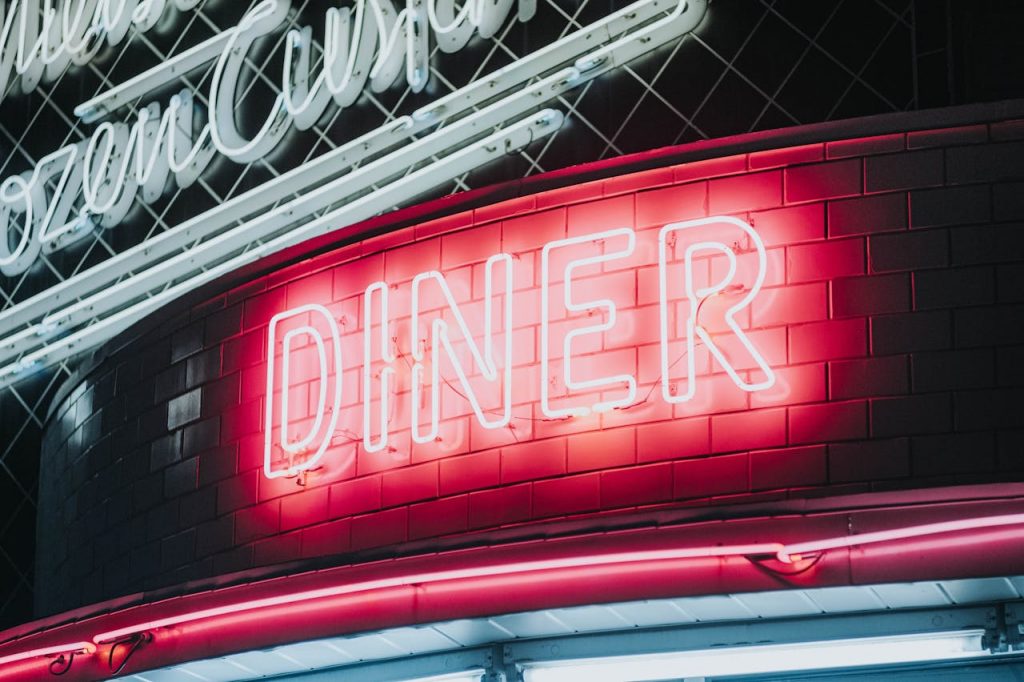
What is the most democratic space in America? Is it a monument, a university hall, or a legislative chamber? I propose it is a structure far more humble, yet infinitely more welcoming: the American Diner. That gleaming, often prefabricated box of stainless steel, neon, and Formica is a place where bankers sat next to truckers, where first dates became engagements, and where the most profound philosophical discussions of a small town unfolded over a cup of coffee and a short-stack of pancakes. The diner is more than a restaurant; it is a cultural artifact, a living, breathing time capsule that captures the aspirations, the contradictions, and the essential, unpretentious spirit of mid-20th century American life.
For those of us who appreciate the depth of our nation’s story, the diner offers a fascinating study. Its evolution traces the arc of American mobility, industry, and social integration. It is an architectural punctuation mark on the landscape, promising a square meal, a moment of respite, and—most importantly—a fleeting sense of belonging, no matter where you hailed from or where you were headed.
Born of Mobility: From Lunch Wagons to Modular Dreams
The genesis of the diner is rooted in American ingenuity and necessity. It began in the late 19th century as a simple horse-drawn lunch wagon, providing hot, cheap meals to workers after the standard restaurant hours had closed. These wagons were the first form of fast, accessible American nightlife.
The true transformation occurred in the early 20th century with the transition to stationary, modular buildings. Recognizing the efficiency and affordability of prefabricated structures, manufacturers began creating dining cars in factories and shipping them, fully equipped, to locations across the Northeast and Mid-Atlantic. This modular approach was inherently American—a practical, standardized solution to a communal need.
The classic diner aesthetic—all polished chrome, colorful tile work, and jukeboxes—crystallized after World War II. This was a direct reflection of the post-war industrial boom and the era’s optimism. The bright, reflective surfaces symbolized cleanliness and modernity; the endless coffee symbolized relentless energy. The diner became the physical embodiment of the “American Dream”: accessible, reliable, and open for business twenty-four hours a day.
The Great Equalizer: Architecture of Democracy
The diner’s design is key to its social function. It is an architecture of democracy, built on three core, equalizing components:
- The Counter: The long, central counter is the most egalitarian piece of furniture in the room. It erases the social hierarchy of separate tables. Sitting side-by-side on spinning stools, the solitary traveler, the local police officer, and the college student shared the same view of the griddle and the same rapid-fire banter with the cook. It fostered a unique, necessary American intimacy built on proximity.
- The Booths: The parallel booths lining the walls provided semi-private alcoves, creating spaces for intense conversation—family meetings, business deals, or whispered secrets—all within the public, buzzing sphere of the establishment.
- The Menu: The vast, laminate-covered menu, often featuring dozens of items from chili to chiffon pie, ensured that there was something for every palate and every wallet. The sheer variety represented the nation’s diverse appetite, a culinary melting pot served on thick, ceramic plates.
Regional Flavors and Cultural Significance
While the basic stainless-steel shell is uniform, the cultural significance and menu items vary dramatically by region, proving the diner’s adaptive quality:
- In the Northeast (especially New Jersey and New York), the diner is a behemoth, a massive, elaborate structure where Greek immigrant families often fused traditional Mediterranean flavors with American staples, resulting in the famous, mile-long menu. Here, the diner is a central pillar of community life, not just a stop.
- In the South, the concept often evolves into the “Waffle House” or “Meat-and-Three” style, favoring regional comfort foods like grits, country ham, and fried chicken, emphasizing Southern hospitality and deep local ties over the chrome-heavy futurism of the North.
- Across the Midwest and West, diners took their place on major highways, serving as vital oases on long-haul routes, tying the vast American geography together with hot coffee and conversation.
In all its forms, the diner has served as a crucible for social change. During the Civil Rights Movement, the simple act of demanding service at a diner counter became a powerful tool for social justice, highlighting the deep contrast between the diner’s self-professed “open-to-all” ethos and the harsh reality of segregation.
The diner today, whether a preserved mid-century jewel or a modern homage, continues to resonate because it offers an escape from the curated perfection of modern life. It is authentic, slightly worn, and wonderfully predictable. When we slide into a booth and order a patty melt, we are not just ordering food; we are engaging in a shared cultural ritual, connecting with a time when life felt slower, simpler, and when the whole messy, wonderful spectrum of America could meet, literally, at the counter. The diner is a powerful reminder that our greatest national treasures are often found in the most unassuming, brightly lit places.