
American Mythos & National Character
The Frontier Spirit: How It Still Shapes American Ambition
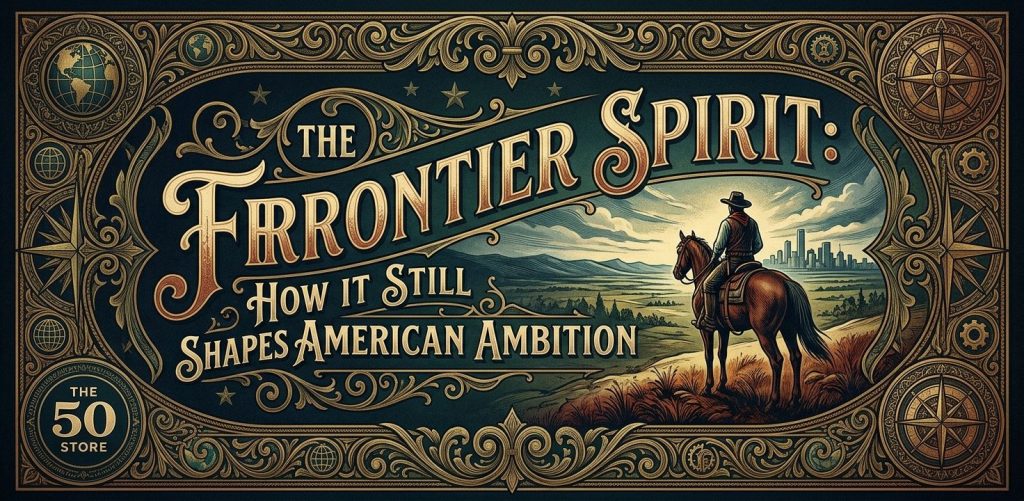
The Call of the Frontier
I still remember sitting on the porch of my grandfather’s farmhouse, listening to the wind rustle through the cornfields and imagining the endless prairie that once lay beyond those rows. That feeling – the pull toward something new, something untamed – is what many call the frontier spirit definition. It is not just a dusty phrase from history books; it is a thread that runs through the American story, from the first settlers who stepped off the Mayflower to the entrepreneurs who launch startups from garage workbenches today.
When I was a boy, my father would tell tales of Daniel Boone (Daniel Boone (1734-1820)) blazing trails through the Cumberland Gap, and of the pioneers who filled their wagons with hope and headed west after the Louisiana Purchase. Those stories were not just adventure; they were lessons in courage, self‑reliance, and the belief that a better life waited just over the next hill. That belief is the heart of the american can do attitude.
Why the Frontier Spirit Still Matters
Let me share a few numbers that might surprise you. According to the U.S. Census Bureau, over 60 % of Americans say they have started a side hustle or small business at some point in their lives. The Kauffman Foundation reports that nearly 15 % of working‑age adults are engaged in early‑stage entrepreneurial activity, a rate that rivals many nations known for innovation. Even more striking, a Gallup poll found that 72 % of respondents believe the american dream evolution is still achievable if one is willing to work hard and take risks.
These statistics reveal that the frontier spirit is not a relic; it is alive in our garages, our kitchen tables, and our online storefronts. When we see a young coder in Austin uploading an app that helps farmers monitor soil moisture, or a retired teacher in Maine opening a bakery that sources grain from local mills, we are witnessing the same impulse that drove families to stake claims in the Oklahoma Land Rush (Oklahoma Land Rush location). The land may have changed, but the hunger for opportunity has not.
Situation: America was born from a continent vast and unexplored, where success depended on grit and ingenuity. Complication: Today we face complex challenges – economic inequality, climate change, technological disruption – that can make the old ideals feel distant. Question: Can the frontier spirit still guide us through these modern storms? Answer: Yes, because the spirit is less about geography and more about mindset – a willingness to step into the unknown, to learn from failure, and to build something new.
From Log Cabins to Silicon Valleys
Allow me to tell a micro‑history that shows how a small personal story reflects a national shift. In 1972, a young woman named Anita Rowe (Anita Rowe (1948-)) borrowed $5 000 from her parents to open a small sewing shop in a strip mall in Columbus, Ohio. She started by altering clothes for neighbors, then began designing her own line of workwear using durable denim. Within five years, she employed ten people and supplied uniforms to local factories. Her shop became a gathering place where workers exchanged ideas about improving productivity.
Anita’s tale mirrors the larger rugged individualism today that still fuels our economy. She did not wait for a corporation to give her a chance; she saw a need, took a risk, and created value. Her story is echoed in countless modern examples: the veteran who starts a landscaping crew after service, the college dropout who launches a solar‑panel installation co‑op, the immigrant family that opens a grocery that doubles as a community center. Each of these ventures begins with a person looking at the frontier of their own circumstances and deciding to step forward.
What ties these stories together is the national identity formation that happens when ordinary people act on extraordinary ideas. When we celebrate Anita’s perseverance, we are not just praising a seamstress; we are reinforcing the belief that anyone, regardless of background, can shape the nation’s future through hard work and inventive thinking.
Keeping the Spirit Alive Today
So how do we nurture this frontier spirit in our own lives and communities? Here are a few practical thoughts that have worked for me and many others I’ve known.
- Stay curious. Treat every new skill or hobby as a small expedition into unknown territory.
- Embrace failure as a stepping stone. The pioneers who turned back after a harsh winter still learned valuable lessons about preparation and resilience.
- Seek out mentors and peers who challenge you to think bigger. A conversation over coffee can spark the next big idea.
- Give back to your community. When you share your success, you help extend the frontier for those who follow.
It is also helpful to ask ourselves the questions that often arise when we contemplate our own ambitions.
Frequently Asked Questions
- Is the frontier spirit only for the young? No. Age does not diminish the capacity to explore new possibilities. I have seen retirees learn coding, start consulting practices, or turn lifelong hobbies into small enterprises. The spirit is a mindset, not a chronological marker.
- How can I tell if I’m truly embracing rugged individualism? Look at whether you are taking ownership of your decisions, seeking solutions rather than waiting for them, and feeling a sense of purpose in your work. If you are blaming external forces for every setback, you may be drifting from the frontier mindset.
- Does the frontier spirit conflict with community values? Not at all. The original frontiers relied on mutual aid – barn raisings, wagon trains, and shared water sources. True individualism thrives when it is paired with a willingness to support others.
- What role does technology play? Technology is simply a new set of tools. Just as the rifle and the compass aided nineteenth‑century explorers, smartphones and cloud computing help today’s innovators reach farther, faster.
Final Thoughts
To sum up, the frontier spirit remains a vital force shaping American ambition. It lives in the american dream evolution that adapts to each generation, in the frontier spirit definition that calls us to explore beyond our comfort zones, in the enduring notion of rugged individualism today that encourages self‑reliance, in the ongoing national identity formation forged by countless acts of courage, and in the steadfast american can do attitude that refuses to settle for the status quo.
As I look out over the fields that once stretched toward the horizon, I feel hopeful for the roads yet to be traveled. The frontier is not a line on a map; it is the space between where we are and where we dare to go.
What frontier will you cross today?