
American Lifestyle
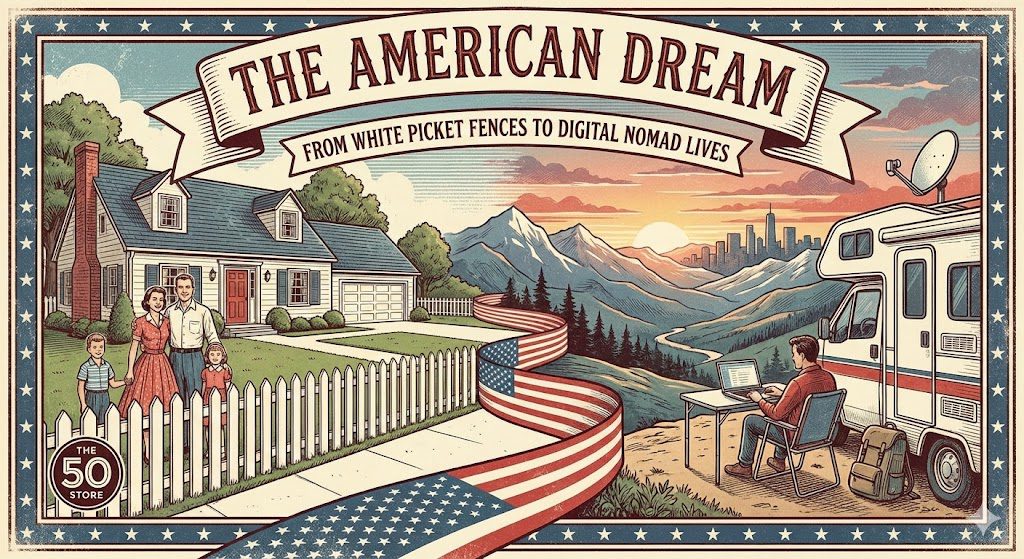
The American Dream: From White Picket Fences to Digital Nomad Lives (and Everything in Between!)
Introduction: Is the American Dream Still Kicking?
We all know the phrase, but what is the American Dream, really? Is it about owning a house with a white picket fence, or has it gotten a radical makeover, perhaps a solar-paneled yurt in the desert powered by crypto-mining rigs? It’s that national belief that anyone can achieve a better life through sheer grit and opportunity. Sounds great, right? A Horatio Alger story perpetually unfolding. But the story is a lot more complex than a tidy postcard; it’s a sprawling, multi-generational saga full of plot twists and cliffhangers.
Join me on a journey through its glorious highs, its tough lows, and what “success” even means in 2026. Is it financial security, personal fulfillment, or a perfectly curated Instagram feed showcasing your #vanlife adventures?
Once Upon a Time in America: The Dream’s Humble Beginnings
Forget materialism! This dream started with “life, liberty, and the pursuit of happiness” – a promise of freedom, justice, and opportunity that pulled immigrants to these shores like moths to a flame. It wasn’t about accumulating possessions, but rather escaping oppression and building a life where your potential, not your pedigree, determined your destiny.
Enter historian James Truslow Adams (1931). He coined the term during the Great Depression, a period when the chasm between the haves and have-nots yawned wide. He wasn’t talking about fancy cars or sprawling estates; he envisioned a “better, richer, fuller life for everyone,” where your potential, not your birth, defined your path. A truly grand social order! A meritocracy where talent rises to the top, regardless of its origins.
Then came the Post-War Glow-Up (Mid-20th Century). Ah, the “Golden Age”! A booming economy, suburbs spreading like wildfire, and the Dream got a shiny new wrapper: homeownership, marriage, kids, two cars in the garage, and the latest consumer goods. Freedom meant wealth, and media pushed this glossy image relentlessly. Think “Leave it to Beaver” meets Madison Avenue.
But wait, there’s a catch. This picture wasn’t universal. While some basked in the glow of prosperity, many were left out. The dream, it turned out, wasn’t accessible to all. Powerful movements like the Civil Rights era erupted, demanding the dream’s promises extend to everyone, regardless of race, creed, or color. The American Dream, it seemed, needed a serious software update.
The Dream Hits a Snag: Modern Roadblocks and Rising Doubts
Fast forward to today, and the landscape looks dramatically different. The perfectly manicured lawns of yesteryear are now threatened by climate change, and the white picket fences are crumbling under the weight of economic anxieties. We’re talking rising inequality, jobs shifting overseas, automation creeping in, and wages just not keeping up. Remember when a house cost twice your salary? Now it’s six times, maybe more!
The crushing costs of healthcare, education, and housing have transformed those traditional “milestones” into seemingly unattainable goals for many. The path to upward mobility feels less like a staircase and more like a sheer cliff face.
This has led to a nation divided in opinion. A recent study reveals a stark generation gap: If you’re under 50, you’re probably more skeptical about the Dream’s attainability. Your grandparents might be more optimistic, remembering a time when hard work reliably led to upward mobility.
The wealth gap further exacerbates this divide. Unsurprisingly, if you’re wealthier, you’re more likely to believe the dream is alive and well. Access to resources and opportunities shapes one’s perception of possibility.
Racial and ethnic divides also play a significant role. For many Black Americans, the idea that the dream was never possible resonates deeply, given the historical and ongoing systemic barriers they face. White adults are more likely to say they’ve “achieved” it, while others are still “on their way,” highlighting the uneven playing field.
The Great Debate: Is the Dream Broken, or Just Different?
Let’s be honest, the “rags-to-riches” story is pretty rare. Some argue it’s less a dream and more a myth, a carefully crafted narrative that obscures the realities of systemic inequality. They point to a system of “predatory capitalism” benefiting the top 1%, while leaving others struggling to make ends meet.
Systemic barriers determine who gets to dream in the first place. Race matters, with historical redlining, persistent wealth gaps, and lower upward mobility for Black Americans serving as significant roadblocks.
Class struggle also persists. Your postcode shouldn’t determine your wealth, but often it does. Inherited advantages and policy choices can overshadow individual effort, creating a self-perpetuating cycle of inequality.
Gender gaps also remain a challenge. Traditionally, the Dream wasn’t designed for women to have agency and economic independence. Despite progress, sexism, wage gaps, and higher poverty rates for women persist, hindering their ability to fully participate in the pursuit of happiness.
Even for those who consider themselves “middle class,” the reality is often bleak. Imagine a married couple making $100,000. Sounds good, right? Nope. Reports show achieving a basic middle-class life (home, kids, savings) is practically impossible in all 50 states. Ouch. The middle class, once the bedrock of the American Dream, is now feeling increasingly precarious.
Reimagining the Dream: What’s on the Horizon?
Younger generations are shaking things up, challenging the traditional definitions of success. Forget the big house; they’re prioritizing happiness, fulfillment, flexibility, mental health, and work-life balance. Community over consumerism, anyone?
The rise of the side hustle is transforming the landscape of work and personal prosperity. Entrepreneurship, remote work, and diversified income streams are becoming the new pathways to financial security and personal fulfillment. Hello, digital nomads!
Artificial intelligence presents both opportunities and challenges. AI could displace jobs, but it could also create new high-paying ones and boost efficiency. The big question: How do we ensure it benefits everyone, rather than exacerbating existing inequalities?
Big ideas for a “New Dream” are gaining traction. Universal Basic Income (UBI) could provide a safety net as automation grows, ensuring a basic standard of living for all.
Wealth redistribution is a hotly debated topic, with many believing we need to level the playing field to truly unlock opportunity for all.
Social impact and purpose are becoming increasingly important to workers, especially younger ones, who want their careers to have meaning beyond just a paycheck.
Ultimately, the future likely involves a multicultural, diverse, and socially just vision of the American Dream, recognizing that opportunity must truly be for all, regardless of race, class, gender, or any other arbitrary distinction.
Conclusion: Dreaming On, Differently
The American Dream started as a broad vision of opportunity, morphed into material aspirations, and is now being critically re-evaluated and redefined. It’s a story of constant evolution, adaptation, and struggle.
While the challenges are real and skepticism is high, the core desire for a better, richer, and fuller life persists. It’s just less about a one-size-fits-all formula and more about individual fulfillment and collective well-being.
So, what does the American Dream mean to you today? Is it still possible? I invite you to share your thoughts and experiences in the comments below. Let’s continue this conversation and reimagine the Dream together.