
American Lifestyle
Fourth of July 2026: The Independence Day That Marks 250 Years of America
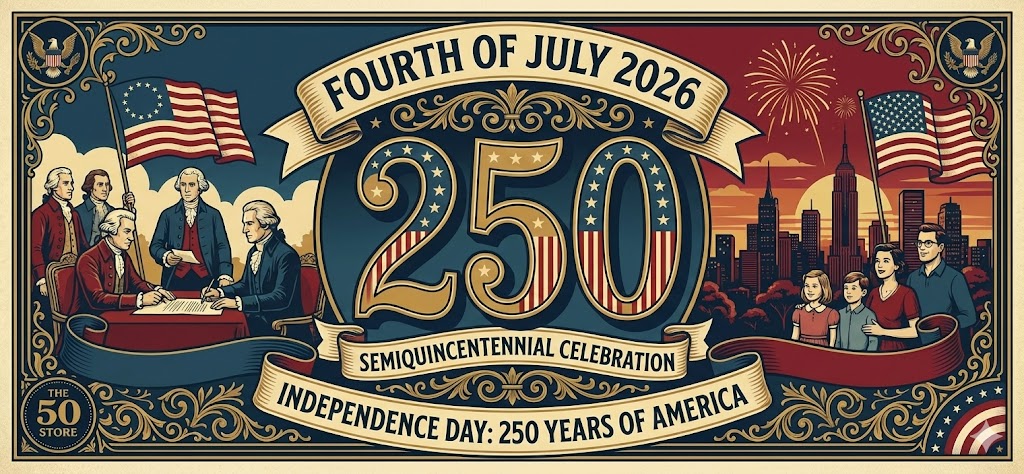
Most Fourth of July holidays feel familiar. You wake up, maybe smell charcoal in the air by noon. Someone’s already got a flag on the porch. Kids are running around with sparklers before it’s even dark. You say “Happy 4th of July” to your neighbor and mean it in that easy summer way.
But 2026 is going to feel different.
It won’t just be another Independence Day. It will mark the USA 250th anniversary, the semiquincentennial. That’s a big word. Most of us didn’t grow up saying it. It simply means 250 years since the United States declared independence.
Two hundred and fifty years. That number makes you pause for a second.
A Summer Day in 1776
On July 4, 1776, the Continental Congress adopted the Declaration of Independence in Philadelphia. The words were bold. Risky. Almost reckless if you think about it.
Thomas Jefferson wrote that all men are created equal. That governments get their power from the people. Those lines have been argued over ever since. They’ve been tested. Expanded. Challenged. Fought for.
And yet here we are, 250 years later, still talking about them.
That’s not a small thing.
The Fourth of July Has Changed Before
The holiday hasn’t always looked like it does now.
In the early years, Independence Day was loud and political. People gathered to hear the Declaration read out loud. There were speeches about duty and freedom. Cannon fire. Musket salutes. It wasn’t just a day off. It was a civic ritual.
After the American Civil War, the Fourth of July meant something else too. It was about holding the Union together. About healing, even when healing was slow and imperfect.
By 1976, during the Bicentennial, the mood felt reflective but proud. The United States Mint released special coins. Cities hosted tall ships and big celebrations. The country had been through Watergate and Vietnam. People wanted to feel steady again.
Every era brings its own meaning to Independence Day.
2026 will be no different.
Why 2026 Feels Bigger
The 250th anniversary of the United States isn’t just another round number. It’s a quarter of a millennium. That’s longer than most nations have lasted in their current form.
The U.S. Semiquincentennial Commission has been planning national events for years now. States are organizing their own programs too. You can expect big celebrations in places like Boston and Philadelphia. Plenty of parades. Fireworks. Historical reenactments.
But I think what will stand out most won’t be the spectacle.
It will be the feeling.
We’re living in a time that moves fast. News cycles spin. Technology changes how we talk, vote, work, argue. Sometimes it feels like the ground shifts every few years.
And then you look at that number. 250.
It reminds you that the country has been through hard seasons before. The American Revolution. The Civil War. Economic collapse. World wars. Social upheaval. None of it was neat. None of it was simple.
Still, the framework held.
Saying “Happy 4th of July” in 2026
Most years, when you say “Happy 4th of July,” it’s light. It’s about cookouts and fireworks and maybe a long weekend.
In 2026, those same words might land a little deeper.
You might think about the generations before you. Immigrants who arrived with almost nothing. Soldiers who never made it home. Families who argued around dinner tables but still showed up to vote.
Even the casual “Happy 4 July” greeting might carry a hint of gratitude. Or at least awareness.
It’s not about pretending everything has always been perfect. It hasn’t. That’s part of the story too. The country has had to grow into its promises, sometimes slowly, sometimes painfully.
But 250 years is proof of something steady underneath it all.
The Army’s 250 Years
There’s another milestone close to this one. The United States Army was founded in 1775, before independence was even declared. That means the 250 year Army anniversary comes right alongside the nation’s.
Think about that. Before the ink was dry on the Declaration, men were already enlisted, already marching, already taking risks.
George Washington didn’t know how it would end. None of them did.
That thread of service runs through every generation since. It will be part of the 2026 observances whether you’re at a small-town parade or watching a ceremony in Washington.
Fireworks, Then and Now
Fireworks have always been part of this holiday. In 1777, Philadelphia celebrated with lights and cannon fire. It was loud. Defiant. A little chaotic, I imagine.
We still light up the sky every July. Kids still cover their ears. Dogs still panic under the bed. Some traditions never change.
But in 2026, when those fireworks burst overhead, they’ll mark something rare. A republic that has lasted 250 years. That’s not normal in world history. It’s worth noticing.
Making It Personal
You don’t have to attend a major event to take part in the semiquincentennial.
Maybe you read the Declaration out loud with your family. Maybe you visit a local historical site you’ve driven past a hundred times. Maybe you just sit quietly for a moment and think about what citizenship means to you.
It doesn’t have to be grand. Sometimes the most meaningful observances are small and honest.
Looking Ahead
The 250 year anniversary USA milestone is a celebration, yes. But it’s also a checkpoint.
We’ve inherited something that began in 1776. Not finished. Not flawless. But durable.
When the Fourth of July 2026 arrives, it will feel festive. It should. Birthdays matter. But beneath the music and the fireworks, there will be a quieter thought.
Two hundred and fifty years. That’s a long run.
And what happens next is up to us.