
American History & Origins
The Great Migration: How It Rewrote the American Map
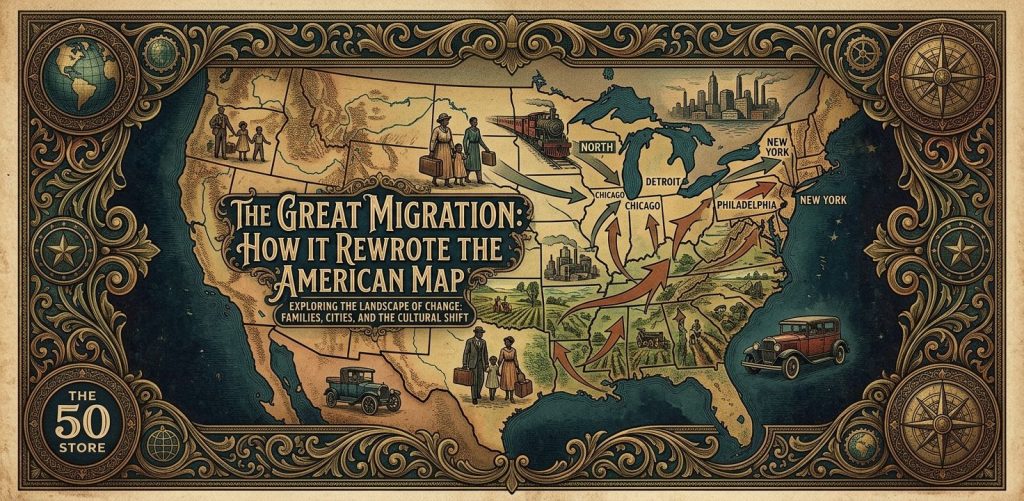
I’ve seen a lot of changes in my day. I was born in 1920, and I grew up in a small town in Ohio, not far from the route many take. I remember my own neighbor, Mr. Johnson, who came from Alabama and told me stories of the journey, how they crammed into a rusty car with barely enough money for food. His story is one of millions, each with its own twists of hope and hardship. But few events altered the landscape as dramatically as the great migration. Over the course of the 20th century, millions of African Americans left the rural South and headed north and west, forever changing the map of America. Their journey wasn’t just a change of address; it was a revolution on wheels, a quiet storm that rewrote cities, labor, and culture.
The America They Left Behind
To understand the magnitude of this shift, picture the South in the early 1900s. The region was largely agricultural, dominated by sharecropping and Jim Crow laws. Opportunities were scarce, and danger was ever-present. Family ties kept many rooted, but the oppressive social order and limited economic prospects pushed many to consider the unthinkable: leaving everything familiar behind.
The agricultural economy of the South was shattered by the boll weevil infestation in the early 1900s, which destroyed cotton crops, the region’s main source of income. Combined with the exploitative sharecropping system that locked families into debt, many had no choice but to seek opportunities elsewhere.
Many of those who stayed could not read or write because schools were underfunded. The average Black farmer earned barely enough to feed his family. And the constant threat of racial violence made daily life a tightrope walk. It was against this backdrop that whispers of better jobs in the industrial north began to spread. This period is a crucial, often painful, part of american history.
A Call from the Industrial North
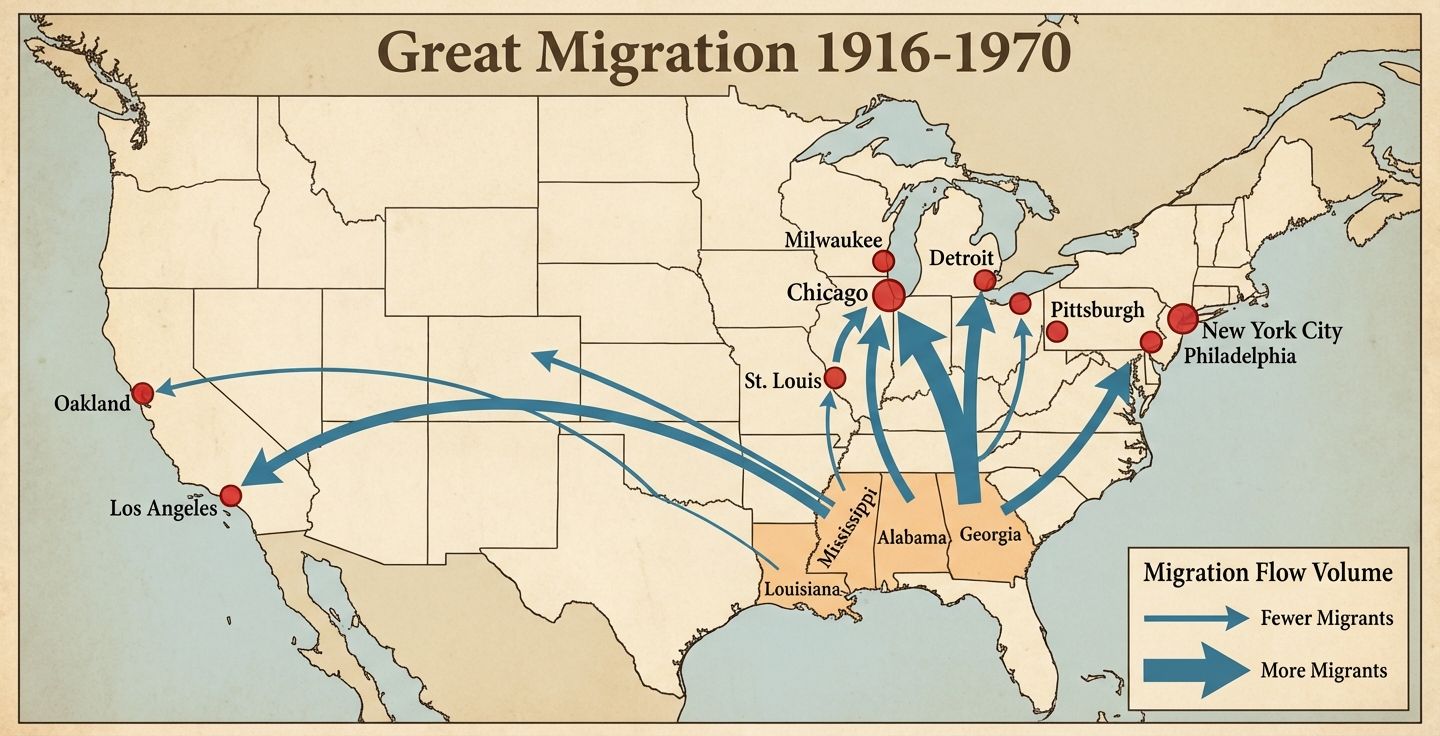
By the 1910s, northern factories were booming. World War I had created a labor shortage, and industrialists looked south for workers. Recruiters promised jobs in Chicago‘s stockyards, Detroit‘s automobile plants, and Cleveland‘s steel mills. The first wave of migrants, often young and daring, boarded trains and later buses, carrying little more than hope. They wrote home, and soon whole communities packed their bags. The movement became a self-perpetuating stream, fueled by social networks that stretched across states. Family ties pulled more and more people northward. By the 1920s, the flood had become a river.
Among those who made the journey was the renowned journalist and activist Ida B. Wells (1862-1931), who fled Memphis for Chicago after violent threats. Her investigative reporting on lynching and her advocacy for civil rights laid groundwork for future struggles. Wells’ story exemplifies the courage and determination that defined the migration.
Other cities like New York City, Philadelphia, Pittsburgh, St. Louis, Milwaukee, and even far‑off Los Angeles became beacons. Even Oakland on the West Coast attracted its share. The destinations were as varied as the reasons for leaving.
Numbers That Will Make You Stop and Think
Here’s where the numbers startle even someone like me who’s lived through most of the 20th century. Between 1916 and 1970, approximately 6 million African Americans left the South. That’s larger than the entire population of many countries. The U.S. Census Bureau reports that the African American population in the North and West grew from 1.2 million in 1910 to 10 million by 1970. By 1970, over 80% of African Americans lived in urban areas, up from just 50% in 1900, a staggering wave of urbanization.
Consider individual cities: In Chicago, the Black population jumped from 44,000 in 1910 to over 500,000 by 1950. Detroit saw its Black residents increase from 6,000 to 500,000 in the same period. New York City‘s Black population grew from 90,000 to more than 1 million. These weren’t just numbers; they were families, churches, and new neighborhoods springing up overnight. The scale of this demographic shift was unprecedented in american history.
By 1930, more than half of all African American migrants had settled in just five cities: Chicago, New York City, Detroit, Philadelphia, and Los Angeles. This concentration created powerful community networks that could mobilize quickly for labor actions and civil rights campaigns. The migration also accelerated the shift from a rural to an urban society, with the national urbanization rate for African Americans climbing from 20% in 1900 to over 80% by 1970.
The Birth of New Urban Landscapes
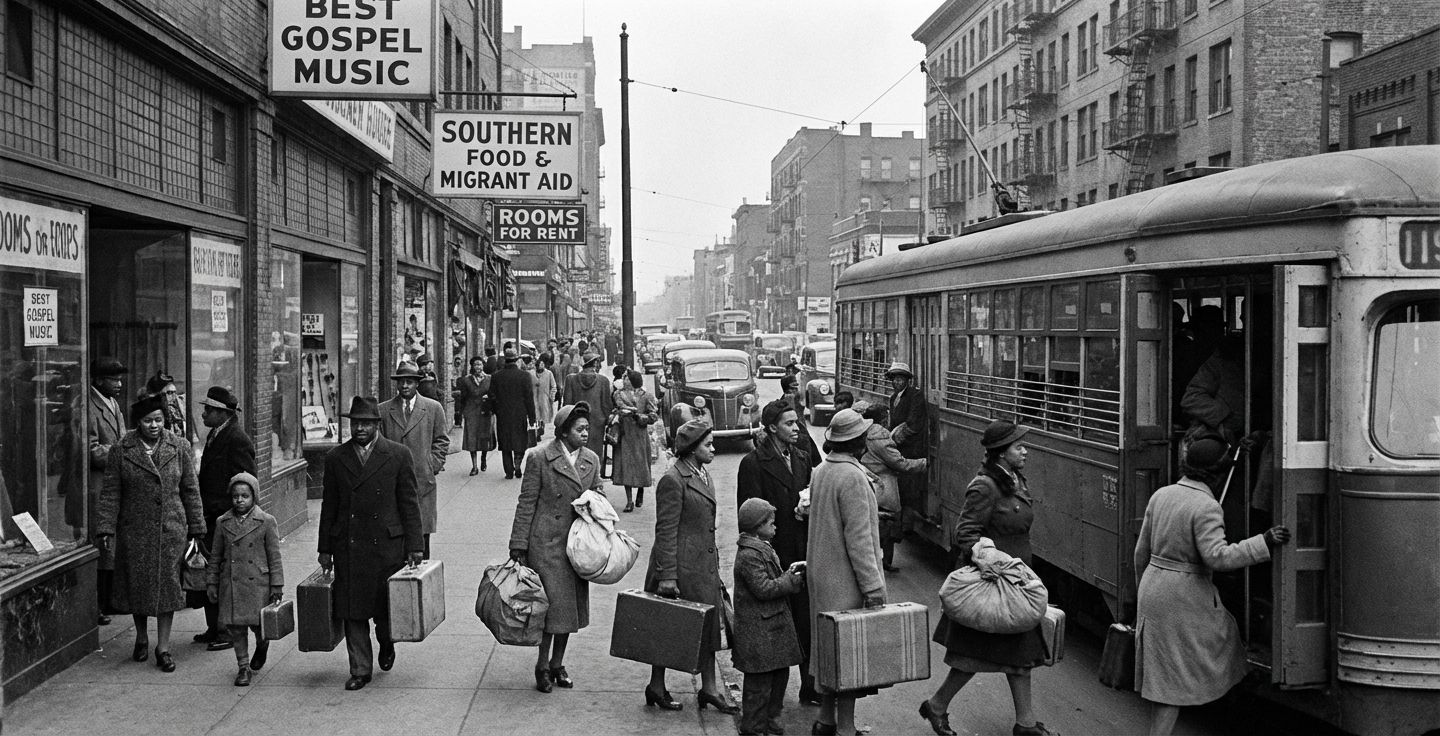
As these migrants arrived, cities transformed. Neighborhoods like Bronzeville in Chicago, Paradise Valley in Detroit, and Harlem in New York City became cultural capitals. But rapid growth also strained housing and infrastructure. The demand for homes led to urban sprawl as neighborhoods pushed outward. At the same time, discriminatory practices like restrictive covenants and redlining confined many Black families to overcrowded districts—what some called ghettos. These conditions sowed the seeds for future unrest but also for resilient community bonds.
Consider the story of the Smith family from Mississippi. In 1942, they arrived in Chicago with nothing but a suitcase and the address of a cousin. They settled on a modest street in Bronzeville, where the father found work in a steel mill. Their children later became teachers and activists, contributing to the city’s growth and the broader civil rights movement. Such personal journeys were the building blocks of a new urban America.
The Role of Labor unions
Labor unions played a complex role. Some unions excluded Black workers, perpetuating inequality. Others, like the Brotherhood of Sleeping Car Porters led by A. Philip Randolph (1889-1979), fought for both workers’ rights and civil rights. Randolph’s threat of a march on Washington in 1941 pressured President Roosevelt to ban discrimination in defense industries. The alliance between labor and civil rights became a powerful force in the decades that followed.
Cultural Explosion
The migration sparked a cultural renaissance. Writers like Richard Wright (1908-1960) gave voice to the urban Black experience in works such as Native Son. Musicians from Chicago and St. Louis blues traditions influenced rock and roll. The migration also fed the civil rights movement; the concentration of Black voters in northern cities gave the movement political clout. Leaders like Martin Luther King Jr. found allies in these urban centers.
The Political Voice Forged in the North
The demographic shift gave African Americans newfound political power. In cities like Chicago, Black voters became a decisive bloc. In 1928, Chicago elected Oscar De Priest (1871-1951) to the U.S. House of Representatives, the first African American to serve in Congress in the 20th century. His victory was a direct result of the Great Migration, which swelled the city’s Black electorate. Similar stories unfolded in New York City and Detroit, where Black politicians began to win seats at the local and state levels.
This political clout became instrumental during the civil rights movement. Northern Congressmen and Senators, backed by their constituents, pushed for anti-lynching laws and fair employment practices. The March on Washington for Jobs and Freedom in 1963 was organized with the support of labor unions and civil rights groups, many of which had grown strong in the northern cities because of the migration. The voice that emerged from the crowded streets of ghettos and the bustling factories reshaped national policy and American ideals.
Questions You Might Be Wondering
You may have questions about this pivotal moment. Here are some common ones.
Did only African Americans participate in the Great Migration?
While the great migration primarily refers to African Americans moving out of the South, other groups also experienced large‑scale relocations during the same era. For example, many white southerners moved to California for agricultural work, and immigrants from Europe and Mexico arrived in industrial cities. However, the sheer number and lasting impact of the Black migration are unique in american history.
How long did the Great Migration last?
Historians usually divide it into two phases. The first Great Migration lasted from about 1916 to 1940, with about 1.6 million people moving. The second, larger phase occurred from 1940 to 1970, with around 5 million migrants. The movement slowed after the 1970s as the South’s economy improved and civil rights legislation reduced some of the push factors.
Did the migration solve the problem of racism?
Unfortunately, no. While the North offered more economic opportunities, migrants still faced segregation, discrimination, and violence. The rise of ghettos and race riots in cities like Chicago and Detroit showed that prejudice was not confined to the South. However, the concentration of Black communities in the North created a political base that helped fuel the civil rights movement.
What happened to the cities left behind in the South?
Some Southern cities experienced population declines, but many adapted over time. The loss of labor forced changes in agriculture, and the return of some migrants in later years, along with new industries, brought renewal. Today, many Sun Belt cities are thriving again, showing the dynamic nature of American demographics.
Looking Back, Looking Forward
The great migration stands as one of the most significant internal movements in modern american history. It reshaped the nation’s cities, spurred the growth of urbanization, and laid the groundwork for the civil rights movement. The stories of those who embarked on this journey—often with only a few dollars and a hope for a better life—still echo in the neighborhoods, music, and political landscape of today’s America.
As I sit here reflecting, I’m reminded of the strength and resilience that built this country. Those who left behind the familiar taught us that family ties and social networks can be lifelines in times of change. Their courage reminds us that progress is possible, even when the road is long.
What lessons from the Great Migration can we apply to the challenges of our own time? How might understanding this massive shift help us build more inclusive communities today? I’d love to hear your thoughts. Please share your comments below.