
American History & Origins
How the Transcontinental Railroad Connected and Divided America
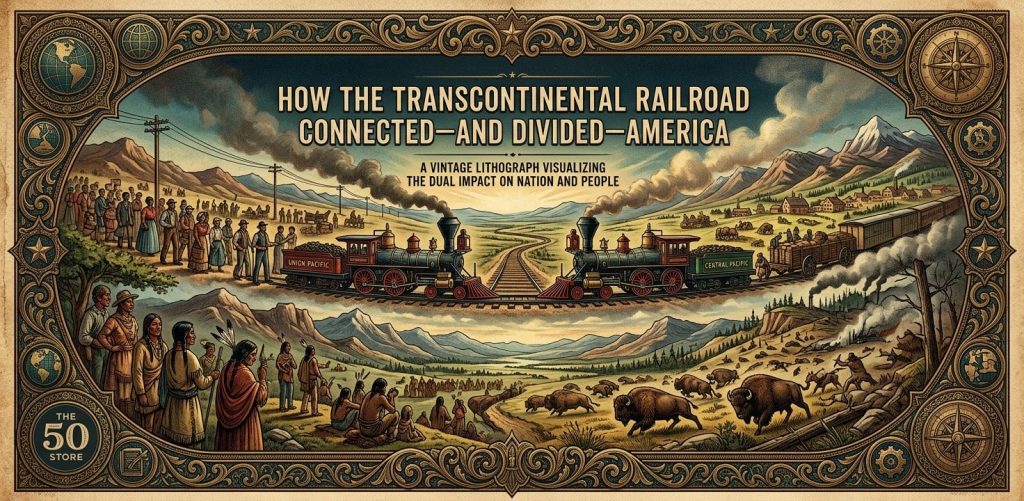
I’ve sat on my porch many evenings, watching the sun dip behind the hills, and I often think about the iron threads that once stitched this vast land together. The story of the transcontinental railroad is not just a tale of steel and steam; it’s a story of people, dreams, and the deep scars that progress can leave behind. Let me walk you through it, the way an old storyteller might, with a warm cup of tea and a willingness to hear both the triumphs and the tears.
Attention: A Nation Holding Its Breath
Close your eyes and imagine a country where a letter from New York to San Francisco took months, carried by horse, wagon, or ship around the horn of South America. The very idea of crossing the continent in a week seemed like a farmer’s fantasy. Yet, in the middle of the 1800s, a dream began to take shape, a dream that would bind the East Coast to the West Coast with rails of iron. That dream was the transcontinental railroad, and it promised to shrink a continent.
Interest: Numbers That Make You Pause
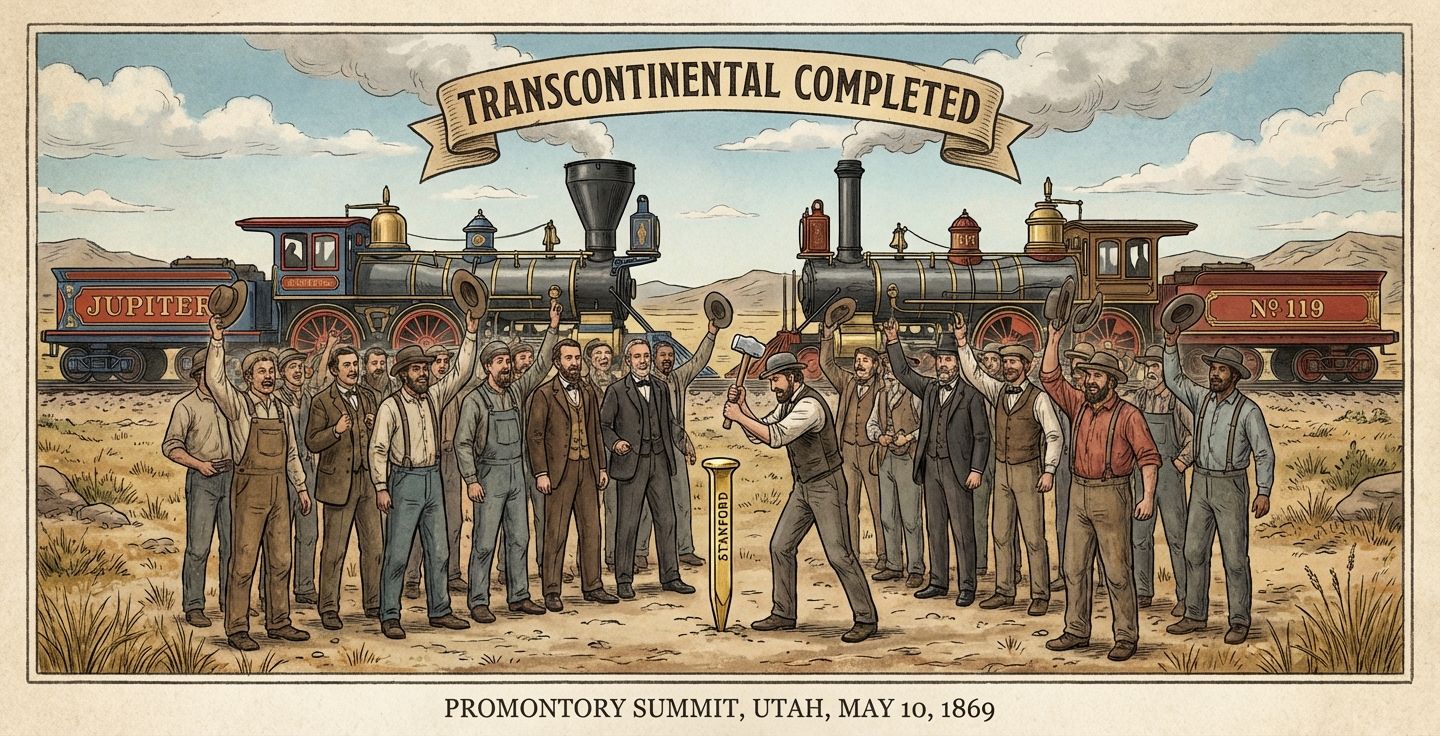
Now, let me share a few figures that still astonish me, even after all these years. The first transcontinental railroad stretched about 1,900 miles, a distance that required more than 8 million pounds of iron and 400,000 timber ties. When the golden spike ceremony finally took place at Promontory Summit, Utah on May 10, 1869, the two railroads—the Union Pacific Railroad and the Central Pacific Railroad—had laid a combined total of 1,776 miles of track in just under six years. Think about that: in the time it takes to raise a child, they laid enough track to circle the Earth nearly three‑quarters of the way.
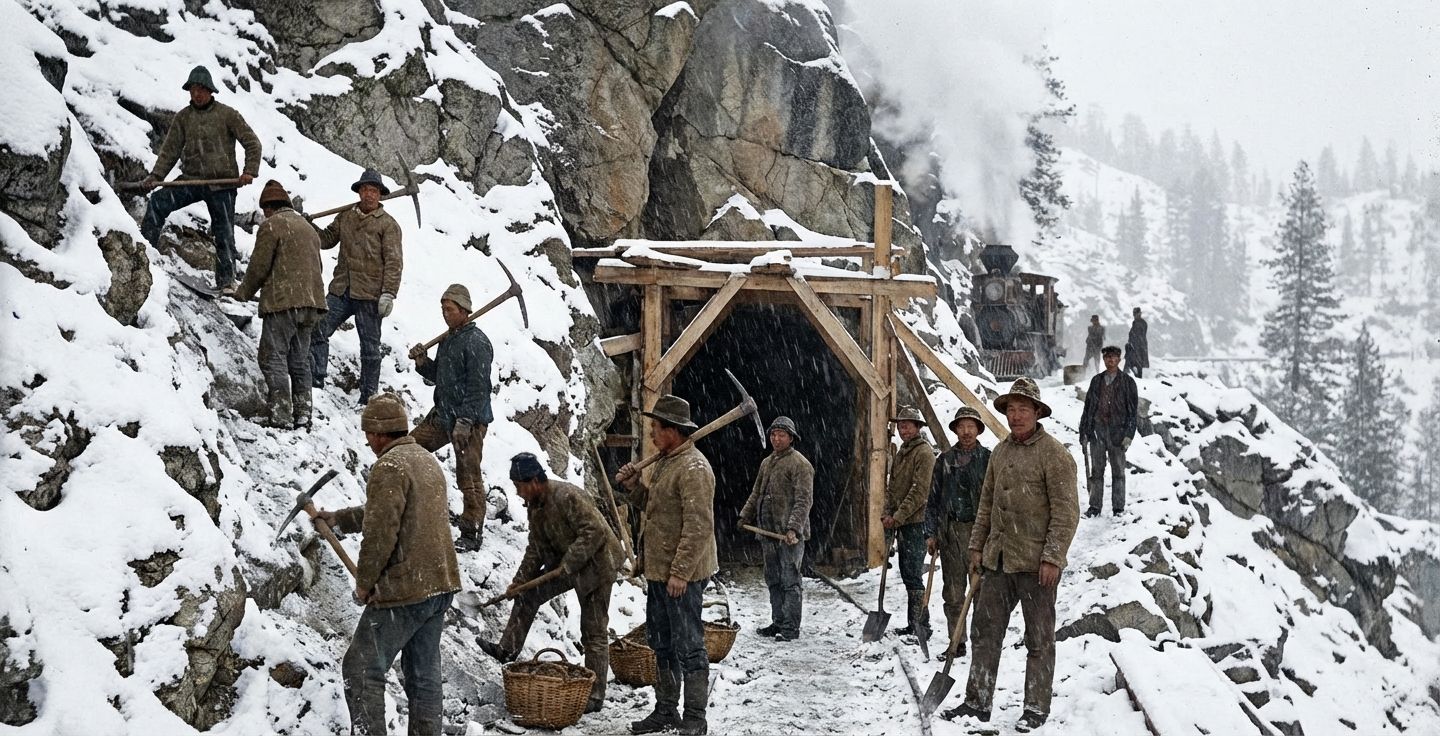
And here’s a statistic that often goes unnoticed: over 12,000 Chinese railroad workers toiled on the Central Pacific side, making up roughly 90% of its workforce. They blasted tunnels through granite, laid track in freezing snows, and did it for wages that were often 30‑40% lower than their Irish counterparts. Their contribution was essential, yet their names were rarely etched in the official histories.
Finally, the financial side of the venture was as dramatic as the engineering. The Pacific Railway Act 1862 and subsequent acts granted the railroads millions of acres of land and tens of millions in government bonds. Yet, the crédit mobilier scandal later revealed that a construction company had overcharged the federal government by tens of millions, lining the pockets of a few while the public bore the cost.
Desire: Why This Story Still Matters
You might wonder why a piece of 19th‑century infrastructure should stir something in us today. The answer lies in the micro‑histories that hide inside the grand narrative. Take, for example, a young Irish immigrant named Michael, who left the famine‑struck hills of County Mayo in 1865 to work on the Union Pacific grading crews. He slept in a canvas tent, ate salted pork and hardtack, and watched the prairie unfold mile after mile. When the rails finally met at Promontory, Michael stood beside a Chinese worker named Lee, shook his hand, and whispered, “We made it.” That handshake—across language, culture, and hardship—symbolizes what the railroad could do: bring strangers together.
On the flip side, the same iron that united also divided. The rapid expansion accelerated the Native American displacement as tribes were pushed from their ancestral lands to make way for the tracks. The railroad brought settlers, hunters, and soldiers, and with them came disease, depleted bison herds, and broken treaties. The sorrow of those losses still echoes in the stories of many Indigenous communities.
The railroad also sparked the great railroad strike of 1877, when wage cuts provoked workers from Baltimore to San Francisco to walk off the job. The strike revealed the growing tension between the powerful railroad barons and the everyday laborer—a tension that would shape labor rights for generations.Action: Carrying the Lessons Forward
So, what do we do with this layered legacy? First, we honor the hands that laid the track—recognizing the Chinese crews, the Irish gangs, the Civil War veterans, and the many unnamed laborers whose sweat built the nation’s spine. Second, we remember the cost paid by the lands and peoples whose lives were upended. And third, we use that awareness to ask ourselves how we can build future connections—be they broadband highways, clean energy grids, or community projects—without repeating the injustices of the past.
If you feel moved, share a story of your own family’s connection to the rails, visit a local railroad museum, or simply pause the next time you hear a train whistle and think of the multitude of lives that once depended on that sound.
Questions You Might Be Wondering
- Who drove the golden spike? It was Leland Stanford (1824‑1893), then governor of California and president of the Central Pacific Railroad, who tapped the final spike into place.
- Why were Chinese workers chosen for the toughest sections? The Central Pacific faced the Sierra Nevada mountains, where harsh winters and sheer rock faces made progress slow. Contractors found Chinese laborers to be reliable, hardworking, and willing to undertake dangerous tasks like nitroglycerin blasting and tunnel construction.
- What happened to the credit mobilier scandal? The scandal erupted in 1872 when investigators revealed that the Crédit Mobilier of America, a construction firm linked to Union Pacific insiders, had sold shares at below‑market prices to congressmen in exchange for favorable legislation. Though several officials were censured, few faced criminal penalties, and the episode fueled public distrust in corporate‑government collusion.
- How did the railroad affect Native American tribes? The rail line cut through hunting grounds, disrupted migration routes, and facilitated the rapid influx of settlers and soldiers, leading to conflicts such as the Sioux Wars and the eventual confinement of many tribes to reservations.
Summary: Iron Threads, Human Stories
The transcontinental railroad was a marvel of engineering that shrank a continent, fueled economic growth, and reshaped the American landscape. It was built on the backs of diverse laborers—Chinese, Irish, Civil War veterans, and many others—whose sacrifices are etched into every mile of track. At the same time, its arrival hastened the displacement of Native peoples, sparked labor unrest, and exposed the dark side of unchecked corporate power. The legacy is a tapestry of triumph and tragedy, reminding us that progress is never purely good or bad; it is a reflection of the values we choose to uphold.
As we look ahead to the challenges of our own era climate change, technological disruption, social inequality I leave you with this question: How can we forge new connections that unite us without repeating the divisions of the past? I’d love to hear your thoughts in the comments below.